
The Galapagos Islands are a bucket-list destination for good reason: due to a lack of natural predators, friendly wildlife such as playful sea lions and gigantic sea tortoises let visitors get up close and personal. This 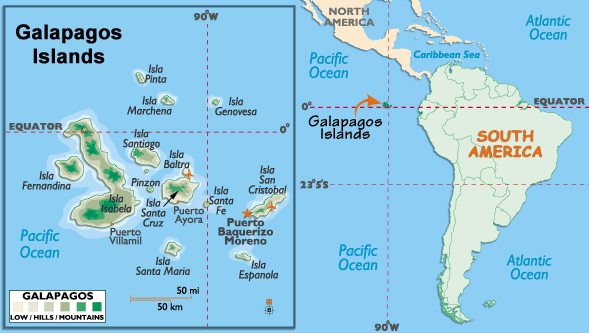 archipelago of about 19 islands an smaller islets scattered over 620 miles off Ecuador’s coast in the Pacific Ocean is a double World Heritage site (both land and sea are protected). Each island has its own unique landscape, from barren black, volcanic rocks to white sand beaches and gemstone-blue waters. A Galapagos Islands Vacation is going to be wonderful but, it is best to book at least a few months in advance. This is a major tourist destination, boats often fill up during high season and there aren’t very many of them.
Galapagos Islands Weather (When to Visit)
The busiest months for tourism are June, July and August, as well as mid-December to mid-January (prices are often highest at these times as well). The hot, rainy season of December through May is when the ocean is the calmest, daily rains give way to mostly-sunny skies, and temperatures are in the 80s.
The cooler, dryer season is June through November with temperatures in the 70s. Though the seas are rougher, experienced divers believe it’s the best time to visit because colder water attracts even more fantastic marine life (such as big schools of hammerhead sharks). It’s also when visitors have a better chance of spotting legendary whale sharks at Wolf and Darwin islands.
Visiting the Galapagos Islands: Land or Sea
The first decision you have to make about visiting the Galapagos Islands is also the most difficult. Do you want to stay in a hotel on one of the three inhabited islands, exploring other islands and areas via day-trip boat rides? Or do you want to be based on a live-aboard boat, which provides your accommodation and your mode of travel from island to island? Here are three considerations to think about when deciding:
- Cost: A trip to the Galapagos Islands is expensive. However, it’s easier to have a less expensive experience if you choose to be land-based. There are hotels and restaurants at many price points on San Cristobal Island, Santa Cruz Island, Isabela and Floreana islands. Live-aboard boats come in a range of price points but, all but the most bare-bones boats still add up to more than a land-based vacation.
- Time management: If you choose a land-based vacation, you will spend a lot of your time getting from your hotel, onto a day-trip boat, out to the day’s destination, then back to your hotel. Travelers on live-aboard boats sleep in cabins on the boat, which navigates from place to place during the night. So passengers wake up in a new destination ready for a full day of exploration.
- Access: Because land-based explorations are limited to the five islands that can be reached in one day, land-based travelers will never be able to visit the more distant islands that boat-based itineraries include.
Best Beaches in the Galapagos Islands
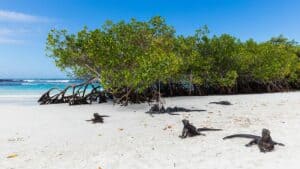 Tortuga Bay Beach, Santa Cruz Island
Tortuga Bay is one of the largest and most famous beaches of the Galapagos Islands. This beautiful white coral sand beach lies about a 2.5 km walk from Puerto Ayora and behind the main beach is a natural bay that is an excellent spot for sea kayaking and snorkeling. Discover the amazing underwater world of the Galapagos, including sea turtles, sea lions, and white-tipped sharks. Watch birds like pelicans, flamingos, and lava gulls, which come to this beach in search of food.
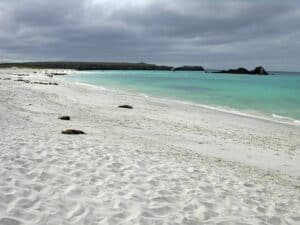 Gardner Bay Beach, Espanola Island
This beautiful beach is famous for the multitudes sea lions you’ll find lying around in the sand. You can meet these friendly animals up-close while witnessing amazing sunsets. Another great beach for snorkeling, with a diversity of tropical fish, and white-tipped reef sharks.
.
.
 El Garrapatero, Santa Cruz Island
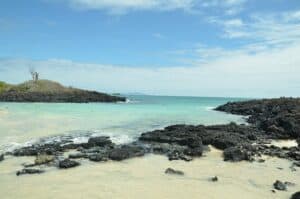
Lined by mangroves and Manzanillo trees, this white sand beach is visited by pelicans, marine iguanas, ghost crab, shrimp, and penguins. This 3 km long beach lies about 20 km northeast of Puerto Ayora and is a great place to enjoy snorkeling, sunbathing and picnics.
.
.
 Puerto Villamil, Isabela Island
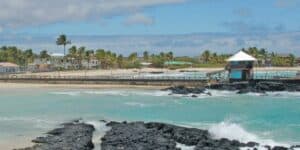
This white sandy beach, in front of the town Puerto Villamil, is shaded by coconut palms and dry tropical forest and offers shelter to wildlife like marine iguanas, sea lions, boobies and many different kinds of birds. There are several other beaches nearby Puerto Villamil, but those are only accessible by cruise ship.
.
 Puerto Egas, Santiago Island
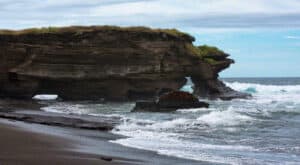
This beautiful white sand beach is home to numerous sea lions and is an excellent spot for snorkeling with sea turtles and tropical fish. To the right of the beach are lava rock outcroppings dotted with marine iguanas, birds, and other wildlife. The infamous “Darwin’s Toilet”, a bizarre tidal phenomenon that resembles a gigantic toilet is a big attraction. Just don’t fall in!
Best Galapagos Islands Restaurants
Finch Bay Restaurant – Puerto Ayora $31 – 60
Finch Bay Restaurant, part of the award-winning Finch Bay Hotel in Puerto Ayora, is considered by many to be one of the best fine dining restaurants in the Galapagos Islands with excellent menu options for seafood-lovers, vegetarians, Ecuadorian, and international dishes. Telephone: +593 5 2526297 Web: Finch Bay Restaurant.
Coco Surf – Puerto Villamil $11 – 30
This sidewalk cafe serves up some of the tastiest seafood dishes in all of the Galápagos, and you’ll hardly notice the high price points once the live band starts jamming out to jazzy island tunes. The tuna tartare and patanachos mar y terra (appetizer platter with an assortment of seafood and meat) are highly recommended. Telephone: +593 5 2529465 Web: Coco Surf.
Oasis – Puerto Villamil $11 – 30
Esmeraldas native Geanny Bennett Valencia cooks up some of the best dishes in town. Mouth-watering encocados (coconut stews) are the favorite, served in versions like camarones (shrimp), langosta (lobster) or pescado (fish). The restaurant only opens by reservation; call ahead or stop by during the day. Telephone: +593 5 2529054 Web: Oasis.
Isla Grill – Puerto Ayora $11 – 30
This buzzing grillhouse serves satisfying plates of grilled meat and seafood. Among the top picks: costillitas (pork ribs), mariscada (char-grilled shrimp, octopus and calamari) and churrasquito de mimi (a particularly tender cut of steak). The plump salads are also first-rate. Telephone: +593 98 462 7240 Web: Isla Grill.
Garrapata – Puerto Ayora $11 – 30
Good tunes, cool breezes and tasty Ecuadorian and international dishes (seared tuna, grilled seafood platters and fish in coconut sauce) draw a lively crowd most nights. It’s pricey but casual, with open sides and a pebble floor. Telephone: +593 5 2526264 Web: Garrapata.
Best Galapagos Nightlife
Bongo Bar
The Bongo Bar is the top hot spot in Puerto Ayora. Located on the second floor of a building on Avenida Darwin, it is open from 7 p.m. to 2 a.m. The bar has a wide variety of clientele that includes locals as well as tourists and naturalist guides who take their guests around the islands. The Bongo Bar serves some of the best sushi in the Galapagos. Telephone: +593 98 493 0894 Web: Bongo Bar.
Buganvilla
Buganvilla is located at the northern end of Avenida Darwin and is open from 7 p.m. to 2 a.m. This outdoor lounge features loads of fanciful decoration. You will enjoy fairy lights and trickling fountains as well as cozy, recessed alcoves that have couches. On many weekends, the Buganvilla offers live music, and patrons enjoy a pool and a Foosball table. Telephone: +593 98 694 6342 Web: Buganvilla.
Limon y Cafe
Limon y Cafe is an outdoor bar where the casual, local younger crowd gathers. This is the most popular meeting place on Santa Cruz. It has a bar as well as wooden tables and serves ice-cold beer. Guests are welcome to hang out and chat, play cards or play pool. There is a TV over the bar where subtitled movies are often played. The locals call it Puerto Ayora’s local Cheers because the staff members know all the names of repeat patrons. Telephone: +593 99 601 7793 Web: Limon Cafe.
La Panga
La Panga is the most popular disco in Puerto Ayora. It is a hotspot until closing time every weekend, which is 3 a.m. It has a full bar that offers drinks with a local flavor. Salsa partners are found on the small dance floor, and others just dance the night away however they want. The music is an eclectic combination of Latin, pop and electronic. Telephone: +593 98 898 4670 Web: La Panga.
Madera Fina
Madera Fina is frequented by the older crowd. You will not find the wild dancing like that of La Panga, but it is a great place to relax, and the dance floor has plenty of room. It is open from 8:30 p.m. to 3 a.m. on weekends and serves from a full bar. Telephone: +593 99 164 9260 Web: Madera Fina.
Best Galapagos Islands Hotels
Related Posts
 Discover the Most Beautiful Basel on The Rhine River
 Amazing Maraú Peninsula – The Best Beaches & Natural Pools
 Discover Búzios | The Best Beaches & Nightlife You’ll Love
 Discover Rio: The Most Beautiful Beaches & Amazing Views
 The Best of Beautiful Palau Travel Guide
 Discover the Best of the Maldives: Your Ultimate Travel Guide
I’ve been looking into visiting the Galapagos Islands, but I’m having a hard time deciding whether to book a cruise or stay in a hotel and take day trips. I noticed you mentioned that staying on land is generally less expensive, which is definitely appealing! We’re mostly interested in snorkeling, seeing sea lions, and visiting some of the beaches. Would we miss out on too much if we stayed on Santa Cruz Island instead of booking a cruise?
Hi Melissa! Staying on Santa Cruz Island is actually a great option, especially if you’re trying to keep costs down! You can visit Tortuga Bay, enjoy snorkeling excursions, and take guided day trips to nearby islands. You’ll still have wonderful opportunities to see sea lions, marine iguanas, sea turtles, and other wildlife. The biggest advantage of a cruise is reaching some of the more remote islands that aren’t practical to visit on day trips. But if beaches, snorkeling, and wildlife are your priorities, a land-based vacation can be very rewarding. I’d recommend booking your excursions in advance, especially during the busier travel months. Enjoy planning your Galapagos adventure! 🐢🌴
The Galápagos Islands have been on my travel wish list for years because of the wildlife, but I never realized there were so many beautiful beaches too. I like the idea of staying on one island and taking day trips instead of spending the whole vacation on a boat. Seeing sea lions and sea turtles in the wild would be an unforgettable experience. If it were your first visit, which island would you choose as your base?
For a first trip, I’d probably choose Santa Cruz Island because it has a good mix of accommodations, restaurants, and easy access to several popular attractions. Tortuga Bay is beautiful, and there are plenty of day tours available if you want to explore nearby islands. It gives you a nice balance of comfort and adventure without feeling rushed.
The Galapagos Islands honestly seem like one of the most unforgettable wildlife destinations anywhere in the world. I love that the animals there are so relaxed around people because it makes the experience feel much more natural and immersive. The combination of volcanic landscapes, white-sand beaches, sea lions, giant tortoises, and snorkeling with marine life sounds incredible. Tortuga Bay and Gardner Bay especially look beautiful with that bright blue water and all the wildlife along the shore. Did you end up preferring the land-based style of visiting the islands or do you think the live-aboard cruises are the better overall experience?
One of the things that makes the Galapagos so special is how different every island feels, both in scenery and wildlife. A land-based trip works really well for travelers who want more flexibility, restaurants, and hotel options, while the live-aboard cruises give access to more remote islands and wildlife areas that day trips can’t always reach. I loved how easy it was to combine beautiful beaches, snorkeling, and wildlife encounters all within the same day. Seeing sea lions, marine iguanas, giant tortoises, and tropical fish so close together really made the islands feel unlike anywhere else in the world.