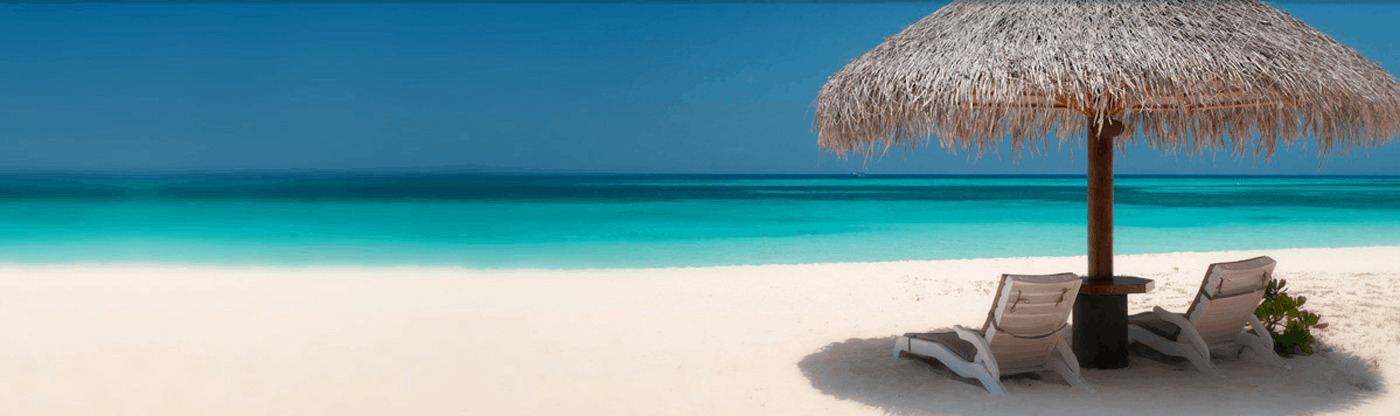

Australia is famous for its beautiful beaches in Australia, which rank among the best in the world. Soft sand and clear blue seas stretch for miles, inviting travelers to explore. Every region has its own unique style, from tropical islands to rugged southern shores.
In the north, palm islands welcome you to rest. At the same time, the south has tall cliffs and secret bays. Surfers ride the waves. Swimmers enjoy safe lagoons. Sunseekers also find warm sun almost every day.
Most importantly, the beautiful beaches in Australia give more than views. For example, some beaches bring you close to wildlife. Others share local culture. As a result, each visit feels exciting. Finally, these beaches create memories that stay with you forever.
Visit the best beaches of Australia here. Or visit us on Pinterest.
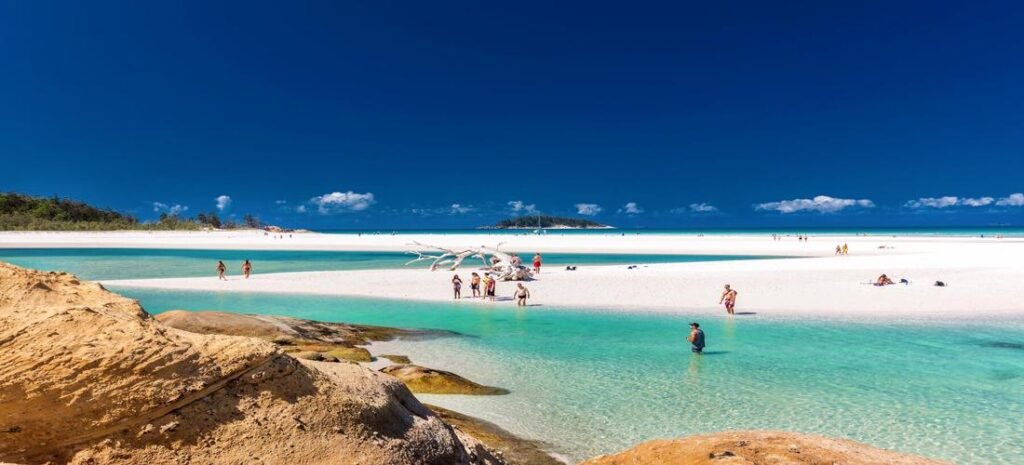
When to Visit Australia’s Best Beaches
Australia’s beaches look incredible year-round. However, each season offers something unique:
Summer (Dec–Feb)
Days feel hot and lively. It’s perfect for swimming, sunbathing, and beach parties. Northern beaches can also be steamy—and stinger season is in full swing. Wear a stinger suit if diving or swimming up north.
Autumn (Mar–May)
Temperatures stay warm, but humidity drops. The skies often clear. As a result, it’s ideal for long walks, snorkeling, and whale watching along the southern coasts.
Winter (Jun–Aug)
Winter brings cooler air and quieter beaches. Surf beaches like Bells are at their best. At the same time, northern areas remain warm—great for escape to warmer waters.
Spring (Sep–Nov)
This season brings floral bloom and crystal-clear water. Snorkeling conditions improve. In addition, shoulder season means fewer crowds and better travel deals.
Travel Tip: Aim for autumn (Mar–May) for the best mix of weather, fewer people, and lower prices. Still, any season has its beauty if you match the region to your weather preference.
Whitehaven Beach, Queensland
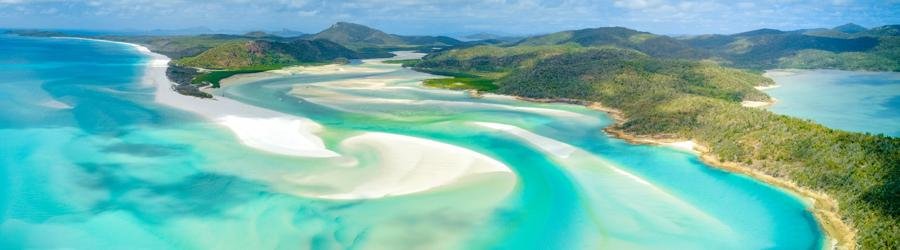
Whitehaven Beach is the crown jewel of the Whitsundays and often called the most beautiful beach in Australia. Its pure silica sand stays cool underfoot and stretches for seven kilometers along Whitsunday Island, glowing against turquoise water. At Hill Inlet, the tide creates swirling patterns of sand and sea that are breathtaking from the lookout. Visitors can reach the beach by boat, seaplane, or helicopter from Airlie Beach or Hamilton Island, making it both accessible and unforgettable.
Location: Whitsunday Island, Queensland (in the heart of the Whitsundays, accessible from Airlie Beach or Hamilton Island).
Where to Stay: The Sundays (Hamilton Island) – A 5-star beachfront retreat with a 9.4 Wonderful rating. Elegant suites, ocean views, and upscale amenities—perfect for beach lovers.
Turquoise Bay, Western Australia
Turquoise Bay in Exmouth lives up to its name with water so clear it looks unreal. Located beside Ningaloo Reef, this beach is famous for drift snorkeling, where the current carries you gently across coral gardens alive with tropical fish. The sand is soft and white, and the shallow lagoon makes swimming easy even for beginners. Thus, sea turtles and rays are often spotted close to shore, making Turquoise Bay a must for nature lovers.
Location: Turquoise Bay – Exmouth, Western Australia (inside Cape Range National Park, on the Ningaloo Reef).
Where to Stay: Sal Salis Ningaloo Reef – A 5-star luxury eco-camp rated 9.4 Wonderful, with safari-style tents just steps from Ningaloo Reef and Turquoise Bay.
Cable Beach, Western Australia
Cable Beach stretches for 22 kilometers along the Indian Ocean and is one of Australia’s most iconic sunset spots. Its wide expanse of white sand is perfect for long walks, while the gentle waves invite cooling swims. The beach is also known for camel rides at dusk, where the silhouettes of the animals move slowly across a glowing orange sky. As a result, Cable Beach offers a mix of relaxation, adventure, and unforgettable scenery.
Location: Cable Beach – Broome, Western Australia (in the Kimberley region, famous for camel rides at sunset).
Where to Stay: Cable Beach Club Resort & Spa – A 5-star resort with a 9.1 Superb rating. Famous for its beachfront location, lagoon pools, and spa treatments.

Wineglass Bay, Tasmania
Wineglass Bay in Freycinet National Park is often called one of the world’s most beautiful beaches. The sand forms a perfect crescent, framed by pink granite cliffs and deep blue water. Hike to the lookout for sweeping views, or walk down to the sand for a peaceful swim. Thus, Wineglass Bay offers both a sense of adventure and pure serenity.
Location: Wineglass Bay – Freycinet National Park, Tasmania (on the east coast, framed by pink granite cliffs).
Where to Stay: Freycinet Lodge – A 5-star eco-retreat rated 9.2 Superb, nestled inside Freycinet National Park with waterfront cabins near Wineglass Bay.
Hyams Beach, New South Wales
Hyams Beach in Jervis Bay is famous for its dazzling white sand, often said to be the whitest in the world. The calm, clear water makes it ideal for swimming and snorkeling. Families love its safe conditions, while photographers flock to capture the vibrant contrast of sand and sea. So, Hyams Beach is a perfect coastal escape only a few hours from Sydney.
Location: Hyams Beach – Jervis Bay, New South Wales (south of Sydney, known for its pure white sand).
Where to Stay: Paperbark Camp – A 5-star luxury tented retreat rated 9.3 Superb, blending eco-comfort with natural bushland just minutes from Hyams Beach.
Burleigh Heads, Queensland
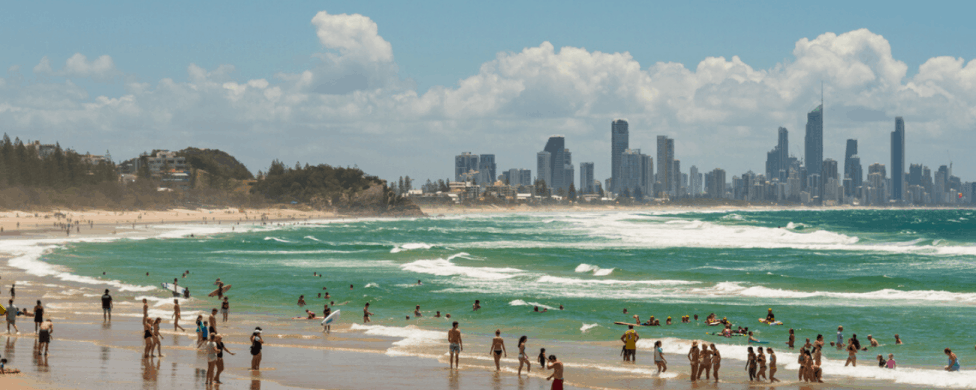
Burleigh Heads blends natural beauty with laid-back surf culture on the Gold Coast. Golden sand meets rolling waves that attract surfers from around the world. At the same time, nearby Burleigh Head National Park offers shady trails with ocean views. Also, its lively cafés and relaxed vibe make Burleigh one of Queensland’s most loved beach towns.
Location: Burleigh Heads – Gold Coast, Queensland (surfing hub with trails in Burleigh Head National Park).
Where to Stay: The Langham, Gold Coast – A luxury 5-star resort with a 9.1 Superb rating. Guests enjoy beachfront suites, fine dining, and sweeping coastal views near Burleigh.
Vivonne Bay, South Australia
Vivonne Bay on Kangaroo Island feels wild and untouched. The beach stretches in a long curve of soft white sand with turquoise water rolling gently onto shore. Seals and dolphins often appear close to the beach, adding to its charm. Thus, Vivonne Bay offers a mix of beauty and wildlife in one peaceful setting.
Location: Vivonne Bay – Kangaroo Island, South Australia (wild, remote, and rich in wildlife).
Where to Stay: CABN Kangaroo Island – A luxury eco-retreat rated 9.5 Exceptional on Booking.com. Located in Penneshaw, it offers stylish cabins and easy access to Vivonne Bay and other island highlights.
Bells Beach, Victoria
Bells Beach is legendary in the surfing world. Located along the Great Ocean Road, it hosts the annual Rip Curl Pro, one of the most famous surf competitions on the planet. Towering cliffs frame powerful waves that draw surfers year-round. So, Bells Beach is both a sporting icon and a natural wonder.
Location: Bells Beach – Great Ocean Road, Victoria (near Torquay, famous for world-class surf).
Where to Stay: RACV Torquay Resort – A luxury 5-star stay rated 9.0 Superb, offering spacious rooms, golf, and spa facilities close to Bells Beach.
Noosa Main Beach, Queensland
Noosa Main Beach is calm, family-friendly, and welcoming. Its gentle waves are perfect for swimming and beginner surfers, while the golden sand is ideal for relaxing. Shops, restaurants, and walking tracks sit just steps away. Also, the nearby Noosa National Park adds natural beauty with trails and coastal lookouts.
Location: Noosa Main Beach – Noosa, Queensland (family-friendly with calm waves and nearby Noosa National Park).
Where to Stay: Sofitel Noosa Pacific Resort – A 5-star resort rated 9.2 Superb, featuring luxury suites, a lagoon pool, and prime access to Noosa Main Beach.
Bay of Fires, Tasmania
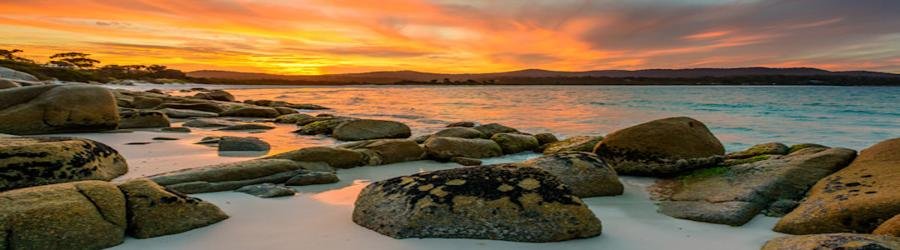
The Bay of Fires is a stunning stretch of coastline on Tasmania’s northeast shore. White sand meets bright orange lichen-covered rocks and clear blue water, creating one of Australia’s most striking beach landscapes. The area feels quiet and remote, perfect for walking or photography. As a result, the Bay of Fires is a true natural masterpiece.
Location: Bay of Fires – Northeastern Tasmania (stretching from Binalong Bay north along the coast, known for orange rocks).
Where to Stay: Bay of Fires Great Escape – A highly rated (9.7 Exceptional) beachfront holiday home in Binalong Bay, just minutes from Bay of Fires. It offers sweeping ocean views and luxurious comfort.
Beach Essentials Checklist for Australia
Packing smart makes your trip to the beautiful beaches in Australia easier and safer. So, the right items help you enjoy the sand and sea without worry. Here are a few must-haves for the coast:
- Reef-safe sunscreen – Protect your skin and the reef at the same time.
- Wide-brimmed hat – Essential for long hours under the Aussie sun. In addition, it’s useful for hikes to beach lookouts.
- Rash guard or stinger suit – A must for northern Queensland from November to May. Thus, you’ll swim safely even during stinger season.
- Sandals or water shoes – Ideal for hot sand, coral edges, or rocky spots.
- Reusable water bottle – Staying hydrated is crucial. Also, refillable bottles reduce waste.
- Light towel or sarong – Easy to pack and quick-drying. In addition, they double as a picnic blanket or cover-up.
- Dry bag – Keeps phones, wallets, and cameras safe from sand and spray.
- Snorkel gear – Perfect for reefs like Turquoise Bay or the Whitsundays. So, you won’t miss out on colorful marine life.
- Camera or drone – Many of Australia’s beaches are once-in-a-lifetime photo spots. Finally, a camera ensures those memories last forever.
Travel Tip: The Australian sun is stronger than many travelers expect. Apply sunscreen often, and always carry water. As a result, small items like these can make your beach day more enjoyable and stress-free.
Frequently Asked Questions about Australia’s Beaches
What is the best time to visit the beaches in Australia?
The best months are March to May and September to November. During these seasons, the weather is warm, crowds are smaller, and the water is clear.
Can you swim at all beaches in Australia?
Yes, but safety is important. Always swim between the red and yellow flags where lifeguards patrol. In addition, check for signs about rips, jellyfish, or sharks before entering the water.
Which beaches are best for surfing?
Bells Beach in Victoria and Burleigh Heads in Queensland are top surfing spots. At the same time, beginners will find smaller, gentler waves at Noosa Main Beach.
Are there family-friendly beaches in Australia?
Yes, Noosa Main Beach, Hyams Beach, and Cable Beach all have calm water and safe swimming conditions. Moreover, these beaches often have facilities close by.
Do I need to worry about stinger season?
In northern Queensland, stinger season runs from November to May. Thus, swimmers should wear stinger suits during these months for protection.
Travel Tip: If you’re short on time, combine beaches in the same region. For example, you can explore both Whitehaven Beach and Airlie Beach on the same trip.
Final Thoughts on Australia’s Beaches
Australia’s coastline is filled with natural wonders, from remote coves to world-famous sands. Each beach has its own personality, offering beauty, adventure, and relaxation. Nearby luxury resorts also ensure your stay matches the quality of the destination.
Most importantly, the beautiful beaches in Australia deliver unforgettable experiences. Whether you surf, swim, or simply watch the sunset, the coast leaves lasting memories. Finally, with so many beaches to choose from, every visit brings a new reason to fall in love with Australia.
Related Posts
 The Most Beautiful Beaches of Queensland Australia
 The Most Beautiful Beaches of Victoria Australia
 The Most Beautiful Beaches of Kangaroo Island
 Australia’s Coral Coast – Explore the Most Beautiful Beaches
 The Best Burleigh Heads Guide
 Australia’s Northwestern Coast: The Most Beautiful Beaches of Exmouth
Pingback: Maria Santos
That variety is one of the best parts of traveling along the coast, since each region feels completely different. For a first visit, focusing on one area like Queensland works really well because you can experience multiple iconic spots such as Whitehaven Beach, the Whitsundays, and places like Noosa without spending too much time traveling. Trying to cover too many regions in one trip can feel rushed since distances are quite large. Starting with one region allows you to enjoy the beaches, activities, and scenery at a more relaxed pace while still getting an amazing experience.
Pingback: Luis Bass
That’s a great idea because Australia really does offer options that can work for a wide range of ages and interests. Noosa is a strong choice for a family reunion since it has calm, swimmable water, nearby restaurants, and easy access to walking trails.
The Whitsundays are also amazing, especially for scenery and boat trips, but they can feel a bit more spread out depending on where everyone stays. For convenience and variety all in one place, Noosa tends to be the easiest to plan around.
Pingback: Wendy Ferrell
That variety is one of the best parts of exploring Australia’s coastline. Because the country is so large, focusing on one region usually gives you a more relaxed and enjoyable trip.
Queensland, for example, lets you combine multiple incredible beaches within a shorter distance. Trying to cover multiple regions can work, but it often involves more travel time, so keeping it focused tends to feel less rushed and more rewarding.
Pingback: Marc
Many first-time visitors to Australia start with one coastal region to keep travel simple, often Queensland because it combines warm weather, reef snorkeling, and iconic beaches like Whitehaven Beach and Noosa. However, travelers with more time frequently add southern destinations such as Tasmania or Victoria for contrast, cooler scenery, and world-class surf coastlines. Australia’s distances are large, so focusing on one area helps reduce transit time while still delivering a strong beach experience. Mixing regions works best when travelers plan enough days to enjoy each coastline without rushing.
Pingback: Kristi
Both Tasmania and Western Australia offer excellent scenic coastal experiences, though they feel very different. Tasmania tends to deliver dramatic cliffs, cooler weather, wildlife sightings, and iconic viewpoints like Wineglass Bay and the Bay of Fires. Western Australia often features long stretches of white sand, clear turquoise water, and fewer crowds, especially around Ningaloo Reef and Cable Beach. Travelers focused on coastal walking, photography, and quieter landscapes often enjoy combining both regions when time allows.
Pingback: Christine
Most popular Australian beaches provide clear safety signage, lifeguard flags, and updated surf condition information, especially in major tourist areas. Still, checking local conditions ahead of time helps travelers stay prepared for tides, weather shifts, or seasonal hazards like jellyfish. Official tourism sites and local surf lifesaving organizations often publish reliable updates. Taking a few minutes to review conditions before heading out usually leads to a safer and more enjoyable beach visit.
Pingback: Andria P
I’m so glad you found the guide helpful! If you want a balance of calm water, wildlife, and amazing snorkeling without the larger crowds, Turquoise Bay in Western Australia is a fantastic choice. The drift snorkeling is easy, the sea life is incredible, and the beach feels peaceful compared to the east-coast hotspots. Another great option is Vivonne Bay on Kangaroo Island, where you can enjoy soft sand, turquoise water, and the chance to spot seals and dolphins. If you tell me when you’re thinking of traveling, I can suggest the best region for that time of year too!
Pingback: Jim H
Great question — Australia really does spoil us with options! For a one-week trip that blends calm beaches, stunning views, and easy snorkeling, I usually recommend starting in Queensland. You can pair Whitehaven Beach with the Whitsundays and then add spots around Airlie Beach or the Great Barrier Reef for simple, beautiful snorkel days. Western Australia and Tasmania are incredible too, but Queensland gives you the smoothest mix of scenery and relaxed swimming without long travel times. If you tell me the vibe you prefer — quiet, adventurous, or a little luxurious — I can help you map out the perfect one-week beach itinerary!