Tasmania is filled with stunning coastlines, and its beaches feel wild, peaceful, and unforgettable. This guide covers the most beautiful Tasmania beaches, from quiet bays to dramatic ocean views. Use it to plan the perfect beach day with swimming, walks, and scenic photo stops.
Tasmania beaches feel wild as well as unforgettable. The water often looks bright turquoise, and the sand can be shockingly white. On the east coast, you can visit famous spots like Wineglass Bay for sweeping views and calm shoreline scenery. Farther north, the Bay of Fires stands out with orange lichen-covered rocks and clear water. In contrast, the west coast feels raw and powerful, with big waves and wide open beaches. Even better, many Tasmania beaches stay quiet, so you can enjoy them without heavy crowds. Below, you’ll find the best Tasmania beaches to visit for scenery, beach walks, and amazing photos.
Read our Tasmania Travel Guide here, or find more information on Australia’s best beaches here. Visit on Pinterest here.
Tasmania Weather and Best Time to Visit Tasmania Beaches
Tasmania has cooler weather than most of mainland Australia, so beach days feel different here. Even in summer, the air can stay mild, and the ocean often feels cold. Because of that, Tasmania beaches work well for scenic walks, relaxing views, and coastal exploring year round.
Summer (December to February) is the warmest and most popular time to visit. Days feel longer, and the weather is usually best for swimming and beach lounging. At the same time, this season brings the biggest crowds, especially in places like Wineglass Bay and the Bay of Fires.
Autumn (March to May) still feels comfortable, and the beaches stay much quieter. You’ll often get sunny days, fewer people, and beautiful coastal light for photos. This season is also great for beach hikes and lookout views.
Winter (June to August) feels cold, windy, and dramatic along the coast. Even so, it’s a great time for rugged scenery and peaceful beach walks. If you love moody ocean views, winter delivers.
Spring (September to November) brings fresher air and brighter days. The scenery starts to feel alive again, and crowds stay smaller before summer arrives.
Overall, late summer and early autumn (February to April) offer the best mix. You’ll get nicer weather, fewer crowds, and plenty of time to enjoy Tasmania beaches at a slower pace.
Why Visit Tasmania Beaches
Tasmania beaches feel wild, peaceful, and completely different from mainland Australia. Instead of crowded shorelines and high-rise backdrops, you’ll find rugged scenery and open space. Because the island stays less developed, many beaches still feel quiet and untouched.
The coastline also brings serious variety. On the east coast, you can visit turquoise bays with soft white sand and postcard views. Farther north, places like the Bay of Fires stand out with orange rocks and crystal-clear water. In contrast, the west coast delivers dramatic waves, long empty beaches, and raw Southern Ocean energy.
Tasmania beaches also pair perfectly with nature. You can hike to lookout points, walk along coastal trails, and spot wildlife nearby. Even better, the scenery looks stunning in every season. So you don’t have to visit only in summer. If you love beautiful coastlines with fewer crowds, Tasmania is hard to beat.
Iconic East Coast Beaches
Wineglass Bay Beach
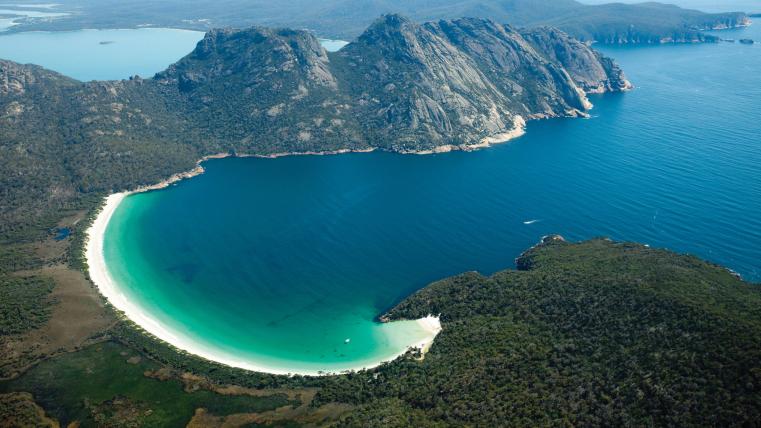
Wineglass Bay is one of the most famous Tasmania beaches, and it truly earns the hype. This crescent-shaped shoreline sits inside Freycinet National Park, with soft white sand and glowing turquoise water. Pink granite peaks rise behind the bay, so the views feel unreal from every angle. Since you must walk to reach the beach, it stays quieter than most iconic spots. The hike also makes arriving even more rewarding, especially on a sunny day.
Bay of Fires / Binalong Bay
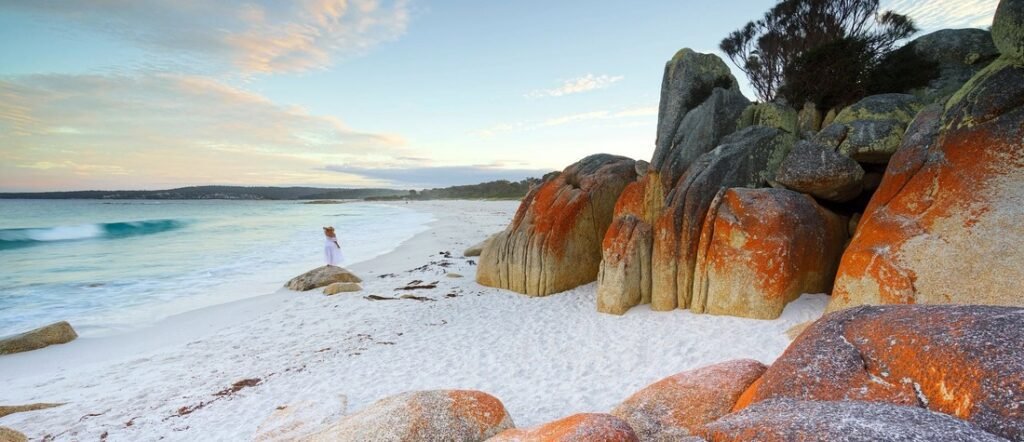
The Bay of Fires is known for its brilliant white sand, clear blue water, and huge granite boulders covered in bright orange lichen. Because the coastline stretches for miles, you can always find your own cove or calm corner. The water often looks crystal clear, which makes this area great for swimming and snorkeling. It’s also perfect for beachcombing, slow coastal walks, and dreamy photo stops. If you want that “wow” scenery, this beach delivers every time.
Friendly Beaches
Friendly Beaches sit near the entrance to Freycinet National Park, yet they feel wild and open. These long stretches of white sand stay far less crowded than Wineglass Bay, so they’re ideal when you want space. The scenery feels peaceful, with dunes behind you and ocean views straight ahead. Since the shoreline runs for miles, it’s perfect for long walks and relaxed picnics. It’s also a great choice if you want a beautiful beach without a big hike.
Family-Friendly and Accessible Options
Boat Harbour Beach
Boat Harbour Beach on Tasmania’s northwest coast feels like a hidden gem. It sits in a sheltered cove, so the water often stays calm and clear. That makes it a great spot for families who want an easier swim day. In summer, the beach can have patrols on weekends, which adds extra peace of mind. With turquoise water and soft sand, it also looks like a postcard in real life.
Seven Mile Beach
Seven Mile Beach is a popular choice near Hobart, especially for visitors who want an easy beach day close to the city. The beach feels wide and open, with plenty of space to spread out. Since the waves are usually gentle, it’s great for families and casual swimmers. At the same time, the open shoreline attracts kite surfers when the wind picks up. It’s also perfect for long walks because the sand stretches on and on.
Kingston Beach
Kingston Beach is another easy option close to Hobart, and it works well for a low-effort beach day. The shoreline feels relaxed, and the water often stays calm enough for swimming. Since it’s close to parks, cafes, and local amenities, it’s a convenient spot for families. It’s also great for picnics and sunset walks along the sand. If you want an accessible beach with a local feel, Kingston is a solid pick.
Surfing and Wilderness Beaches
Clifton Beach & Carlton Beach
Clifton Beach and Carlton Beach sit near Hobart, and both are popular surfing spots. These beaches often get consistent waves, which makes them great for learning and building confidence. Since many surfers visit regularly, the vibe feels active but still friendly. They can also have patrols at times, depending on the season and conditions. If you want a surf beach close to town, these are two of the best options.
Ocean Beach
Ocean Beach is Tasmania’s longest beach, stretching over 30 kilometers along the wild west coast. The scenery feels dramatic, with endless sand, heavy waves, and open Southern Ocean views. Because the area is so exposed, the wind and surf can feel powerful. That said, it’s one of the best beaches in Tasmania for solitude and rugged coastal photos. If you want untamed beauty, Ocean Beach is the place.
Shipstern Bluff
Shipstern Bluff is one of Tasmania’s most famous surf locations, but it’s only for experienced surfers. The wave is massive and challenging, and the area feels remote and rugged. Since you need to hike to access the break, it stays wild and undeveloped. Even if you don’t surf, the location still draws visitors who want to witness the power of the ocean. It’s a true bucket-list spot for big-wave fans.
Tasmania Beaches at a Glance
Tasmania beaches offer every kind of coastline, from calm family bays to wild ocean views. To make it easier, use this quick guide to match the right beach to your style.
- Iconic must-see beach: Wineglass Bay Beach
- Most photogenic coastline: Bay of Fires / Binalong Bay
- Quiet strolls and wide-open sand: Friendly Beaches
- Family swim favorite: Boat Harbour Beach
- Closest beaches to Hobart: Seven Mile Beach and Kingston Beach
- Surf-friendly spots near Hobart: Clifton Beach and Carlton Beach
- Wild west coast scenery: Ocean Beach
- Big-wave spectacle: Shipstern Bluff
Tasmania Beach Safety Tips
Tasmania beaches are beautiful, but conditions can change quickly. Some beaches stay calm, while others get strong waves and fast-moving currents. Because of that, it helps to stay alert, especially if you plan to swim.
If lifeguards are on duty, swim between the flags whenever possible. It’s also smart to watch the water for a few minutes before going in. That way, you can spot rips, shifting waves, or sudden drop-offs. On wilder beaches, staying close to shore and avoiding rough surf can make your day safer and more enjoyable.
When in doubt, choose a more sheltered beach for swimming. For example, Boat Harbour Beach and Kingston Beach often feel calmer than exposed west coast beaches.
Tasmania Ocean Temperature and Swimming Tips
Tasmania has cooler ocean temperatures than most of mainland Australia. Even in summer, the water can feel cold at first. Still, many visitors swim on warm days, especially in sheltered bays with lighter wind.
For longer swims, a wetsuit can make a big difference. It helps you stay comfortable, and it also extends the time you can spend in the water. If you prefer a quick dip instead, that works too. Afterward, a towel and a light jacket or windbreaker can feel surprisingly helpful, even on sunny beach days.
Best Tasmania Beaches for Swimming vs Scenic Walks
Tasmania beaches can feel calm and swimmable in one area, yet wild and dramatic in another. Because conditions change fast, it helps to pick your beach based on what you want to do.
Great Beaches for Swimming
These beaches often feel more sheltered and comfortable for a dip:
- Boat Harbour Beach – Clear water and a protected cove feel
- Seven Mile Beach – Wide shoreline with gentle waves
- Kingston Beach – Easy access and a relaxed local vibe
Top Beaches for Scenic Walks and Views
These beaches shine when you want photos, cliff views, and long beach walks:
- Wineglass Bay Beach – Famous views and a rewarding walk in
- Bay of Fires / Binalong Bay – Orange boulders and stunning coastline
- Friendly Beaches – Quiet stretches with lots of space
- Ocean Beach – Wild west coast scenery and endless sand
Best Tasmania Beach Photo Spots
Tasmania beaches feel made for photography, especially when the light hits just right. For the most dramatic shots, aim for early morning or late afternoon when the colors look softer.
- Wineglass Bay Lookout – One of Tasmania’s most iconic coastal views
- Bay of Fires Rocks – Bright orange boulders and clear blue water
- Friendly Beaches Shoreline – Wide sand and peaceful open space
- Ocean Beach West Coast Views – Big skies, rolling waves, and rugged drama
- Shipstern Bluff Area – Powerful coastal scenery with a remote feel
What to Pack for a Tasmania Beach Day
Tasmania beaches can feel sunny one minute and windy the next, so packing a few extras helps. Even in summer, the air and water often stay cooler than people expect. With that in mind, a simple beach bag can make your day much more comfortable.
Here’s what to bring to Tasmania beaches:
- Light jacket or windbreaker (coastal wind can be strong)
- Swimsuit + towel for swimming or sunbathing
- Sunscreen + sunglasses + hat (the sun still hits hard)
- Water bottle and snacks for longer beach walks
- Comfortable walking shoes if you plan to hike in
- Reef shoes (optional) for rocky areas and uneven shoreline
- Wetsuit (optional) if you want a longer swim
Final Thoughts on Tasmania Beaches
Tasmania beaches offer some of the most unforgettable coastline scenery in Australia. From iconic bays like Wineglass Bay to wild west coast stretches like Ocean Beach, every region brings a different vibe. Some beaches feel perfect for swimming and relaxing, while others shine during long walks and scenic photo stops. Since Tasmania stays quieter than many mainland beach areas, it’s also easy to find peaceful spots with room to breathe. If you love rugged nature, clear water, and jaw-dropping views, Tasmania beaches deserve a spot on your bucket list.
Frequently Asked Questions About Tasmania Beaches
What are the best Tasmania beaches to visit?
Some of the best Tasmania beaches include Wineglass Bay Beach, Bay of Fires / Binalong Bay, Friendly Beaches, Boat Harbour Beach, Seven Mile Beach, and Ocean Beach. Since each one offers a different experience, it helps to choose based on swimming, scenery, or beach walks.
Are Tasmania beaches good for swimming?
Yes, many Tasmania beaches are great for swimming, especially in sheltered bays. Boat Harbour Beach and Kingston Beach often feel calmer than exposed west coast beaches. Still, the water can feel cold even in summer, so many people prefer quick dips or a wetsuit.
Is the ocean cold in Tasmania?
Tasmania has cooler ocean temperatures than mainland Australia. Even during summer, the water can feel chilly at first. For longer swims, a wetsuit can keep you warm and comfortable.
When is the best time to visit Tasmania beaches?
Late summer and early autumn are some of the best times to visit Tasmania beaches. During February to April, the weather often feels pleasant while crowds drop compared to peak summer. Spring also works well if you want fewer visitors and fresh coastal scenery.
Are Tasmania beaches crowded?
Many Tasmania beaches stay quieter than popular mainland destinations. Iconic spots like Wineglass Bay can still draw visitors, especially in summer. Even so, beaches like Friendly Beaches and Ocean Beach often feel open and peaceful.
Are there family-friendly beaches in Tasmania?
Yes, Tasmania has several family-friendly beaches with easier access and calmer conditions. Seven Mile Beach and Boat Harbour Beach are popular picks for families. Kingston Beach is another easy option close to Hobart with a relaxed atmosphere.
Are Tasmania beaches safe?
Many beaches are safe, but conditions can change quickly. It helps to watch for rips, strong waves, or sudden drop-offs before swimming. When lifeguards are present, swimming between the flags is always the safest choice.
What is the most photogenic beach in Tasmania?
Bay of Fires is one of the most photogenic beach areas in Tasmania because of its orange lichen-covered rocks and bright blue water. Wineglass Bay is another top photo spot thanks to its famous lookout views. For a more dramatic mood, Ocean Beach delivers wild west coast scenery and big skies.
Related Posts
 The Most Beautiful Beaches of Queensland Australia
 The Most Beautiful Beaches of Victoria Australia
 The Most Beautiful Beaches of Kangaroo Island
 Australia’s Coral Coast – Explore the Most Beautiful Beaches
 The Best Burleigh Heads Guide
 Australia’s Northwestern Coast: The Most Beautiful Beaches of Exmouth
Pingback: Lenora
For photography-focused travel, Tasmania’s east coast often provides the best balance of access, color, and calmer conditions. Locations like Wineglass Bay, Bay of Fires, and Friendly Beaches offer clear water, bright sand, and excellent sunrise and sunset lighting. The west coast, including Ocean Beach, delivers powerful scenery with dramatic skies and rugged Southern Ocean waves, which works beautifully for moodier landscape photography. Many travelers interested in Tasmania beach photography visit both regions to capture the full range of coastal scenery while enjoying quieter Australian beach destinations.
Pingback: Flossie
Most visitors get the best Tasmania travel experience by combining a couple of regions rather than staying in just one place. Hobart works well as a base for nearby beaches like Seven Mile Beach, Kingston Beach, and day trips along the east coast. Meanwhile, Freycinet National Park is ideal for iconic Tasmania coastal scenery such as Wineglass Bay and Friendly Beaches. Because driving distances are manageable, a short road trip lets travelers experience both sheltered swimming beaches and Tasmania’s wilder west coast landscapes, creating a more complete Australia beach itinerary.