Find the right beach umbrella or sunshade for every getaway.
A day at the beach should feel relaxing; but long hours in the sun can quickly drain your energy. That’s why the Best Beach Umbrellas are essential. They provide reliable shade, block harsh UV rays, as well as add comfort to your time on the sand. Moreover, the Best Beach Umbrellas keep your spot cool and inviting, even on the hottest afternoons. In fact, they can transform your beach day from tiring to enjoyable.
In addition, beach umbrellas are more than simple shade makers. They create a gathering spot for family and friends, give kids a place to cool down, in addition to offering a cozy escape for reading or napping by the waves. For example, an oversized umbrella works well for groups, while a lightweight design is perfect for solo beach days. On the other hand, a canopy offers more privacy and coverage.
Ultimately, choosing the Best Beach Umbrellas comes down to balancing function and style. Modern options focus on features like wind resistance, portability, and UV-blocking fabrics. As a result, you can enjoy long hours at the beach without sacrificing comfort. With that in mind, this guide highlights the Best Beach Umbrellas that deliver quality, durability, and ease of use—so you can spend more time enjoying the shore and less time fighting with your shade.
You can find the best beach gear here, or visit us on Pinterest

Which Type of Beach Shade Is Right for You?
Portable beach shades come in several styles, and each one serves a different purpose. The right choice depends on how many people need coverage, how far you must carry it, and whether you value open views, privacy, or maximum shade.
| Type of Beach Shade | Best For | Main Advantage | Keep in Mind |
|---|---|---|---|
| Traditional Umbrella | Couples and short beach trips | Familiar design and quick setup | Requires a dependable sand anchor |
| Umbrella Shelter | Solo travelers and sporting events | Side panels block low-angle sun | Can feel bulky when packed |
| Beach Cabana | Families and small groups | Open sides provide shade and airflow | Usually takes up more space |
| Pop-Up Beach Tent | Families with young children | Privacy, ventilation, and protected floor space | Enclosed designs may feel warmer |
| Large Sunshade | Groups and all-day outings | Provides the most shared coverage | May require extra setup space or specific wind conditions |
No single style works for every beachgoer. A lightweight umbrella may be ideal for a quick afternoon by the water, while a cabana or large sunshade is usually more practical for families spending the entire day on the sand.
Traditional Beach Umbrellas
Traditional umbrellas are ideal for couples, solo travelers, and anyone who wants familiar shade without a complicated setup. Most have a center pole, adjustable tilt, and a round canopy that can be repositioned as the sun moves.
They are generally easier to carry than larger shelters, but they must be paired with a dependable sand anchor or weighted base. Vented canopies can help manage light breezes, although every umbrella should be closed when conditions become too windy.
Umbrella Shelters
Umbrella shelters combine the structure of a traditional umbrella with angled side panels that provide additional coverage. They are especially useful when the sun is low, the breeze is blowing from one direction, or you want a little more privacy.
Many models include windows, ground stakes, and interior storage pockets. Their enclosed shape provides more protection than an upright umbrella, but they can be heavier and bulkier to transport.
Beach Cabanas
Beach cabanas provide a wide roof with open sides, creating generous shade without blocking the ocean breeze. They work particularly well for families and small groups who want enough room for chairs, towels, coolers, and children’s beach gear.
Most portable cabanas use a center pole or corner supports with sand pockets for stability. They provide an airy, social setup, although their larger footprint may not be practical on crowded beaches.
Pop-Up Beach Tents
Pop-up beach tents create a more private and enclosed space on the sand. They are popular with families who need a protected area for young children, naps, changing clothes, or storing belongings away from direct sunlight.
Look for mesh windows that improve airflow and sand pockets or stakes that keep the tent secure. Some designs open almost instantly, while others require flexible poles and take more practice to assemble.
Large Sunshades
Large sunshades are designed for families, groups, and long days by the water. Instead of a traditional center pole, many use stretched fabric supported by corner poles, sandbags, or the ocean breeze.
These shades offer expansive coverage and plenty of usable space underneath. However, they require more room to install, and some beaches restrict oversized canopies or wind-powered shade systems. Always check local beach regulations before setting one up.
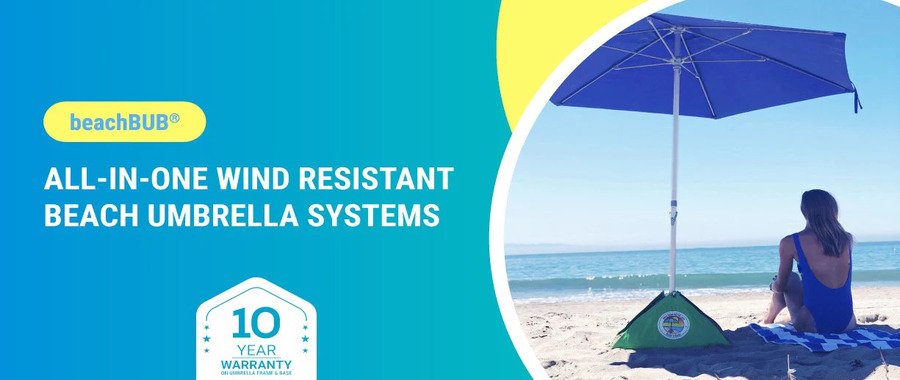
beachBUB ClearWater All-In-One – Best Traditional Umbrella
The beachBUB ClearWater is a strong choice for travelers who want the familiar coverage of a traditional umbrella with a more dependable anchoring system. Its 7.5-foot canopy provides UPF 50+ protection, while the aluminum pole and fiberglass ribs are designed for repeated beach use.
The complete system includes the umbrella, sand-filled ULTRA base, oversized carrying bag, shovel, and sand-removal tool. When properly filled and installed, the base complies with the ASTM F3681 beach-umbrella safety standard. The open design also preserves airflow and unobstructed ocean views better than a tent or enclosed shelter.
Why It Stands Out: Complete anchoring system, UPF 50+ canopy, generous coverage, durable frame, and padded carrying strap.
Trade-Off: Filling the base takes more effort than installing a simple screw anchor, and the umbrella cannot be repositioned easily once the base is full.
Best For: Couples, families, and frequent beachgoers who prefer a traditional umbrella with a substantial sand anchor.
View the beachBUB ClearWater Umbrella System
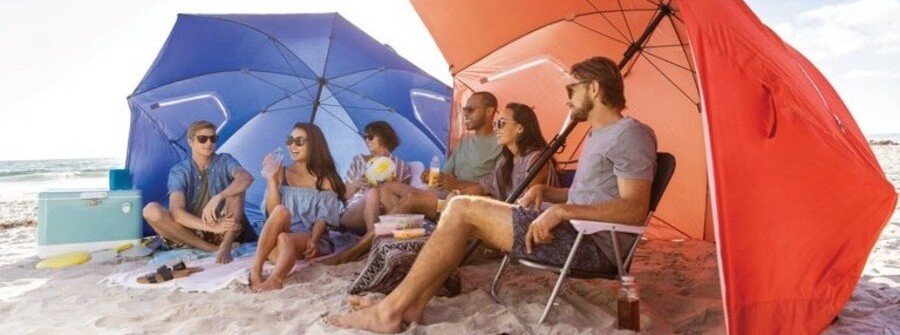
Sport-Brella Premiere XL – Best Umbrella Shelter
The Sport-Brella Premiere XL combines the quick-opening shape of an umbrella with the additional coverage of a portable shelter. Its oversized 9-foot canopy and two side panels help block overhead sunlight, low-angle rays, light wind, and blowing sand. Zippered windows can be opened for better airflow and visibility.
The UPF 50+ canopy is supported by a heavy-duty center pole with an auger-style tip. Ground stakes and tie-down cords provide additional stability, while interior pockets keep phones, sunscreen, and other small items away from the sand. It also works beyond the beach for sporting events, festivals, camping trips, and backyard gatherings.
Why It Stands Out: Large canopy, adjustable side panels, ventilation windows, UPF 50+ protection, storage pockets, and versatile setup.
Trade-Off: It is heavier and bulkier than a traditional umbrella, and the extended panels require additional space.
Best For: Travelers who want more coverage and privacy without setting up a complete beach tent.
View the Sport-Brella Premiere XL
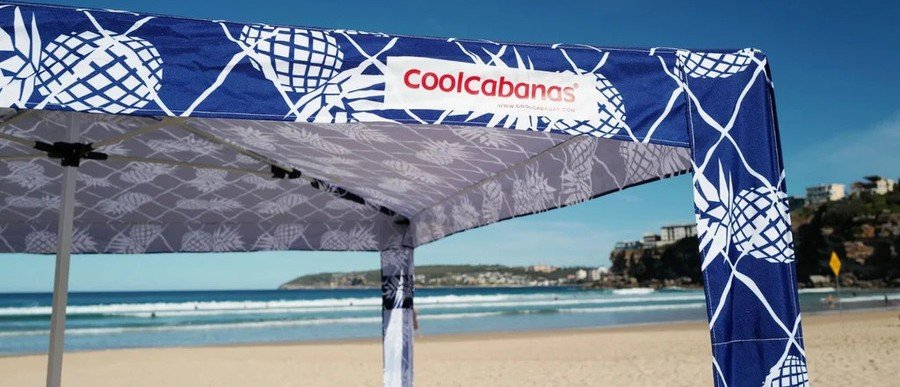
CoolCabana 5 – Best Beach Cabana
The CoolCabana 5 creates a spacious, open-sided area for families and small groups without blocking the ocean breeze. Its large canopy provides approximately 64 square feet of UPF 50+ shade, leaving enough room underneath for chairs, towels, a cooler, and beach gear.
A center pole supports the roof while the four extended corners are secured with sand-filled pockets. One person can usually assemble it in a few minutes, and the open design makes it easy to watch children or enjoy an unobstructed view of the water. When the beach day is over, the components fold into a single carrying case.
Why It Stands Out: Generous shade, open airflow, UPF 50+ fabric, sand-pocket anchoring, and manageable one-person setup.
Trade-Off: The long carrying case can feel awkward over uneven terrain, and the cabana requires a larger footprint than an umbrella.
Best For: Families and groups who want airy, resort-style shade with space for chairs and beach supplies.
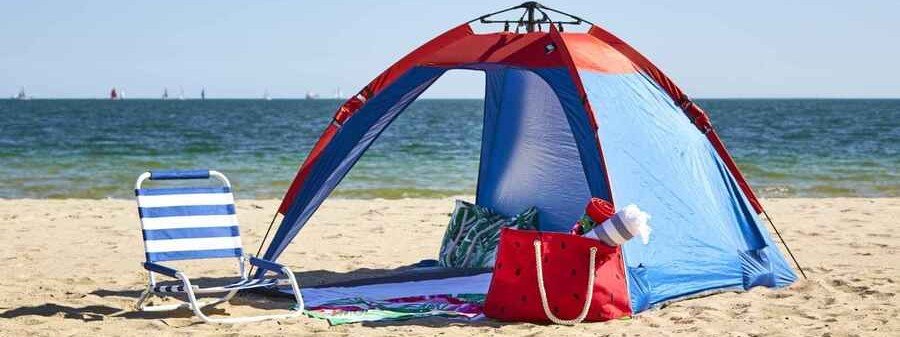
Oileus XL Beach Tent – Best Family Beach Tent
The Oileus XL creates a protected space for families who need more than overhead shade. Its extended floor and partially enclosed design provide room for two adults with children, while mesh windows allow ocean breezes to move through the interior. The floor is especially helpful for playtime, naps, and keeping smaller beach items out of the sand.
Despite its roomy interior, the tent weighs approximately four pounds and folds into an included carrying bag. An automatic frame helps it open quickly, while six sand pockets, stakes, and guy lines provide several ways to secure it properly.
Why It Stands Out: Lightweight design, roomy interior, extended floor, mesh ventilation, fast setup, and multiple anchoring points.
Trade-Off: The lower, partially enclosed interior can feel warmer than an open umbrella or cabana, and folding it may require practice.
Best For: Families with young children who want shade, a clean floor area, and protection on multiple sides.
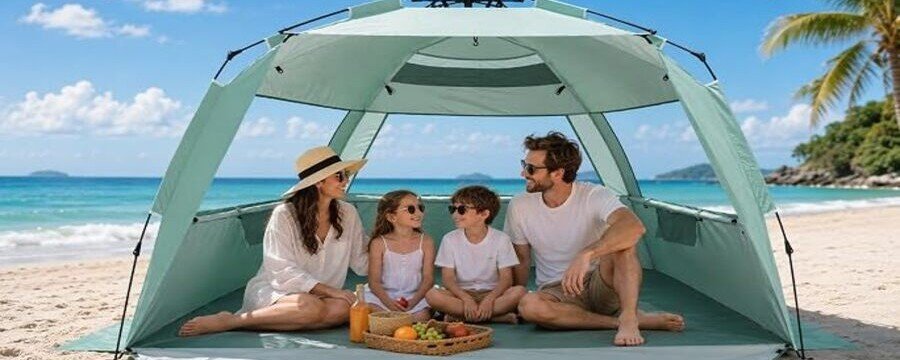
WhiteFang 3-Person Beach Tent – Best Budget Option
The WhiteFang Beach Tent provides useful shade, ventilation, and privacy without the higher price of many family shelters. Its UPF 50+ fabric covers three sides, while large mesh windows can be opened to encourage airflow or closed when more privacy is needed.
An extended floor creates additional room for children, towels, and beach supplies. It can also zip upward to close the front of the tent when changing clothes or stepping away briefly. Three sand pockets, steel stakes, sand stakes, and guy lines provide several anchoring points.
Why It Stands Out: Affordable price, UPF 50+ coverage, mesh ventilation, closable front panel, interior storage, and multiple anchoring accessories.
Trade-Off: The flexible-pole setup takes more effort than an automatic pop-up frame and is usually easier with two people.
Best For: Budget-conscious couples and small families who want both shade and privacy.
Shibumi Shade Classic – Best Large Sunshade
The Shibumi Shade Classic provides expansive coverage without the collection of poles, ropes, and stakes found on many large canopies. Its curved aluminum frame supports a free-moving canopy that floats above the group using the ocean breeze. The open design preserves airflow and leaves approximately 150 square feet of usable UPF 50+ shade beneath it.
Despite its size, the entire shade weighs around four pounds and packs into a carry-on-sized bag. One person can usually assemble it within a few minutes, making it practical for families who need broad coverage without hauling a heavy shelter across the sand.
Why It Stands Out: Extensive coverage, lightweight travel size, UPF 50+ fabric, open airflow, and quick one-person setup.
Trade-Off: The canopy relies on a steady breeze unless used with the Wind Assist accessory. Some beaches restrict wind-powered shades or oversized canopies, so local regulations should always be checked before traveling.
Best For: Families and groups who want maximum shade with minimal packed weight.
View the Shibumi Shade Classic
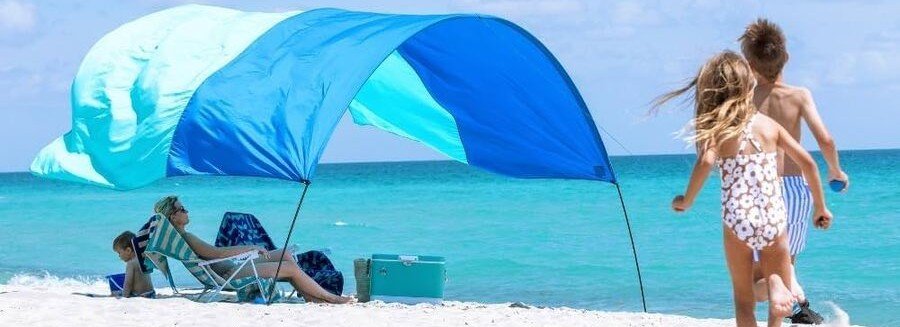
How to Choose the Right Beach Umbrella or Sunshade
The right beach shade should provide enough coverage without becoming difficult to carry, assemble, or secure. Consider how many people will use it, how far you normally walk across the sand, and whether you prefer an open design or additional privacy.
Size and Shade Coverage
A larger canopy does not always create better usable shade. The sun changes position throughout the day, so consider how easily the umbrella can tilt or the shelter can be repositioned. Couples may be comfortable beneath a 6- to 7.5-foot umbrella, while families and groups often benefit from a cabana or sunshade with a clearly stated shaded area.
UPF Protection
Look for fabric rated UPF 50+ when sun protection is a priority. This rating indicates that the material blocks most ultraviolet radiation passing directly through the fabric. However, sunlight can still reach you from the sides or reflect from sand and water, so continue using sunscreen, protective clothing, hats, and sunglasses beneath the shade.
Wind Resistance and Anchoring
A vented canopy can help release some wind pressure, but the anchor is what keeps a traditional umbrella connected to the sand. Look for sandbags, weighted bases, auger-style anchors, stakes, or multiple tie-down points appropriate for the shelter’s design.
For traditional umbrellas, the CPSC recommends looking for an anchor labeled as meeting the ASTM F3681 safety standard for wind speeds up to 30 mph. Even with a compliant system, close the canopy immediately if it becomes unstable, conditions worsen, or you leave the setup unattended.
Packed Weight and Portability
Check both the packed weight and folded length. A four-pound tent may be easy to carry, but a long cabana bag can still feel awkward on stairs, dunes, or uneven walkways. Travelers arriving by plane should also confirm that the folded shelter will fit inside their luggage or meet airline baggage requirements.
Setup and Breakdown
Some shades open automatically, while others use flexible poles, sand pockets, or several tie-down points. Quick setup is helpful, but breakdown matters just as much at the end of a long day. Choose a design you can confidently assemble, secure, and pack away without relying on extra help.
Airflow and Privacy
Open umbrellas and cabanas provide the strongest airflow and widest ocean views. Tents and umbrella shelters offer better privacy and protection from low-angle sunlight but can retain more heat. Mesh windows, roll-up panels, and adjustable sidewalls provide a useful balance between ventilation and coverage.
Beach Umbrella and Sunshade Safety
A properly secured shade protects more than your own beach setup. Loose umbrellas, poles, stakes, and canopies can become dangerous when sudden gusts move through an open shoreline.
- Follow the manufacturer’s setup instructions and use every required anchor, sand pocket, stake, or tie-down.
- Fill sandbag bases completely rather than estimating that they are heavy enough.
- Never rely on pushing a bare umbrella pole into the sand without an appropriate anchor.
- Use an anchor that is approved for the size of your umbrella canopy.
- Close the canopy if the pole begins leaning, the fabric starts pulling sharply, or conditions become gusty.
- Never leave an open umbrella, cabana, tent, or sunshade unattended.
- Position stakes and ropes where they will not create a tripping hazard.
- Keep large shelters away from lifeguard sightlines, emergency access areas, and marked walkways.
- Check local beach regulations because some destinations restrict oversized tents, cabanas, or wind-powered shades.
- Collapse the shade before repositioning it rather than dragging or carrying it while fully open.
Even products advertised as wind-resistant have limits. When conditions become unpredictable, taking the shelter down is safer than relying on its anchor or frame.
How to Clean and Store Beach Umbrellas and Sunshades
Sand, salt, moisture, and sunscreen residue can shorten the life of beach-shade fabric and hardware. A few minutes of care after each trip will help prevent mildew, corrosion, stiff hinges, and damaged seams.
Shake out loose sand before folding the canopy or tent. If the fabric or frame has been exposed to saltwater, rinse it gently with fresh water and allow every piece to dry completely. Never pack a damp shelter into its carrying bag for long-term storage.
Check poles, ribs, hinges, stakes, and anchor connections regularly. Remove trapped sand, tighten loose fasteners, and replace bent or damaged components before the next trip. Follow the manufacturer’s care instructions before using soap or placing any fabric in a washing machine.
Store the clean, dry shade in its carrying case in a cool location away from direct sunlight. Keep stakes, tools, and anchor pieces together so nothing is missing when you reach the beach.
Beach Umbrella FAQs
What size beach umbrella is best?
A 6- to 7.5-foot canopy is generally suitable for one or two people. Families and groups may prefer a larger umbrella, cabana, or sunshade that lists its total shaded area.
Is a beach umbrella better than a beach tent?
An umbrella provides better airflow and is usually faster to reposition. A beach tent offers more privacy, side coverage, and protected floor space, making it useful for families with young children.
What does UPF 50+ mean?
UPF measures how much ultraviolet radiation passes through fabric. Material rated UPF 50+ blocks most UV rays that strike the fabric directly, although reflected and side-angle sunlight can still reach people underneath it.
Do I still need sunscreen under a beach umbrella?
Yes. Sand and water can reflect ultraviolet radiation into shaded areas. Sunscreen, protective clothing, a wide-brimmed hat, and sunglasses should still be used beneath an umbrella, tent, or canopy.
Can beach umbrellas withstand strong wind?
Some models and anchors are designed for better performance in breezy conditions, but no portable shade is safe in every wind speed. Close or dismantle it immediately if the frame, canopy, poles, or anchors become unstable.
How do I keep a beach umbrella from blowing away?
Use an anchor or weighted base designed for the umbrella’s canopy size. Install it according to the manufacturer’s directions, fill sandbags completely, and never rely on placing a bare pole directly into the sand.
Can I take a beach umbrella or sunshade on an airplane?
Possibly, but packed dimensions matter more than the open size. Compare the carrying case with your airline’s checked-baggage limits, and pack sharp stakes or tools only where permitted.
Are beach tents and cabanas allowed everywhere?
No. Some beaches limit canopy size, prohibit certain wind-powered shades, or restrict shelters during crowded seasons. Check the destination’s current beach rules before traveling.
Related Posts
 The Best Inflatables You’ll Absolutely Love for the Beach
 The Best Beach Drink Accessories You’ll Love This Summer
 The 10 Tested and Proven Best Beach Chairs You’ll Love
 The Best Essentials For Your Alaska Cruise You’ll Love
 The Most Thoughtful Traveler Gifts Everyone Will Love
 The Best Womens Beach Clothes & Outfit Essentials You’ll Love
I’ve lost more than one inexpensive beach umbrella to a sudden gust, so the stability details were especially helpful. The beachBUB sounds dependable for windy shorelines, while the CoolCabana seems better when several people need shade. Portability matters too, since carrying heavy gear across soft sand can become exhausting. If you usually visit the beach alone, which option offers the best balance of easy setup, reliable anchoring, and enough shade for one person?
For one person, I would choose a traditional umbrella with a strong sand-anchor system, especially if you want something compact and easy to reposition. The beachBUB offers excellent stability, although filling its base adds an extra setup step. A CoolCabana provides more coverage, but it requires more space and can be less convenient for a quick solo visit. Whichever style you choose, follow its anchoring instructions and close it when winds become strong or unpredictable. No portable beach shade is completely windproof.
Beach canopies often feel cooler because they provide broader shade coverage and better airflow through mesh panels or vented sides, which helps reduce heat buildup underneath. Many beach travelers choose canopies for extended stays since they offer additional sun protection, privacy, and space for families or gear. Lightweight designs have improved significantly, making transport easier while still maintaining durability and UV resistance. This combination of shade coverage, ventilation, and portability continues to make beach canopies a popular option for full-day coastal outings.
Durable beach umbrellas typically feature fiberglass ribs, rust-resistant aluminum poles, reinforced stitching, and UPF-rated canopy fabric designed for repeated sun and salt exposure. Wind vents, strong anchoring systems, and quality carry cases also contribute to longevity by reducing stress on the frame during use and transport. Investing in well-constructed beach gear often improves comfort and reliability during coastal trips, especially in breezy seaside environments. High-quality sun protection equipment supports safer beach days while maintaining consistent performance over multiple seasons.