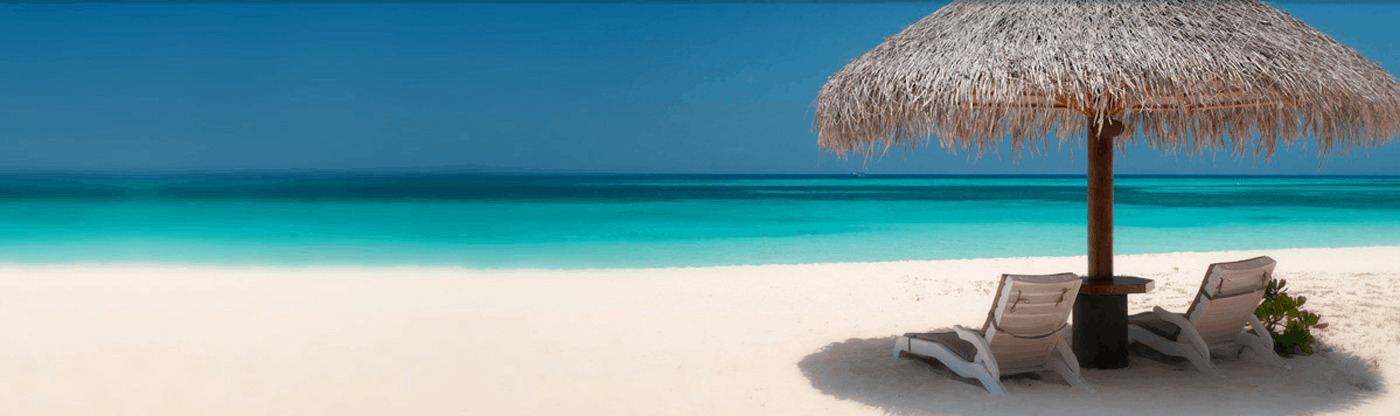
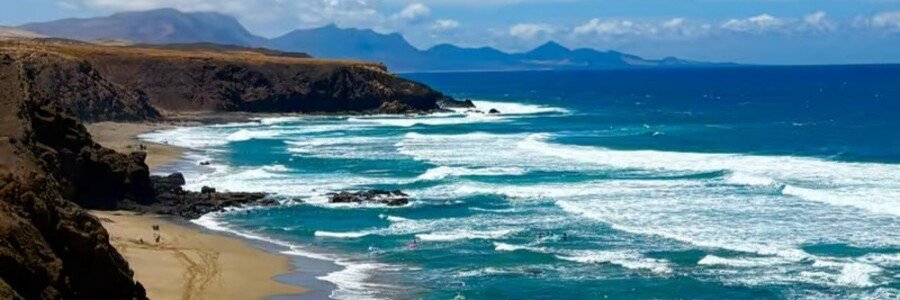
Relax on calm beaches with sunny days and coastal walks.
Caleta de Fuste sits only ten minutes south of the airport on Fuerteventura’s east coast. Its horseshoe-shaped beach has calm, shallow water. A large harbor wall blocks the strong Atlantic waves and keeps the bay gentle. For this reason, families, swimmers, and sunbathers can enjoy the water without heavy surf. Beside the sand, a wide path leads to beach bars, seafood restaurants, and the marina.
There is also plenty to do beyond the beach. You can visit an 18th-century stone fort that once guarded the coast from pirates. For a change of pace, play a round at one of two golf courses or explore the island’s volcanic land. The marina offers dolphin-watching trips, jet ski rentals, and scuba diving. With beaches, tours, and island sights close by, the town makes a handy base for your trip.
Explore our complete Canary Islands guide to discover more beautiful beaches, islands, and trip ideas.
Caleta de Fuste Weather and Best Time to Visit
The area has warm weather and sunny days throughout the year. Its spot on Fuerteventura’s east coast also brings mild winters and a steady sea breeze. You can enjoy the beach, golf, and outdoor activities in every season. Temperatures change little, but crowds, prices, and ocean conditions vary by month.
Spring (March to May)
Warm days and little rain make this a lovely time to visit. Beaches stay quieter than they do in summer, and the mild weather suits coastal walks and sightseeing. You can also try water sports without the peak-season crowds. Late spring brings warmer ocean water and longer days.
Summer (June to August)
Long, sunny days bring temperatures in the low 80s°F (upper 20s°C). A steady Atlantic breeze often keeps the heat from feeling too strong. The sheltered bay has calm water for swimming, paddleboarding, and snorkeling. Summer also brings the largest crowds and highest hotel prices, so book early.
Autumn (September to November)
The ocean holds much of its summer warmth through early autumn. Warm water and mild air create good conditions for swimming and boat trips. Crowds also begin to thin as the season moves on. So, choose these months if you want beach weather with a quieter feel.
Winter (December to February)Mild days and regular sunshine offer a warm break from colder parts of Europe. Daytime weather often suits beach walks, outdoor meals, and island tours. Nights can feel cool, so pack a light jacket or sweater. You may also see a few rainy or cloudy days, but long periods of rain remain less common.
Best Time to Visit Caleta de Fuste
Visit in spring or autumn for warm weather and smaller crowds. These seasons work well for beach days, coastal walks, sightseeing, and water sports. Hotel prices may also cost less than they do during the summer rush.
Choose summer for the warmest air and long days beside the water. Visit from December through February for mild winter sun and a slower pace. No matter when you go, bring a light layer for windy evenings.
Why Visit Caleta de Fuste
The region offers a calm beach, an active marina, and a central spot on Fuerteventura’s east coast. Families can enjoy the shallow bay, while couples can walk beside the water or dine near the harbor. Golf, boat trips, and water sports add more ways to fill each day.
Swim in a Sheltered Bay
A large harbor wall blocks much of the strong Atlantic surf. This helps the horseshoe-shaped bay stay calm and shallow on many days. Young children and new swimmers can enter the water with more ease. The gentle setting also works well for floating, paddleboarding, and beginner snorkeling.
Walk Along the Waterfront
A paved path follows the coast and links the beach with the marina, restaurants, and nearby hotels. You can take a quiet morning walk, stop for lunch with a sea view, or watch boats return to the harbor. The flat route makes the waterfront easy to explore on foot. It also gives you plenty of places to stop without needing a car.
Try Water Sports and Boat Trips
The marina serves as the main base for many activities on the water. You can join a dolphin-watching cruise, rent a jet ski, take a sailing trip, or also book a scuba lesson. Calm water near the bay helps beginners feel more at ease. Skilled guests can head farther from shore for diving and open water trips.
Visit an Old Coastal Fort
The Castillo de San Buenaventura stands beside the shore and dates to the 18th century. The small stone tower once helped guard the coast from pirate attacks. You can walk around the outside and view its thick walls near the water. It also adds a piece of local history to a day at the beach.
Play Golf Near the Coast
Two 18 hole golf courses sit a short drive from the bay. Fuerteventura Golf Club features palms, lakes, and wide fairways, while Golf Club Salinas de Antigua crosses dry volcanic land. Both courses welcome a range of skill levels. The mild climate also allows golfers to play through most of the year.
Explore More of Fuerteventura
The central east coast location makes island trips easier. You can drive north toward the dunes near Corralejo or travel south to the beaches of the Jandía Peninsula. Volcanic viewpoints, salt pans, and inland villages also sit within reach. Staying close to the airport cuts down on transfer time at the start as well as the end of your trip.
The Best Beaches in Caleta de Fuste
The coast has calm bays, long sandy shores, and dark volcanic coves. First, you can swim in the sheltered water near town. Next, follow the coast to quieter beaches with fewer services and more open views. Each stop offers a different way to enjoy Fuerteventura’s east coast.
Playa del Castillo
A wide curve of golden sand sits inside a large, sheltered bay. The harbor wall blocks much of the strong Atlantic surf, so the water often stays calm and shallow. For this reason, families and new swimmers can enter the sea with more ease. The beach also has sunbeds, umbrellas, showers, toilets, and nearby places to eat.
Next, walk along the path that circles the bay and leads toward the marina. You can rent a kayak, paddleboard, or pedal boat close to the sand. Children have plenty of room to play, while adults can relax and watch the boats. Afterward, stop at a waterfront café or visit the old stone fort beside the harbor.
Playa de la Guirra
Several curved sections of pale sand sit south of the marina. Stone breakwaters protect the shore and form calm lagoons for swimming. The water is often gentle, which works well for families and relaxed beach days. Wide sandy areas also give you room to spread out without feeling packed together.
Nearby, a paved path runs between the water, hotels, and Atlantico Shopping Centre. You can stop for lunch, buy beach supplies, or continue walking along the coast. The shore feels quieter than the main bay, yet useful services remain close. Later, the promenade offers clear ocean views during an evening walk.
Playa del Muellito
Dark sand and smooth volcanic pebbles line this small shore near Salinas del Carmen. Low white buildings, old salt pans, and a simple fishing dock shape the view. In fact, this stop feels far more local than the large resort beaches. The clear water also creates a sharp contrast with the dark coast.
The nearby Salt Museum explains how workers once collected sea salt by hand. Outside, you can walk beside the salt pans and see the skeleton of a large whale near the shore. Bring shoes that can handle pebbles and rough ground. Then, stop for seafood nearby or follow the coastal path for more sea views.
Playa Blanca
A long strip of light sand stretches between the airport and Puerto del Rosario. At about 875 metres long, it gives you plenty of room for a walk or a quiet spot by the water. Waves here feel stronger than those inside the sheltered bays. As a result, local surfers often use parts of the shore when conditions are right.
You can watch the surfers, walk beside the sea, or rest farther from the busiest areas. The open coast also catches more wind, so check the flags before swimming. Parking and basic services make the beach easy to visit by car. Still, the long shoreline rarely feels as enclosed as the beaches near the main resort.
Pozo Negro Beach
Dark sand and rounded pebbles cover this quiet shore at the end of a wide volcanic valley. White fishing houses sit close to the water, while old lava fields rise behind the village. By contrast, you will not find rows of resorts, beach clubs, or rental stands. The simple setting offers a look at the island’s older fishing culture.
Moderate waves and wind can affect swimming, so check the water before going in. You can also walk along the shore and study the dark volcanic land around the bay. After your walk, choose one of the local restaurants for fresh fish and sea views. Few tourists make the drive, which helps the village keep its slow pace.
Scenic Spots & Hidden Gems
The beach may draw you here, but the east coast holds much more. You can see an old defense tower, walk beside working salt pans, and find stone homes built by the island’s first people. Closer to town, a tidal pool and old lime kilns hide along the shore. Most of these places sit within a short walk or drive.
Castillo de San Buenaventura
This round stone tower has guarded the harbor since the early 1700s. Builders used dark volcanic rock and thick walls to protect the coast from pirate attacks. Although you cannot always enter, you can walk around the outside and study its simple design. The tower stands close to the sea, which also makes it an easy stop during a waterfront walk.
Next, follow the path around the harbor for views of the bay and marina. Morning light brings out the dark stone, while sunset adds warm color to the walls. Signs near the site share a little of its past. Best of all, you can visit without planning a separate trip away from town.
Caleta de Fuste Marina
Fishing boats, sailboats, and tour vessels fill this small harbor beside the main beach. You can walk along the docks and watch crews prepare for trips across the Atlantic. In the morning, boats leave for fishing and dolphin tours. Later, they return as cafés and restaurants begin to fill.
The harbor also gives you a clear view of the old stone tower and curved bay. Stop for lunch, book a boat trip, or sit near the water and watch the activity. Sea lions live in a managed pool near part of the marina, which may interest families. Still, you do not need to book an activity to enjoy the views and lively setting.
Salinas del Carmen and the Salt Museum
Rows of shallow salt pans stretch between black volcanic rock and the blue Atlantic. Workers guide sea water into the ponds, where the sun and wind slowly leave salt behind. The white salt creates a sharp contrast with the dark coast. For this reason, the site offers some of the most unusual photo views on the east side of the island.
Inside the museum, you can learn how families gathered and prepared sea salt by hand. Outside, paths lead past the pans, old buildings, and a whale skeleton near the shore. Strong wind and ocean spray are common, so bring a light layer. Check the opening hours before driving out, since museum times may change.
Caleta de Fuste Natural Pool
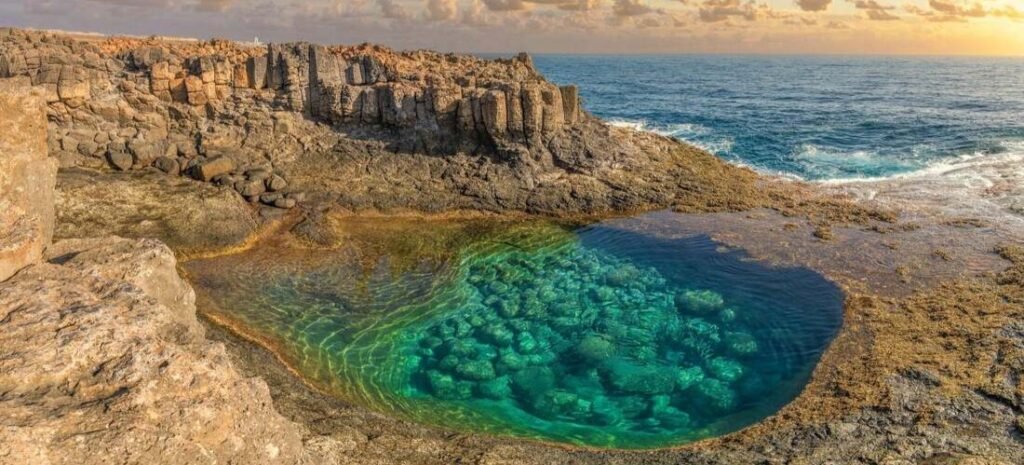
A round pool forms in the dark lava rock north of the main resort area. At low tide, the sea drops and leaves clear blue water inside the rocky edge. The bright water and black stone create a striking view. Since the pool appears only at the right tide, many people miss it during their stay.
Check a local tide chart and aim to arrive near low tide. Never enter when waves wash over the outer rocks, since a sudden surge can pull you toward the sea. Wear water shoes because the volcanic rock feels sharp and slick. Even when swimming is unsafe, you can view the pool from a safe distance and take photos.
La Guirra Lime Kilns
Old stone kilns stand beside the coastal path south of the marina. Workers once used these tall ovens to turn limestone into lime for buildings and water tanks. Their dark walls and wide openings reveal a side of local history that many beachgoers walk past. Today, the restored structures add an unusual stop to the seaside path.
You can reach them on foot while walking toward the southern beach and shopping centre. First, view the kilns from the path. Then, continue along the coast for views of the man-made lagoons and open Atlantic. The flat route works well when you want history and scenery without a long hike.
La Atalayita Archaeological Site
More than 100 low stone structures sit inside a rough field of old lava near Pozo Negro. The Mahos, the island’s first known people, used the settlement for homes, animal pens, storage, and shelter. Many rooms sit low against the ground to block strong wind. As you walk between them, you can see how people lived in this dry and rocky land.
Start at the visitor centre to learn what each type of building once held. Next, follow the marked route through the settlement and climb the nearby rise for a wide view. The dark lava field and bare hills make the site feel far removed from the coastal resorts. Entry is currently free, but check the museum’s official hours before making the drive.
Best Activities in Caleta de Fuste
Whether you enjoy relaxing on the water, exploring the coastline, or spending time outdoors, there’s no shortage of things to do. Calm seas, year-round sunshine, and easy access to the coast make it simple to fill your days with adventure or relaxation.
Water Adventures
Dolphin & Whale Watching: Boat excursions leave from the marina throughout the week, offering opportunities to spot dolphins and, during certain seasons, pilot whales. Many cruises also include swimming or snorkeling stops along the coast.
Scuba Diving & Snorkeling: The protected bay creates excellent conditions for beginners, while nearby reefs attract experienced divers. Explore volcanic rock formations, colorful fish, octopus, rays, and other marine life beneath the Atlantic.
Paddleboarding & Kayaking: Calm water makes this one of the best places on the island to enjoy paddleboarding or kayaking. Paddle along the shoreline, explore small coves, or simply enjoy the peaceful scenery.
Sailing & Catamaran Cruises: Spend a relaxing day on the Atlantic while taking in volcanic landscapes and coastal views. Many cruises include lunch, drinks, swimming, and snorkeling.
Outdoor Activities
Championship Golf: Two championship golf courses sit just minutes from the beach, offering year-round play with beautiful ocean and volcanic views. The mild climate makes golfing enjoyable in every season.
Coastal Walks: The waterfront promenade and nearby coastal paths provide beautiful views of the Atlantic while connecting beaches, the marina, and scenic viewpoints. It’s an easy way to explore the coastline at your own pace.
Local Experiences
Explore the Marina: Browse local shops, enjoy fresh seafood, watch excursion boats return to the harbor, or simply relax with a drink while overlooking the water. The marina remains one of the liveliest parts of town throughout the day.
Visit the Salt Museum: Learn about the island’s historic salt industry through restored salt pans, interactive exhibits, and coastal walking trails. It’s an interesting stop that combines local history with beautiful ocean scenery.
Best Day Trips from Caleta de Fuste
The central location makes it easy to explore both ends of Fuerteventura. Within a day, you can cross sand dunes, enter sea caves, tour an old capital, or visit a quiet volcanic island. Most places are easy to reach by car. Still, Isla de Lobos takes more planning because you must drive north and then catch a boat.
Corralejo Natural Park
Large dunes of pale sand spread across the northeast coast for several miles. The wind shapes the sand into smooth ridges, while turquoise water borders the other side of the road. You can climb a dune, walk across the soft sand, or stop at one of the long beaches. From higher points, look across the water toward Isla de Lobos and Lanzarote.
First, drive along the FV-1a and choose one of the marked roadside parking areas. Do not drive onto the dunes or park on protected land. Next, cross the sand on foot to reach the ocean. Bring water and sun protection because the open landscape has almost no shade.
The beaches face the Atlantic, so waves and currents can grow strong. Check the flags before swimming and stay near shore when conditions feel rough. Visit early in the morning for cooler sand and fewer people. Late afternoon also brings softer light across the dunes.
El Cotillo
This old fishing village offers two very different sides of the Atlantic coast. North of town, low lava rocks form shallow lagoons with pale sand and clear water. These sheltered pools often work well for families and relaxed swims. South of town, open beaches face stronger waves and draw skilled surfers.
Walk around the small harbor to see white fishing homes, local boats, and waterfront restaurants. Then, climb toward Torre del Tostón, an old defense tower above the coast. From this area, you can look across the cliffs and watch waves break below. Local restaurants also serve grilled fish, octopus, and other seafood near the harbor.
Before leaving, drive north to the red-and-white lighthouse at Punta de Tostón. Small coves and rough lava fields line the route. The west coast also faces the setting sun, so this is one of the best day trips to extend into the evening. Bring a light layer because the wind often grows cooler after sunset.
Betancuria
Fuerteventura’s former capital sits inside a green valley surrounded by dry volcanic hills. White homes, palms, and stone lanes give the village a very different look from the beach resorts. At its center, the Church of Santa María rises above a quiet square. The present building replaced an earlier church damaged during a pirate attack.
Start with a walk through the old streets and small courtyards. Next, visit the Archaeological Museum to learn about the Mahos, the island’s first known people. Shops nearby sell local crafts, cheese, and aloe products. Small restaurants also serve goat, fish, wrinkled potatoes, and sauces made with peppers or herbs.
On the drive, stop at the Guise and Ayose viewpoint to see two large bronze statues of ancient island kings. The mountain road also opens to wide views of bare ridges and deep valleys. Take each bend slowly because the route feels narrow in places. This trip works best when you want history, scenery, and local food in one day.
Ajuy Caves
Dark cliffs, a black pebble beach, and strong Atlantic waves create one of the island’s wildest coastal scenes. A marked path starts beside the village beach and climbs above the water. Along the way, signs explain the old rock layers and lime trade. The route then drops by stone steps toward two vast openings in the cliff.
Inside, the sound of waves echoes against the dark walls. Wear shoes with a firm grip because the path can feel steep, dusty, and slick near the sea. Do not enter during high waves or poor weather. There are no rails inside every part of the caves, so watch children closely.
After the walk, return to the village for lunch beside the black shore. Small restaurants serve fresh fish, squid, and local dishes with ocean views. You can also walk to the old lime kilns near the trail. Allow time to enjoy the coast instead of treating the caves as a quick photo stop.
Oasis Wildlife Fuerteventura
This large park combines animal habitats with a botanical garden full of palms, cacti, and native plants. Giraffes, elephants, hippos, lemurs, reptiles, and many bird species live across the grounds. Shaded paths lead between each area, but the park covers a lot of land. Plan on spending most of the day if you want to see it without rushing.
Check the daily schedule as soon as you arrive. Talks and animal programs take place at set times, so a little planning can prevent long walks back across the park. Some visits and feeding sessions may cost extra or need a booking. Buy those before they fill if they matter to your group.
Wear comfortable shoes and carry water because the grounds can feel hot and steep. Families with small children may want a stroller. Food, restrooms, and rest areas are available inside. Check the park’s transport options too, since it may offer pickup points from some resort areas.
Isla de Lobos
This protected island sits off the northern tip of Fuerteventura and has no paved roads. A ferry from Corralejo reaches its volcanic shore in about 15 minutes. Once there, marked trails lead to salt marshes, a lighthouse, a volcanic cone, and clear coastal pools. Playa de la Concha offers a sheltered place to rest near the arrival point.
For a short visit, swim near the small harbor and walk to the curved sandy bay. For a longer day, follow the trail toward Faro de Martiño at the northern end. The full loop takes several hours and crosses dry, open land. Bring sturdy shoes, water, food, and sun cover because shade remains scarce.
The island limits the number of people who may step ashore at one time. You may need separate entry approval, though some ferry companies include it with the ticket. Confirm this before paying and reserve both parts early during busy months. The island has only one small restaurant, so do not depend on it for food without a reservation. Official island guidance explains the visitor limit and boat access.
Best Hotels While Visiting Caleta de Fuste
Whether you’re looking for a luxury beachfront resort, an adults-only retreat, or a boutique stay with personal service, you’ll find stays for every style and budget. Many hotels are just a short walk from the beach, marina, golf courses, and waterfront restaurants, which makes it easy to enjoy everything the area has to offer.
Sheraton Fuerteventura Beach, Golf & Spa Resort ★★★★★ 8.8 | 10
This large resort sits beside the sand on the quieter southern side of the bay. Rooms start at about 49 square metres, so even the standard choices offer plenty of space. Warm colors, tiled floors, and Canarian details create a relaxed island style. Each room also has a balcony or terrace facing the gardens, pools, or Atlantic Ocean.
Outside, several pools curve through gardens filled with palms and tropical plants. Children have their own pool and activity areas, while adults can find quieter spots near the water. The beach and coastal path sit just beyond the grounds. You can also walk to Atlantico Shopping Centre for cafés, shops, and simple meals.
The large spa offers massages, body treatments, a steam room, and water-based treatments. Several restaurants serve buffet meals, Mediterranean dishes, and Asian food. Families will value the large rooms and pools, while couples can book an ocean-view suite or spa day.
Barceló Fuerteventura Royal Level—Adults Only ★★★★★ 9.2 | 10
This adult-only retreat occupies a private area within a much larger beachfront resort. Guests stay in modern suites with separate living space, soft coastal colors, and a balcony or terrace. The layout gives you more room than a standard hotel room. It works well for couples who want peace without giving up the choice of a large resort.
A private pool sits at the center of the adult-only area. Partly submerged loungers let you relax in the water, while a nearby bar serves drinks through the day. Guests also have a private restaurant, Terra Sana, for meals in a quieter setting. At the same time, you can use many dining and leisure areas across the wider complex.
The marina, old stone fort, and main beach are all close enough to reach on foot. You can book a spa treatment, join a boat trip, or spend the day beside the private pool. Choose this stay for an anniversary, honeymoon, or calm trip without children
Elba Palace Golf Boutique Hotel—Adults Only ★★★★★ 9.2 | 10
This adults-only hotel sits inside Fuerteventura Golf Club rather than beside the busy waterfront. Traditional wooden balconies, stone arches, tiled floors, and a central Canarian courtyard give it the feel of an old island home. Rooms and suites follow the same classic style. Many look across the fairways, gardens, or pool.
Golfers can step from the hotel onto the par-72 course. A golf desk helps with tee times, club rentals, and other plans. After a round, you can swim in the peaceful pool or rest in a shaded courtyard. Tennis, a gym, and wellness facilities add options for days away from the course.
Even if you do not play golf, the quiet setting makes this a strong choice for couples. Meals feel calmer than those at a large family resort, and the adult-only rule keeps the pool area relaxed. The beach requires a short ride or a longer walk, so this hotel suits guests who value peace and golf over direct sand access.
Eurostars Las Salinas ★★★★★ 8.4 | 10
This beachfront hotel offers suites and villas instead of small standard rooms. Many suites include a separate living area and kitchen, which helps families and guests planning a longer stay. For more privacy, select villas add extra space and a private pool. Large windows and light colors keep the rooms bright.
The main pool sits between the hotel and the beach. You can move from a sunbed to the sand without crossing busy roads or taking a shuttle. A playground and sports areas give children room to stay active. Tennis courts, a gym, and water sports nearby add choices for adults.
After a beach day, visit the spa for a massage, Turkish bath, or hot tub. The buffet restaurant makes meals easy, while the kitchen in many rooms gives you the choice to prepare snacks or breakfast. This stay works best for families, groups, and anyone who wants more living space.
Barceló Fuerteventura Mar ★★★★★ 8.8 | 10
This lively hotel sits beside the main bay and places you near the beach, marina, shops, and restaurants. Rooms measure about 35 square metres and include a balcony or terrace. Sea-view rooms face the bay, while some upgraded rooms add an outdoor hot tub. The central location makes it easy to explore without a car.
Two large pools form the heart of the resort. Families can join games and daily activities, while children have their own clubs and play areas. Sports courts, mini golf, and a gym provide more ways to stay active. A full thalasso spa offers saltwater treatments, massage rooms, and places to relax indoors.
Several restaurants across the resort serve buffet meals and themed dishes. You can also walk outside the grounds for waterfront cafés and local restaurants. Choose this hotel if you want a busy schedule, plenty of facilities, and everything within easy reach.
Hotel Arena Castillo ★★★★ 9.6 | 10
This modern apartment hotel sits in the center of the resort, about 500 meters from the main beach. Its central spot puts restaurants, shops, bars, and the marina within an easy walk. You can enjoy the town without renting a car or waiting for a hotel shuttle.
The property has 120 one-bedroom apartments for couples and small families. Each unit includes a living area, balcony or terrace, air conditioning, and a simple kitchen. A fridge, microwave, kettle, and cooking rings give you space to prepare breakfast, snacks, or light meals. Daily cleaning adds hotel service without taking away the freedom of an apartment.
Outside, the main pool and sun terrace create a relaxed place to spend the afternoon. A separate children’s pool works well for younger guests, while the rooftop bar offers drinks and views across the resort. A restaurant and fitness area add more comfort during longer stays. Choose this property if you want modern rooms, useful kitchen space, and a walkable location close to the beach.
Flavors of Caleta de Fuste
Fresh Atlantic seafood, traditional Canarian recipes, and Mediterranean flavors make dining one of the highlights of any visit. You’ll find everything from family-run tapas restaurants to waterfront cafés serving fresh fish caught the same day. Whether you’re looking for a casual lunch or a sunset dinner overlooking the marina, there’s something for every taste.
Local Foods to Try
Papas Arrugadas
These famous “wrinkled potatoes” are boiled in salted water and served with traditional mojo sauces. It’s rispy on the outside and fluffy inside. They are also one of the Canary Islands’ signature dishes.
Fresh Atlantic Seafood
Grilled fish, octopus, squid, and local shellfish appear on menus throughout town. Many restaurants serve the day’s catch with simple local flavors that let the fresh seafood shine.
Goat Cheese (Queso Majorero)
Produced on the island for centuries, this award winning cheese has a rich, slightly nutty flavor. Enjoy it on its own, grilled with mojo sauce, or part of a traditional tapas platter.
Ropa Vieja Canaria
This hearty local favorite combines slow cooked beef, chickpeas, potatoes, and vegetables into a comforting meal that’s full of traditional island flavor.
Bienmesabe
End your meal with this classic local dessert made from almonds, honey, sugar, cinnamon, and lemon. Its rich, sweet flavor has made it a local favorite for generations.
Local Drinks to Try
Ron Miel
This smooth honey rum is one of the Canary Islands’ most popular liqueurs. Enjoy it after dinner or over ice for a sweet local treat.
Canarian Wines
Volcanic soil gives local wines a unique character. Crisp whites and light reds pair especially well with fresh seafood and island cuisine.
Barraquito Coffee
A layered coffee made with espresso, condensed milk, Licor 43, steamed milk, cinnamon, and lemon zest. It’s one of the islands’ most iconic coffee drinks.
Tropical Fruit Smoothies
Fresh mango, papaya, banana, and passion fruit are blended into refreshing drinks that are perfect after a morning at the beach.
Dorada Beer
Brewed in the Canary Islands, this light lager is the perfect companion to seafood, tapas, and warm afternoons by the ocean.
Restaurants You Must Try
Restaurante Ascension
Known for authentic Canarian cuisine and fresh seafood, this family run restaurant is a favorite for anyone wanting traditional island flavors. Generous portions, friendly service, and beautifully prepared local specialties keep guests coming back.
Fado Rock Steakhouse
One of the area’s most popular restaurants, it’s famous for perfectly cooked steaks, fresh seafood, and generous portions. The lively atmosphere and varied menu make it a great choice for families and groups.
Algo Mas
This welcoming Mediterranean restaurant combines Italian favorites with fresh seafood and local ingredients. Guests love the relaxed atmosphere, attentive service, and beautifully presented dishes.
The Pickled Palm
A popular breakfast and lunch spot serving fresh salads, tapas, sandwiches, and homemade desserts. It’s an excellent choice for a lighter meal or a relaxed afternoon by the waterfront.
Restaurant La Frasquita
Specializing in fresh seafood and Mediterranean cuisine, this long-standing favorite is well known for grilled fish, paella, and ocean-inspired dishes prepared with local ingredients.
Getting Around Caleta de Fuste
You do not need a car for most days near the beach. Still, buses become less useful once you leave the main east coast route. Your hotel’s exact location also matters because some properties use the resort name even though they sit in Costa de Antigua, Las Salinas, or the hills above town.
Check Your Hotel’s Exact Location
Do not assume every hotel with “Caleta de Fuste” in its listing sits near the main beach. Some properties are in Costa de Antigua, also called Nuevo Horizonte. Others stand near the golf courses or Las Salinas. These areas may require a bus, taxi, or long walk to reach the marina.
Check the address on a map before you book. Also look at the route on foot, not just the distance. Roads west of the coast climb uphill, which can turn a short-looking walk into a tiring one. This matters most if you have young children, limited mobility, or plan to dine near the marina each night.
Use Line 3 for the Airport and Capital
Line 3 is the most useful public bus for most stays. It connects Puerto del Rosario, the airport, the main resort, and Las Salinas. At the airport, the bus stops outside Floor 0 in the departures area. That location may surprise you if you expect to find it beside arrivals.
Check the direction before boarding. One side heads north toward the airport and Puerto del Rosario. The other travels south through the resort and toward Las Salinas. Some Line 3 services start or end in town and do not stop in Nuevo Horizonte, so read the destination display with care.
Schedules change on weekends and holidays. Use the official Tiadhe route page instead of relying on an old blog timetable. The airport’s official transport page also confirms which lines stop at the terminal.
Expect Transfers for Northern Day Trips
Public buses work well along the main east coast. They are less simple for trips to Corralejo, El Cotillo, or Betancuria. Many routes require a change at the main station in Puerto del Rosario.
For example, travel north on Line 3 first. Then, change to Line 6 for Corralejo or Line 7 for El Cotillo. A missed link can add a long wait, mainly during evenings or weekends. Check both the outbound and return times before leaving your hotel.
Ajuy and Betancuria also take more planning by bus. Limited service may leave little time for sightseeing before the return trip. For those places, a rental car or guided tour often saves several hours. Tiadhe lists all current island routes.
Do Not Rent a Car for the Whole Stay Automatically
If you plan only one or two island trips, rent a car for those days instead of your full vacation. Local rental offices may let you collect a vehicle near the resort. This can save airport rental fees and remove the need to park each night.
Before leaving, photograph every side of the car, the wheels, the fuel gauge, and the dashboard. Also ask whether the contract allows travel on unpaved roads. Some companies ban or limit driving to places such as Cofete, even when the vehicle has four-wheel drive.
Most main roads have a good paved surface, but mountain routes can feel narrow and steep. Wind may also push against the car on open roads. Avoid rushing, and allow extra time after dark when rural roads have little lighting.
Watch Your Fuel Level Outside the Resort Areas
Fuel stations are easy to find near larger towns but less common near remote beaches and mountain routes. Fill the tank before driving to Cofete, the Jandía Peninsula, or the western coast. Do not wait until the fuel light appears.
Also check the fuel type before leaving the rental desk. Pumps may use the Spanish words gasolina for gasoline and diésel for diesel. Many stations have attendants, but smaller ones may use self-service machines. Carry a payment card and a little cash in case one method does not work.
Understand Taxi Charges Before a Longer Ride
Official taxis use meters, but the final price may include airport, luggage, night, weekend, or holiday charges. A trip may also cost more if your hotel sits beyond the center. Ask for a rough estimate before starting a longer ride.
Use marked taxi ranks or ask your hotel or restaurant to call a licensed car. Save the local taxi number before going out at night. Taxis may gather near the main shopping areas, but fewer cars wait near quiet beaches or golf resorts.
For the airport, compare the taxi cost with a private transfer if you have a large family or a lot of bags. Child seats may require advance notice. Do not assume a taxi waiting at the rank will carry the correct seat.
Confirm the Pickup Point for Guided Tours
“Hotel pickup included” does not always mean the driver will stop at your front door. Large coaches may use a nearby bus stop or meeting point instead. Check the exact location and time the day before your trip.
For Isla de Lobos, transport to Corralejo may not include the ferry ticket or island permit. Read each item in the booking before paying. Boat trips leaving from the local marina usually do not need a hotel transfer, since many central hotels sit within walking distance.
Also confirm the return plan. Some tours provide one-way transport or leave guests near a different hotel. Save the operator’s phone number and meeting-point map before leaving Wi-Fi.
Essential Tips for Visiting Caleta de Fuste
A few local details can affect your plans more than you might expect. The island follows a different clock from mainland Spain, desert dust can change the weather, and some natural pools vanish with the tide. These tips cover the surprises worth knowing before you arrive.
Set Your Phone to Canary Islands Time
The Canary Islands sit one hour behind mainland Spain. They use the same time as the United Kingdom throughout the year because both change their clocks on similar dates. Flights and tours always use local island time.
Your phone should update on its own, but check it after landing. This matters if you connect through Madrid or another city in mainland Spain. A missed time change can lead to a late airport transfer, tour pickup, or dinner booking. Canary Islands time-zone details
Know What Calima Means
Calima occurs when dry air carries fine dust from the Sahara across the Canary Islands. During a strong event, the sky may turn pale, views can fade, and the air may feel hotter. Dust can also bother your eyes, throat, or lungs.
Check the official AEMET warnings if the sky looks hazy. On heavy calima days, move long hikes and hard outdoor exercise to another time. Keep windows closed if you have asthma or breathing problems. Boat and flight plans may also face delays when visibility drops.
Check Two Tide Times Before Visiting the Rock Pool
The natural pool only appears clearly around low tide. At high tide, waves can cover the outer rocks and turn the same spot into a dangerous part of the open coast. A pool that looks calm in a photo may not be safe when you arrive.
Check the time of low tide and the height of the tide. Also look at the wave forecast, since low tide alone does not promise safe water. Arrive while the sea is still dropping, then leave before waves begin to cross the rocks. Never stand with your back to the Atlantic.
Check the Forecast for Each Side of the Island
Weather at the resort does not tell you what conditions will be like at Ajuy, Corralejo, or Cofete. Fuerteventura has many small weather zones. The sheltered east coast may feel calm while strong wind and large waves hit the west.
Search for the forecast at your actual destination before leaving. Also check wind speed, waves, and road alerts instead of looking only at temperature. Carry a light layer on island drives because higher ground and exposed viewpoints can feel much cooler.
Reconfirm Boat Trips the Night Before
Strong wind or rough water may delay ferries, change routes, or cancel small-boat trips. This can happen even when the bay near your hotel looks calm. Open water north of the island may have very different conditions.
Check your email and messages the evening before a ferry or dolphin cruise. Then, confirm again in the morning if the wind sounds strong. Avoid booking an important boat trip on your final day. An earlier date gives you time to move the trip if the operator cancels.
Buy Groceries Away From the Hotel Mini-Markets
Small shops beside hotels and apartment complexes charge more for water, snacks, and basic food. For a larger shop, use a supermarket in town or visit Atlantico Shopping Centre. This can make a clear difference if your room includes a kitchen.
Stock up before driving to remote beaches too. Places such as Cofete, Ajuy, and Isla de Lobos have few food choices. Do not depend on a beach café being open, mainly outside the busiest months.
Save the Emergency Number and Find the Duty Pharmacy
Call 112 for police, fire, sea rescue, or a medical emergency. The number works across the Canary Islands. Save your hotel’s address in your phone so you can give a clear location.
Pharmacies do not all stay open late, but a rotating duty pharmacy serves the area after normal hours. Look for farmacia de guardia posted on the door of any closed pharmacy. Your hotel can also tell you which location is open. For serious medical problems, call 112 rather than searching for a pharmacy. Spain emergency guidance
Do Not Plan a Tight Airport Morning
The airport may sit only ten minutes away, but that does not mean every trip takes ten minutes. Taxi waits, coach pickups, rental-car returns, and check-in lines can add time. Road delays also grow when several flights arrive or leave together.
If you return a rental car, photograph the fuel gauge and vehicle before handing over the keys. Keep the fuel receipt until the company closes the rental. For an early flight, book your taxi the night before instead of hoping to find one at a quiet rank.
Why Caleta de Fuste Belongs on Your Fuerteventura Itinerary
Caleta de Fuste offers the perfect mix of relaxation, adventure, and convenience. Calm beaches, year-round sunshine, waterfront restaurants, and a welcoming marina create an easygoing atmosphere that’s ideal for families, couples, and solo travelers alike. Whether you’re spending your days swimming, golfing, sailing, or exploring the island’s volcanic landscapes, there’s always something new to experience.
Its central location also makes exploring the rest of the island simple, with many of the top beaches, villages, and natural attractions just a short drive away. If you’re looking for a destination where you can unwind by the sea while still enjoying plenty of activities and day trips, Caleta de Fuste is an excellent place to call home during your Canary Islands vacation.
Frequently Asked Questions About Caleta de Fuste
Is Caleta de Fuste Worth Visiting?
Yes, mainly if you want calm water, family resorts, and a central base for island trips. The town also suits couples who enjoy golf, waterfront walks, and quiet evenings. Travelers seeking large surf beaches or busy nightlife may prefer another part of Fuerteventura.
What Is Caleta de Fuste Known For?
The town is known for its sheltered horseshoe-shaped bay and calm water. It also has a marina, two nearby golf courses, and an 18th-century coastal fort. Its central location makes day trips to both ends of the island easier.
Can You Swim in the Sea?
Yes. The harbor wall blocks much of the strong Atlantic swell, so the main bay often stays calm and shallow. Conditions can still change with the wind and tide. Check the beach flags before entering, mainly with young children.
How Far Is Caleta de Fuste From Fuerteventura Airport?
The main resort area sits about ten minutes from the airport by car or taxi. Line 3 also connects the airport with the town. Check your hotel’s address because properties in Costa de Antigua, Las Salinas, or the golf area may take longer to reach.
What Is the Best Time to Visit?
Spring and autumn bring warm weather and fewer people than summer. Winter works well for mild days, golf, and a break from colder parts of Europe. Choose summer for the warmest air, long days, and a busier resort atmosphere.
Is Caleta de Fuste Good for Families?
Yes. The main bay has shallow water and smaller waves than many open beaches on the island. Family resorts also offer pools, children’s clubs, and larger rooms. A flat coastal path links the beach with the marina, restaurants, and shops.
Do You Need a Rental Car?
No, not for a beach-based stay. You can walk around the main resort and use Line 3 for the airport or Puerto del Rosario. Rent a car for a few days if you want to reach Ajuy, Betancuria, Cofete, or other remote areas.
What Are the Best Beaches Nearby?
Playa del Castillo offers the calmest water and the most services. Playa de la Guirra has protected lagoons and a quieter setting south of the marina. For a different view, visit the dark pebbles at Playa del Muellito or the long sandy shore at Playa Blanca.
What Are the Best Things to Do?
Popular choices include boat trips, scuba diving, paddleboarding, golf, and walks around the marina. You can also visit the coastal fort, salt museum, lime kilns, and tidal rock pool. Easy day trips include Corralejo Natural Park, Betancuria, Ajuy Caves, and Isla de Lobos.
How Many Days Should You Spend in Caleta de Fuste?
Three or four days works well for the beaches, marina, and nearby sights. Stay for a week if you want several day trips without rushing. The central location lets you explore a different part of Fuerteventura each day.
Visit and follow us on Pinterest for more beautiful Caleta de Fuste photos and travel inspiration.
Related Posts
 Visit Beautiful Lohme in the Jasmund Region on Rügen Island
 Visit Beautiful Lauterbach on The Island of Rügen
 Visit Beautiful Putbus on The Island of Rügen
 Discover the Most Beautiful Coastal Landscapes of Sassnitz Germany
 Rhine Gorge: The Most Stunning Hidden Castles You’ll Love
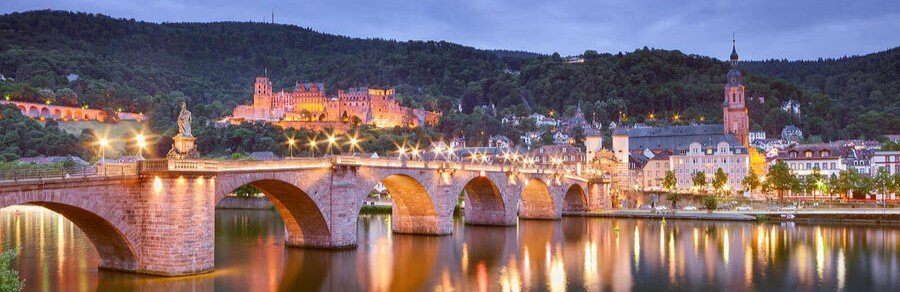 The Most Beautiful Heidelberg Old Town and Stunning Castle Views You’ll Love
We’re looking for somewhere in the Canary Islands that’s a little more relaxed, and Caleta de Fuste sounds like it would be a good fit. The calm beach and marina really appeal to us since we enjoy walking in the evenings after dinner. If you were staying for a week, would you rent a car to explore more of Fuerteventura, or is there enough to keep you busy around Caleta de Fuste?
I’d definitely rent a car if you’re staying for a week. Caleta de Fuste is a great base with plenty of restaurants and a lovely beach, but Fuerteventura has so many beautiful places that are easy to reach by car. You can visit the famous sand dunes at Corralejo, explore quieter beaches along the coast, and stop at scenic viewpoints, all while still returning to Caleta de Fuste each evening.