Experience one of America's last truly wild frontiers.
Nome isn’t a destination for everyone, but that’s part of its appeal. Sitting on the edge of the Bering Sea, this remote community offers a chance to experience Alaska far beyond the usual tourist stops. Rich Gold Rush history, Arctic wildlife, and vast tundra landscapes make it an unforgettable destination for adventurous travelers.
Many visitors come for world-class fishing, wildlife viewing, or to witness the finish of the Iditarod Trail Sled Dog Race. Others are drawn by the opportunity to photograph musk oxen, migratory birds, and the Northern Lights. If you’re looking for a true Arctic adventure, few places in the United States are as unique as Nome.
Learn more about Alaska here, or also see more Alaska images on Pinterest.
Weather & Best Time to Visit
Nome has a subarctic climate with long, snowy winters and short, cool summers. The best time to visit depends on whether you’re hoping to enjoy wildlife, outdoor adventures, or winter events.
Summer (June to August)
Summer is the most popular time to visit. Daytime temperatures range from the mid-50s to upper 60s°F (13 to 20°C), with long daylight hours that are perfect for hiking, wildlife viewing, fishing, and exploring the surrounding tundra. This is also the best season for birdwatching and visiting historic Gold Rush sites.
Fall (September to October)
Autumn brings cooler temperatures and colorful tundra landscapes. Wildlife remains active, and the summer crowds disappear. Early fall is a beautiful time for photography, although weather can change quickly.
Winter (November to March)
Winter transforms Nome into a snowy Arctic landscape. Temperatures often drop well below freezing, making this the season for snowmobiling, dog sledding, and the world-famous Iditarod finish. Visitors may also have a chance to see the Northern Lights on clear nights.
Spring (April to May)
Spring is a time of transition as snow begins to melt and wildlife becomes more active. Days grow longer, and while temperatures remain cool, it’s a quieter season before summer visitors arrive.
Best Time to Visit
For most travelers, June through August offers the best combination of mild weather, long daylight hours, and outdoor activities. If seeing the Northern Lights or experiencing the Iditarod finish is on your bucket list, plan your visit between late February and March.
Why Visit Nome? America’s Last True Frontier
Most people don’t visit Nome by accident—they make the journey to experience one of America’s last authentic frontiers. Positioned on the edge of the Bering Sea and entirely disconnected from Alaska’s road system, this remote outpost trades traditional tourist traps for raw Arctic tundra, living history, and unmatched wilderness.
Living Gold Rush & Musher History
Iditarod Finish Line
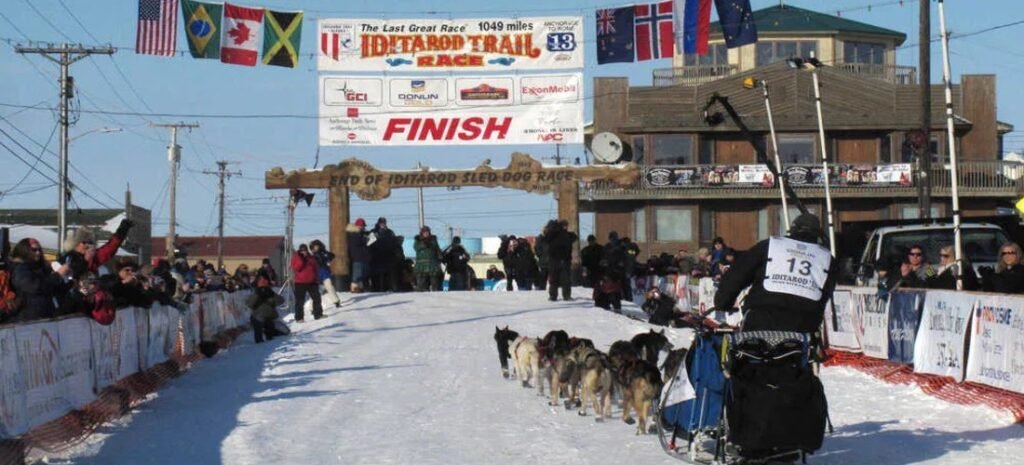
Stand at the famous timber archway where mushers and their sled dog teams complete their epic 1,000-mile race every March.
Anvil Creek & Gold Dredges
Explore massive, rusted historical artifacts like Dredge No. 5 and see where the “Three Lucky Swedes” sparked the 1898 gold rush.
Front Street Culture
Step into historic saloons and local trading posts that still echo the grit and charm of an old frontier boomtown.
Rare Arctic Wildlife Viewing
Musk Oxen Herds
Spot prehistoric, shaggy musk oxen grazing right alongside the local gravel roads or out on the open tundra.
Migratory Bird Haven
Visit during the spring and summer to witness over 100 species of migratory birds nesting in the surrounding wetlands.
Coastal Marine Life
Scan the icy waters of the Bering Sea for seals, walruses, and migrating whales just off the coastline.
The Remote Road System Adventure
300 Miles of Dirt Roads
Rent a sturdy 4×4 to explore three distinct gravel highways that branch out from the town into completely uninhabited wilderness.
The Teller Highway
Drive northwest to a remote Inupiat fishing village where the road literally ends overlooking the Bering Strait.
The Kougarok Highway
Head deep into the interior toward the Kigluaik Mountains for dramatic tundra hikes and views of Salmon Lake.
Spectacular Seasonal Wonders
The Midnight Sun
Experience 24 hours of continuous daylight during the peak of summer, perfect for endless backcountry exploration.
Getting to Nome: Travel Logistics
Because Nome is completely disconnected from the contiguous Alaska highway system, you cannot drive here from Anchorage or the lower 48 states. Reaching this remote Seward Peninsula outpost requires a quick flight, making the journey feel like a true expedition into the Arctic wild.
The Anchorage Flight Connection
Almost all travelers start by flying into Ted Stevens Anchorage International Airport (ANC). From Anchorage, you will board a 90-minute commercial jet flight directly into Nome Airport (OME). Alaska Airlines operates regular, daily non-stop jet service between Anchorage and Nome year-round.
Getting Around Once You Arrive
No Marine Ferries
Despite sitting right on the water, Nome is not serviced by the Alaska Marine Highway ferry system.
Local Car Rentals
To explore the 300 miles of rugged gravel wilderness roads branching out of town, you must reserve a 4×4 truck or SUV ahead of time through local providers like Stampede Vehicle Rentals.
Bush Plane Excursions
If you want to venture even further into remote Norton Sound or Inupiat villages, local carriers like Bering Air operate scheduled commuter flights and air taxis out of the main Nome terminal
Best Beaches Near Nome
Nome City Beach
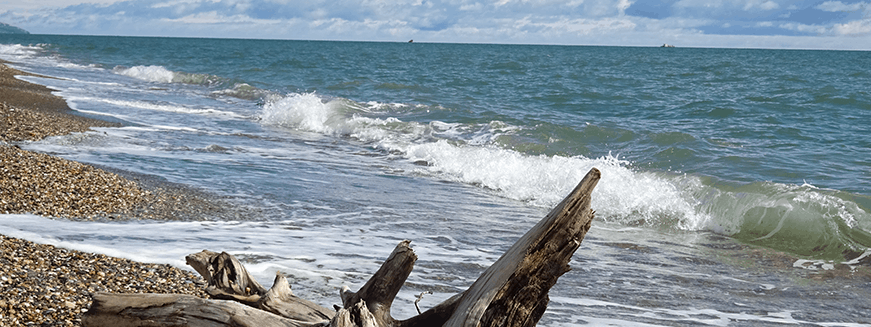
Located right in town, Nome City Beach stretches along the Bering Sea and offers a fascinating glimpse into the area’s Gold Rush history. During the summer, you can watch amateur gold prospectors searching the shoreline, enjoy long walks along the coast, and take in beautiful Arctic sunsets. The water is far too cold for most swimmers, but it’s a great place to experience Nome’s unique character.
Safety Sound Beach
East of Nome, Safety Sound offers quiet shoreline, abundant birdlife, and sweeping tundra views. It’s a favorite area for wildlife photographers and birdwatchers, especially during spring and fall migrations. The peaceful setting makes it an excellent stop if you’re exploring the Nome road system.
Solomon Beach
About 35 miles east of Nome, Solomon Beach combines Arctic scenery with Gold Rush history. Driftwood lines parts of the shore, and the surrounding tundra creates a dramatic backdrop for photography and wildlife viewing. It’s a peaceful place to stretch your legs while exploring the Seward Peninsula.
Cape Nome
Cape Nome features a rugged coastline where the Bering Sea meets Alaska’s remote wilderness. Visitors come for the scenery, fishing, and the chance to spot seabirds and marine wildlife. The drive alone offers spectacular views across the tundra.
Hastings Creek Beach
This quiet stretch of coastline is a favorite with anglers and those looking to experience the solitude of Alaska’s Arctic coast. It’s not a traditional beach destination, but it offers beautiful views, fresh sea air, and excellent opportunities for wildlife spotting.
Surfing in Nome
Surfing may not be the first thing that comes to mind in Nome, but a small community of cold-water surfers takes on the waves of the Bering Sea each year. Wearing thick wetsuits, hoods, gloves, and boots, experienced surfers paddle out during the summer and early fall when conditions are most favorable. The water remains extremely cold year-round, making this an activity suited only to skilled surfers with the proper equipment. For most visitors, simply watching these adventurous surfers tackle Arctic waves is an experience in itself.
Best Things to Do in Nome
Explore Nome’s Gold Rush History
Nome became world famous during the Gold Rush of the late 1890s, and reminders of that era can still be found throughout the area. Visit historic buildings, old mining equipment, and museums that tell the story of the thousands who traveled north in search of gold.
Drive the Nome Road System
Unlike most of Alaska, Nome has nearly 300 miles of roads leading into the surrounding tundra. The three scenic routes offer excellent opportunities to spot wildlife, photograph the Arctic landscape, and visit historic mining communities that few travelers ever see.
Visit the Carrie M. McLain Memorial Museum
This small but fascinating museum highlights Nome’s Gold Rush history, Alaska Native culture, local wildlife, and the region’s unique heritage. It’s the perfect place to learn about the community before exploring the surrounding area.
Watch the Iditarod Finish
Each March, Nome becomes the finish line for the legendary Iditarod Trail Sled Dog Race. Watching mushers and their teams arrive after crossing more than 1,000 miles of Alaska wilderness is an unforgettable experience.
Search for Wildlife
The Seward Peninsula is home to musk oxen, reindeer, Arctic foxes, moose, and hundreds of bird species. Bring binoculars and keep your camera ready, as wildlife sightings are common along the Nome road system during the summer months.
Try Your Luck at Gold Panning
Gold is still found around Nome today. During the summer, some visitors try recreational gold panning, while others simply enjoy watching modern-day prospectors working the beaches and nearby streams.
Experience the Northern Lights
From late fall through early spring, dark skies create excellent conditions for viewing the Aurora Borealis. On clear nights, colorful ribbons of light often dance across the Arctic sky, making Nome a rewarding destination for Northern Lights enthusiasts.
Go Fishing
Fishing is one of the area’s most popular outdoor activities. Salmon, Arctic char, grayling, and other species can be found in nearby rivers and coastal waters, attracting anglers from around the world during the summer season.
Birdwatch Along the Seward Peninsula
Nome is considered one of North America’s premier birdwatching destinations. During spring and summer migrations, birders travel here hoping to spot rare Arctic species that are difficult to find anywhere else in the United States.
Walk Along the Bering Sea Coast
A walk along Nome’s shoreline offers beautiful Arctic scenery, fresh sea air, and a chance to see remnants of the area’s Gold Rush past. It’s also a great place to watch local gold miners searching for treasure along the beach.
Best Places to Stay in Nome
Finding accommodations in Nome is a little different than staying in Alaska’s larger cities. You’ll find comfortable hotels, welcoming inns, and locally owned lodges that cater to outdoor enthusiasts, business travelers, and visitors exploring the Seward Peninsula. While luxury resorts aren’t part of the experience, these stays provide a comfortable base for discovering one of Alaska’s most remote destinations.
Noxapaga Suites ★★★ | 9.6/10
The Noxapaga Suites is a highly-rated, modern boutique apart-hotel that offers a premium and cozy home-base in remote Nome, Alaska. Known as one of the best places to stay in the area, it trades traditional, dated lodge styles for exceptionally clean, cheerful, and fully remodeled suites equipped with high-speed Wi-Fi, smart TVs, and premium linens. Each individually decorated unit functions as a private apartment, featuring a fully stocked kitchen with full-sized appliances, a separate living area, and an in-unit washer and dryer. Its central location on the west side of town offers free parking and an easy walk to the ocean, the local grocery store, Airport Pizza, and cultural sites like the Carrie M. McLain Memorial Museum.
AKAu Gold Resort ★★★ | 10/10
The AkAu Gold Resort (also known as Alaska Gold & Resort) is an all-inclusive, off-the-grid adventure outpost located seven miles north of downtown Nome near historic Anvil Creek. Operating seasonally from mid-June to mid-September, this unique solar-powered property caters to travelers looking to experience an authentic modern-day gold rush. Guests stay in cozy lodge rooms or private cabins and enjoy all-inclusive family-style meals served in a massive Great Room featuring views of the mountains, sprawling tundra, and the Bering Sea. The core of the experience centers around guided week-long gold prospecting packages where visitors are provided professional equipment to high-bank, metal detect, and sluice for gold—and they get to keep every single nugget they find. Beyond mining, the camp coordinates an array of wilderness activities including river fishing, ATV tundra tours, and local airport shuttle transit.
Dredge No. 7 Inn ★★★ | 8.8/10
The Dredge No.7 Inn is a highly rated, gold-rush-themed boutique hotel. It stands out as one of Nome’s premier stays by blending rich historical charm with clean, modern comforts like plush bedding, flat-screen TVs, and shared or private fully stocked kitchens. The property is cleverly split into two distinct locations, offering the quiet Main Inn situated out near the airport and The Sluicebox building located directly downtown within walking distance of local attractions. Guests consistently praise the inn for its welcoming hospitality and its convenient on-site 4×4 vehicle rental fleet, which makes exploring the 300 miles of rugged Arctic tundra roads incredibly seamless.
Raven’s Nest Studio Suite ★★★ | 10/10
The Raven’s Nest Studio Suite is a top-rated, uniquely themed tiny house vacation rental that offers a cozy, independent home base in Nome, Alaska. Perfect for both brief business trips and extended vacation stays, this highly rated “Guest Favorite” property features a comfortable layout that accommodates up to two adults. The space is fully equipped with essential modern conveniences, including a full kitchen, an in-unit washer and dryer, free Wi-Fi, and private parking. Guests appreciate its quiet yet highly central location, which sits close to the Nome Recreation Center and the hospital, while remaining within easy walking distance of Hanson’s Grocery Store and the downtown Front Street district.
2br Executive Rental Downtown ★★★ | 10/10
The 2br Executive Rental Downtown is an exceptional, top-rated rental rated for its superior cleanliness and prime location in Nome, Alaska. Situated just 1.5 blocks from historic Front Street, this ground-floor duplex apartment features two comfortable bedrooms, one bathroom, a private balcony, and a keyless entry system with custom entry codes for seamless, contactless check-ins. Designed as a premier turnkey home base for professional business travelers and vacationers alike, the spacious unit is fully furnished and equipped with high-speed Wi-Fi, a flat-screen TV, a washing machine, and a full kitchen stocked with modern appliances, a coffee maker, dishes, and linens. Its highly walkable central location puts guests just minutes away from downtown restaurants, local grocery stores, the hospital, and prominent cultural landmarks like the Nome Mini-Convention Center.
Local Foods to Try
The food in Nome reflects Alaska’s rich natural resources and Native traditions. Fresh seafood, wild game, and locally harvested ingredients are the stars of the menu. Whether you’re dining at a local café or enjoying a hearty lodge meal, these are some of the flavors worth trying.
King Crab
Alaska king crab is one of the state’s most famous specialties. Sweet, tender meat served with melted butter is a must if it’s in season.
Wild Salmon
Fresh salmon appears on many menus, whether grilled, smoked, or baked. Depending on the season, you may find king, silver, or sockeye salmon caught in nearby waters.
Halibut
This mild, flaky fish is another local favorite. It’s often grilled, blackened, or served as classic fish and chips.
Reindeer Sausage
A popular Alaskan comfort food, reindeer sausage is commonly served for breakfast or in hearty sandwiches. It has a slightly smoky flavor and is found throughout much of the state.
Akutaq (Eskimo Ice Cream)
One of Alaska’s most traditional Native foods, Akutaq is made with whipped fat and berries, with modern versions sometimes using shortening. It’s a unique cultural experience for adventurous eaters.
Local Drinks to Try
After a day exploring the tundra or fishing along the Bering Sea, many visitors warm up with a hot drink or sample a few Alaskan favorites.
Alaskan Amber
One of Alaska’s best-known craft beers, this smooth amber ale pairs well with fresh seafood and hearty meals.
Local Craft Beer
Many restaurants serve a selection of Alaskan craft beers brewed throughout the state, offering everything from crisp lagers to rich porters.
Hot Chocolate
After spending time outdoors, few things are better than a rich cup of hot chocolate. It’s a favorite during the long winter months and after viewing the Northern Lights.
Fresh Coffee
Coffee is a staple in Alaska, especially in remote communities. Local cafés serve freshly brewed coffee that’s perfect before heading out for a day of exploring.
Warm Apple Cider
During the colder months, warm apple cider is another comforting favorite that’s often available at local cafés and seasonal events.
Places to Eat
Dining in Nome focuses on hearty meals, fresh seafood, and friendly local hospitality. While you won’t find large restaurant chains, you’ll discover locally owned cafés and restaurants serving Alaskan favorites.
Board of Trade Saloon
One of Nome’s best-known restaurants, serving fresh seafood, steaks, burgers, and classic Alaskan comfort food in a historic setting. It’s a popular stop for both locals and visitors.
Milano’s Pizzeria
A casual favorite for pizza, pasta, sandwiches, and hearty comfort food. Large portions and friendly service make it a great choice after a day of sightseeing.
Airport Pizza
Known for its pizza, burgers, and sandwiches, this relaxed restaurant is a convenient stop before or after flights and a favorite with both locals and travelers.
Polar Café
This cozy local café serves generous breakfasts, homemade soups, sandwiches, and daily specials. It’s a great place to start the day before heading out to explore.
Bering Tea & Coffee
Perfect for a lighter meal or afternoon break, this welcoming café offers specialty coffees, teas, pastries, sandwiches, and baked treats in a relaxed atmosphere.
Bush Flying: A Way of Life
Unlike most places in the United States, airplanes are part of everyday life in Nome. Bush pilots deliver supplies, transport residents, and provide access to remote areas that can’t be reached by road. Watching small aircraft come and go throughout the day offers a glimpse into how important aviation is across rural Alaska.
If the opportunity arises, a scenic bush plane flight is one of the most memorable ways to experience the region. Seeing the tundra, rivers, and coastline from above gives you a whole new appreciation for Alaska’s rugged beauty.
Fun Facts About Nome
The Finish Line of the Iditarod
Every March, Nome welcomes the finish of the legendary Iditarod Trail Sled Dog Race. After covering nearly 1,000 miles across Alaska’s rugged wilderness, mushers and their dog teams arrive in Nome to celebrate one of the world’s most famous endurance races. It’s one of the biggest events of the year and draws visitors from around the globe.
Home to the Iron Dog Finish
Nome also serves as the finish line for the Iron Dog, the world’s longest snowmobile race. Competitors travel nearly 2,000 miles across Alaska, testing both skill and endurance before crossing the finish line on the shores of the Bering Sea.
No Roads Lead to Nome
One of the most unique things about Nome is that you can’t drive there. There are no highways connecting the town to the rest of Alaska, so visitors arrive by plane during most of the year or by boat during the short summer season. That isolation is part of what makes Nome such a memorable destination.
The World’s Largest Gold Pan
Nome proudly celebrates its Gold Rush heritage with the World’s Largest Gold Pan in Anvil City Square. It’s one of the town’s most photographed landmarks and a fun reminder that gold mining remains part of the area’s history and identity.
Alaska’s Oldest Newspaper
The Nome Nugget has been serving the community since 1900, making it Alaska’s oldest continuously published newspaper. It has chronicled everything from the Gold Rush to modern-day life on Alaska’s western coast.
Golf on the Bering Sea
Winter in Nome brings one of Alaska’s most unusual sporting events. During the Bering Sea Ice Classic, golfers play on the frozen sea, creating one of the most unique golf experiences anywhere in the world.
Experience the Finish of the Iditarod
Each March, Nome becomes the center of the sled dog racing world as mushers complete the legendary Iditarod Trail Sled Dog Race. After traveling nearly 1,000 miles across Alaska’s mountains, rivers, forests, and frozen tundra, teams arrive in Nome to cheering crowds. The finish is far less hectic than the ceremonial start in Anchorage, giving visitors a chance to celebrate the incredible achievement up close. If you’ve ever wanted to experience one of Alaska’s greatest traditions, this is the place to do it.
Essential Information for Visiting Nome
Getting There
Nome is not connected to Alaska’s road system, so most visitors arrive by air from Anchorage. During the summer, cruise ships and private boats occasionally visit, but flying remains the primary way to reach the city.
Getting Around
Rental cars are available and are the best way to explore Nome and the surrounding road system. Taxis are also available in town, while many attractions in downtown Nome can be reached on foot.
Cell Service & Internet
Cell service is available throughout Nome, although coverage becomes limited once you leave town. Most hotels, lodges, and cafés offer Wi-Fi, but internet speeds may be slower than visitors are used to.
Dress for the Weather
Weather conditions can change quickly, even during summer. Pack warm layers, a waterproof jacket, sturdy walking shoes, and a hat. If visiting outside the summer months, winter clothing is essential.
Wildlife Awareness
Wildlife is one of Nome’s biggest attractions. Always observe animals from a safe distance and never approach musk oxen, moose, or bears. Carry binoculars for a better view and follow any local wildlife advisories.
Midnight Sun & Northern Lights
Summer brings nearly endless daylight, making it easy to enjoy long days of sightseeing and outdoor adventures. From late fall through early spring, Nome’s dark skies provide excellent opportunities to view the Northern Lights when conditions are clear.
Don’t Expect Big City Service
Nome is a small, remote community, so restaurants, shopping, and services are more limited than in larger Alaska cities. It’s a good idea to book accommodations, rental cars, and guided tours in advance, especially during the summer season and the Iditarod.
Experience Alaska’s Last Frontier
A visit to Nome is unlike almost anywhere else in the United States. From its Gold Rush history and Arctic wildlife to the legendary Iditarod finish and rugged Bering Sea coastline, this remote destination offers experiences you simply won’t find elsewhere. Whether you’re visiting to fish, photograph wildlife, witness one of Alaska’s greatest sporting events, or simply explore a place few travelers ever reach, Nome delivers an unforgettable adventure at the edge of America’s Last Frontier.
Frequently Asked Questions
When is the best time to visit Nome?
Visit during the summer (June through August) for the best for mild weather, abundant wildlife viewing, tundra hiking, and experiencing the Midnight Sun. Winter (March) is great for winter sports enthusiasts and anyone wanting to experience the electric atmosphere of the Iditarod Trail Sled Dog Race finish line.
Can you drive to Nome?
No. Nome is completely disconnected from Alaska’s main highway system. You must book a flight into Nome. It is possible to arrive by cruise ship during the brief summer ice free window.
Is Nome worth visiting?
Yes. If you crave true frontier wilderness, deep Gold Rush history, rare Arctic wildlife, or vibrant Indigenous culture, Nome delivers an unforgettable, uncommercialized adventure.
Can you see the Northern Lights in Nome?
Yes, because of its high latitude, Nome offers spectacular Aurora Borealis viewing. The best viewing window is from late September through early April when the Arctic skies are dark and clear.
How many days should I spend in Nome?
Two to three days is enough to explore the town, drive the surrounding road system, and enjoy local attractions. If you are planning fishing trips, birdwatching, or attending the Iditarod often stay longer.
Is it safe with the wildlife here?
Stay aware. Grizzly bears are common along the river corridors, and prehistoric musk oxen frequently hang out near the roads. Always maintain a safe distance and carry bear spray if hiking the tundra.
Is Nome expensive?
Expect to pay a Premium. Since it is a remote bush community, expect to pay significantly more for groceries, dining out, and gasoline than you would in Anchorage, as nearly all supplies must be flown or shipped in.
Related Posts
 Discover the Best of Branson & Beautiful Table Rock Lake
 The Best of Fernandina Beach: Amelia Island’s Ultimate Paradise
 Discover the Most Beautiful Gulfport Beaches of Mississippi’s Coast
 The Most Beautiful Beaches of Hilton Head Island South Carolina
 Discover the Most Beautiful Gulf Shores Beaches & Towns
 Explore the Most Beautiful Del Norte County California
Nome is definitely not your typical beach destination, Leahrae, but that’s what makes this guide so interesting! I’ve visited Anchorage and Denali, but I’ve never ventured this far into Alaska. The idea of seeing musk oxen roaming the tundra and exploring old Gold Rush sites sounds incredible. I’m considering a trip in July and would love to rent a vehicle to explore the surrounding roads. Would you recommend driving the Teller Highway or the Kougarok Highway for someone who’s especially interested in wildlife photography and scenery? And is three days enough time to get a good feel for the area?
Hi Robert! Nome is certainly a different kind of beach destination, isn’t it? LOL! But that’s part of what makes it so fascinating! July is a great time to visit, especially for wildlife photography and exploring the tundra. Both highways offer spectacular scenery, but I’d probably lean toward the Kougarok Highway for your interests. You’ll have opportunities to photograph the Kigluaik Mountains, Salmon Lake, and the surrounding wilderness, with chances of spotting musk oxen and other wildlife along the way. The Teller Highway is beautiful too, especially if you’d love to see the remote coastline and the village of Teller. Three days should give you enough time to explore Nome, visit some Gold Rush sites, and enjoy a couple of scenic drives without rushing too much. Just reserve your 4×4 well in advance, check road conditions, and keep your distance from wildlife. I think you’ll find Nome to be one of Alaska’s most memorable adventures! Enjoy your trip! 😊
Nome has always fascinated me because it seems so different from anywhere else in Alaska. I like getting off the beaten path, but I also don’t want to feel completely cut off from everything. It sounds like there’s a nice balance between wilderness and a small town. Is a rental car pretty much a necessity, or can you still see a lot without one?
I’d definitely recommend renting a car if it’s within your budget. Nome has about 350 miles of roads leading out into the surrounding tundra, and that’s where you’ll find a lot of the scenery, wildlife, and historic sites that make the area so special. You can certainly explore downtown on foot, but having a car gives you the freedom to visit places like the old gold dredges, Pilgrim Hot Springs, and some of the more remote beaches at your own pace. It’s one of those destinations where the drive is part of the adventure.
Nome sounds like such a raw and untouched destination, the kind of place where you really feel like you’ve stepped into true Alaska. I love the idea of those wide-open tundra views and spotting wildlife without crowds everywhere, that’s getting harder to find these days. The history with the gold rush and those old dredges adds such a cool layer to the experience too. It also sounds like a place where you can slow down and just take in the scenery, especially along the beaches with that dramatic Bering Sea backdrop. Would you recommend visiting in summer for the easier exploring or winter for the unique events and atmosphere, and how easy is it to get around once you’re there?
It really is one of those places where the landscape and history come together in a very authentic way. Summer is the easiest time to visit thanks to milder weather and long daylight hours, which makes exploring the road system and surrounding areas much more accessible. Getting around is fairly simple by rental car, and those miles of open road make it easy to reach some truly remote and scenic spots.
Nome definitely sounds like one of those places where the landscape becomes the main attraction. The tundra scenery, wildlife sightings, and historic gold rush connection make it feel pretty unique compared with most Alaska destinations. I didn’t realize there were so many drivable routes out from town either. Do most visitors explore independently, or are guided tours more common out there?
Independent travel is very common in Nome because of the road system radiating from town and the wide-open tundra scenery that makes self-guided exploration appealing. Many visitors rent vehicles to access wildlife viewing areas, historic gold mining sites, and coastal viewpoints at their own pace. Guided tours are still available, especially for cultural experiences, hot springs excursions, and seasonal events like aurora viewing. The mix of flexibility and local expertise helps travelers experience authentic Alaska landscapes safely. Nome tourism continues to attract adventure travelers looking for remote scenery with accessible infrastructure.
That mix of gold rush history, beach scenery, and small-town Alaska culture sounds really different from the usual cruise-stop image people have. I also like the idea of those long summer days and fewer crowds compared with bigger destinations. It seems like planning timing carefully would make a big difference. Is late spring or early fall generally easier for travel costs and availability there?
Timing really does make a noticeable difference for Nome travel, especially because it’s a remote Alaska destination with a short peak season. Late spring and early fall often bring better availability on flights and lodging, along with lower prices compared with the busy midsummer window. These shoulder seasons still offer good wildlife viewing, scenic tundra landscapes, and access to local cultural experiences without the heavier visitor traffic. Travelers who plan during these periods often find a more relaxed pace while still enjoying Alaska coastal scenery, gold rush history sites, and authentic small-town atmosphere. Careful timing can definitely help balance cost, comfort, and overall travel experience in western Alaska.