
Island of Bali is a place that surprises you and stays in your heart. From my travels, I remember the endless rice terraces, golden beaches, and the kindness of the people.
For many visitors, Bali becomes a destination they return to again and again. Its mix of experiences and laid-back charm makes it hard to resist. In this guide, I’ll share what makes Bali special, the best times to visit, standout beaches, top seaside stays, signature foods, and helpful travel tips. Let’s dive in!
You can learn more about all of Indonesia here, or visit us on Pinterest.
Why Visit Bali
Bali stands out from Indonesia’s thousands of islands with its unique mix of beauty and culture. You can wander mountain villages or relax beside the turquoise ocean.
Adventure is everywhere. Trek through the rainforests near Ubud, visit ancient temples like Besakih, or sip coffee on the sand at Seminyak. Surfers ride world-class waves, while hikers climb volcanoes such as Mount Batur. In addition, snorkelers and divers can explore the colorful reefs off Amed and Menjangan. Shopping fans will love the bustling markets. Meanwhile, wellness seekers can recharge in yoga studios and spas.
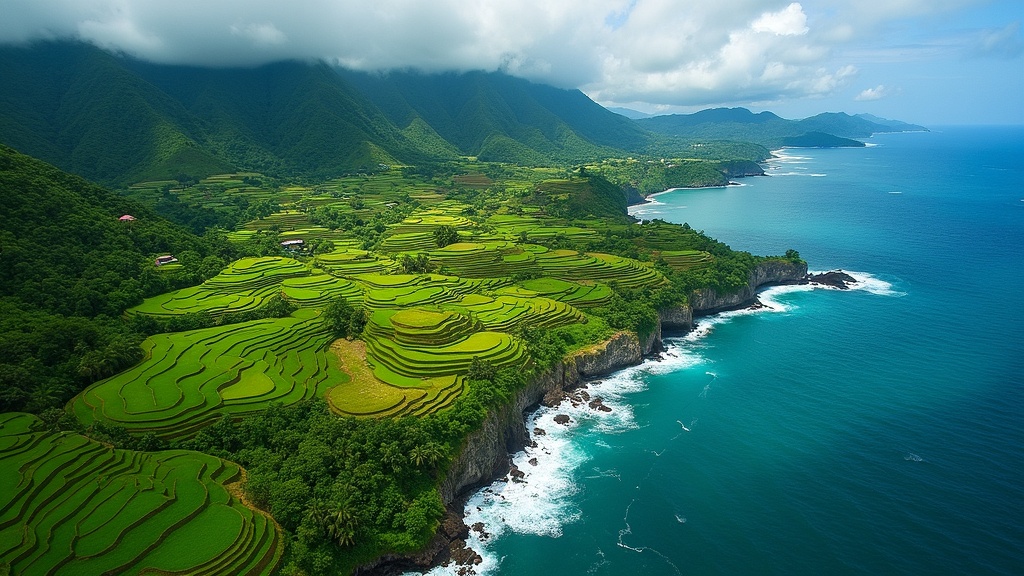
Moving between rice paddies and beach towns, you’ll see Balinese traditions daily. I often stop to watch flower offerings in doorways or stumble upon a temple dance. Bali blends nature, spirituality, and lively beach energy in one place. As a result, every trip feels fresh, inspiring, and unforgettable.
Weather and Best Time to Visit
Bali’s tropical weather stays steady between 26°C (79°F) and 32°C (90°F) year-round. However, the island has two main seasons: dry (April–October) and wet (November–March). I like the dry stretch best. The sky turns a brilliant blue, humidity drops, and the waves are perfect for surfing. In addition, the water becomes crystal clear for diving.
During this season, a reliable breeze softens the heat, and coconut palms provide plenty of shade. As a result, the temperature feels pleasant, even on hotter days. Crowds do grow in July and August, especially on popular beaches and at major temples. Even so, it’s rarely overwhelming if you plan your route carefully.
Meanwhile, the wet season brings afternoon rain, but showers usually pass quickly. Soon after, the sun shines again. In fact, the rice terraces become extra lush, and the whole island feels calmer and quieter. Moreover, if you want to save money, traveling after October and before mid-December often means lower hotel rates and fewer people around.
Best Beaches in Bali
Popular Beaches in Bali
Bali’s shoreline is full of sandy stretches, each with its own personality. If you’re looking for energy, surf schools, or sunset vibes, these popular beaches deliver.
- Kuta Beach – Known for golden sand and breathtaking sunsets. In addition, you’ll find surf schools, beach bars, and endless people-watching.
- Seminyak Beach – Stylish and upmarket. Moreover, Seminyak offers cool restaurants, lively clubs, and sunsets that never disappoint.
- Nusa Dua – Gentle, clear water makes this perfect for families. In fact, it’s one of the best beaches for casual swimming or paddleboarding.
- Jimbaran Bay – Easygoing waters and famous seafood grills right on the sand. As a result, it’s a top spot when you want a relaxed break from busier areas.
- Padang Padang – A dramatic cove framed by cliffs and turquoise water. Surfers flock here, but the view alone makes it unforgettable.
- Sanur Beach – Calm and shallow seas with a laid-back vibe. In addition, the beachfront path is great for cycling or leisurely walks.
Hidden Gem Beaches in Bali
Beyond the big names, Bali hides dozens of coves and bays that reward curious travelers. These beaches feel quieter, more authentic, and just as beautiful.
- Amed Beach – A black-sand shoreline in a relaxed fishing village. Snorkeling and diving here reveal vibrant reefs, and the vibe is peaceful.
- Balangan Beach – Long sandy stretches with palm trees swaying overhead. Moreover, consistent waves make it a favorite among surfers looking for fewer crowds.
- Other Hidden Spots – Don’t hesitate to explore by scooter or ask a local driver for tips. As a result, you’ll often stumble across secluded coves and quiet bays that don’t appear on most maps.
Best Luxury & Budget Beachfront Resorts
Bali works for every budget. Whether you want luxury pampering or a simple bungalow by the sea, you’ll find plenty of options. In this section, I’m sharing my top beachfront picks—split between high-end and budget-friendly stays. These are resorts I’ve stayed in or heard friends rave about. Moreover, they consistently earn high marks from travelers.
Luxury Beachfront Resorts
- Four Seasons Resort Bali at Jimbaran Bay – Spacious villas, infinity pools, and calm waters at Jimbaran Bay. In addition, direct beach access makes it perfect for a treat-yourself escape.
- The St. Regis Bali Resort – Set along Nusa Dua, this resort blends graceful design with tropical gardens and brilliant white sand. As a result, it’s one of Bali’s most elegant stays.
- Alila Seminyak – Right on Seminyak Beach, this luxury pick offers slick ocean-view rooms, five-star dining, and a laid-back atmosphere. Moreover, the sunsets are spectacular.
- Mulia Resort – This upscale resort delivers grand style with oceanfront pools, fine dining, and spacious suites. Furthermore, its pristine stretch of Nusa Dua Beach makes every stay unforgettable.
- Regent Bali Canggu – A sleek resort in trendy Canggu with modern villas, private pools, and direct beach views. In addition, its spa and rooftop lounges add a chic, relaxing vibe.
Budget Beachfront Resorts
- Legian Beach Hotel – Fair prices and comfy rooms right on Legian’s sands. As a result, the vibe stays friendly, casual, and easygoing.
- Poppies Bali – Tucked into lush gardens just steps from Kuta Beach. Moreover, this affordable favorite mixes comfort with tropical charm.
- Bali Budget Beach Bungalow – A relaxed and affordable stay right on the beach in Candidasa. Moreover, it offers a year-round pool—while keeping sea views and serenity.
- Bali Spirit Hotel & Spa – Set just outside Ubud, this one isn’t beachfront. However, it offers peaceful riverside views and quick drives to the shoreline.
- Alam Candi Resort – A peaceful coastal resort featuring simple rooms, an outdoor pool, and its own dive center. In addition, it’s backed by positive guest reviews that praise the quiet ambiance and easy access to the water.
This list isn’t complete—many more beachfront stays line Bali’s coast. Even so, these picks give you a mix of luxury, comfort, and charm. In the end, choosing depends on what matters most to you: a spa, a pool, or simply a spot that feels like your own hideaway.
Flavors of Bali: Food and Drinks You Must Try
Bali’s food is always a highlight. Local dishes blend sweet, spicy, and savory flavors with loads of fresh ingredients. Whether you grab a plate from a street vendor or settle into a riverside restaurant, every bite tells a story.
- Nasi Goreng – Indonesia’s iconic fried rice. Often topped with a fried egg, prawns, or chicken. Simple, classic, and always satisfying.
- Babi Guling – Roast suckling pig packed with spice. The flavors soak right through, making it a must-try for meat lovers.
- Satay Lilit – Minced fish or chicken mixed with coconut and spices, grilled on lemongrass skewers. Moreover, the smoky flavor is unforgettable.
- Lawar – A crunchy, fresh mix of minced meat, veggies, coconut, and herbs. In addition, every bite bursts with local punch.
- Betutu – Chicken or duck cooked low and slow with spice, all wrapped in banana leaves. As a result, it’s tender, spicy, and deeply flavorful.
- Balinese Coffee – Strong and fragrant, perfect after a sunrise temple visit or a beach stroll.
- Es Campur – An icy dessert of coconut milk, jelly, fruit, and syrup. Refreshing, colorful, and ideal after a hot afternoon.
Vegans and vegetarians won’t struggle here. Most warungs (small local diners) serve tofu, tempeh, and vegetable curries. Furthermore, many restaurants happily prepare custom plates if you ask. In the end, sampling what’s fresh and in season always leads to the best surprises.
Smart Travel Tips for Bali
Transportation – Bali’s traffic is slow and unpredictable. Therefore, I usually hire a local driver for full-day trips. In busy areas, ride-share apps also work well. Motorbikes are everywhere. However, only rent one if you’re confident and have an international license.
Currency – The Indonesian Rupiah (IDR) is the only currency. ATMs are common in towns. Even so, keep small cash ready for local shops, drivers, and street stalls.
Respect – Temples require a sarong and sash, which you can borrow or buy at the entrance. In addition, shoes come off when entering homes or sacred spaces. As a result, showing respect earns you friendly smiles everywhere.
Stay Healthy – Always drink bottled or filtered water. If you want ice, ask if it’s purified. In addition, pack mosquito spray, and protect your skin from sunburn on beaches or hikes.
Safety and Customs – Bali is safe, even for solo travelers. However, keep an eye on your belongings, avoid pushy vendors, and stay alert in crowded tourist spots.
Language – A little Bahasa Indonesia goes a long way. For example, “terima kasih” means thank you. Moreover, trying a few words often opens conversations, warm smiles, and the best stories.
A little Bahasa Indonesia—like “terima kasih” for thank you—opens up more conversations, kind smiles, and the best travel stories. Don’t be shy about practicing your language skills!
Bali FAQs: What Travelers Ask Most
What is the best way to get around Bali?
For sightseeing, I usually hire a driver. For shorter trips, ride-share apps are quick and easy. Renting a scooter works too, but traffic can be tricky—so ride carefully.
Do I need a visa to visit Bali?
Most travelers get a free visa on arrival for up to 30 days. However, always check the latest rules before flying, since policies can change.
Is Bali expensive?
Bali fits every budget. Street food and guesthouses keep it cheap, while luxury resorts and high-end dining are there if you want to splurge. Therefore, mixing both often gives the best value.
Is the water safe to drink?
Skip the tap water. Instead, drink bottled or filtered water. Also, check if ice is made from purified water—especially at smaller eateries.
What should I pack?
Bring lightweight clothes, sunscreen, a hat, and mosquito spray. In addition, sturdy shoes help for temple visits or hikes. Don’t forget a sarong—it works as temple attire, a beach mat, or a light cover.
Final Thoughts: Why the Island of Bali Stays With You
In the end, the Island of Bali is more than beaches and temples. It’s a place where culture, nature, and daily life blend in a way you don’t forget. Everywhere you look, there’s color—whether it’s bright offerings on the street, sunsets over the sea, or rice terraces glowing green.
Moreover, Bali makes it easy to choose your own pace. You can chase waves at dawn, wander a bustling market by noon, and finish with a quiet spa evening under the stars. Every moment feels different, yet it all connects into one powerful experience.
So, if you’re ready for a trip that mixes beauty, tradition, and a dash of adventure, Bali is waiting. Pack light, bring curiosity, and let the island surprise you. Chances are, you’ll be planning your return before you’ve even left.
Finally, if you want to go beyond Bali, don’t miss my guide to Indonesia’s hidden gems—perfect islands that show off the country’s quieter magic.
Related Posts
 The Most Beautiful Beaches of Socotra Island Yemen
- The Most Stunning Vietnam Beaches You’ll Love
- The Stunning Coastal Town of Phu Quoc Vietnam You’ll Love
- The Most Beautiful Coastal Towns in Sri Lanka
- The Most Beautiful Gili Islands: Beaches, Resorts & Things to Do
- Discover the Best of Koh Tao: Ultimate Travel Guide





Pingback: Ginger
Great question! Bali feels like a few islands in one, so splitting your stay often gives the best experience. I usually suggest combining Ubud for culture, rice terraces, waterfalls, and temples with a beach area like Seminyak, Nusa Dua, or Canggu for ocean time and sunsets. If you prefer a more relaxed vibe, Sanur or Jimbaran also work beautifully. Staying in two places lets you enjoy Bali’s nature, culture, and coastline without spending too much time in traffic. And if you only choose one, Ubud or Seminyak both make fantastic first-time bases depending on whether you want jungle calm or beach energy.
Bali really does sound like a place that stays in your heart forever. I love how you captured not just the beauty of the beaches and rice terraces, but also the spirit of the people and their traditions. The way you described stopping to watch flower offerings or stumbling into a temple dance brought back memories of my own travels where the little, unexpected moments often became the most meaningful.
Your breakdown of the seasons and hidden beaches was so helpful—I didn’t realize the wet season could actually make the rice terraces even more stunning. I’ve always wanted to try Babi Guling and the idea of sipping Balinese coffee after a sunrise temple visit sounds unforgettable. This post makes me want to finally plan that trip and experience both the adventure and the peaceful side of Bali for myself.
Thank you so much—I’m thrilled the post brought Sumatra’s beauty and spirit to life for you. You’ve captured its essence beautifully: wild rainforests, dramatic volcanoes, pristine beaches, and deeply rich cultural tapestry—all promising a world of adventure around every turn.
Lake Toba is truly unforgettable—its vast volcanic basin is something you have to experience in person to fully appreciate its grandeur. And yes, the island’s wildlife is extraordinary. Spotting orangutans in their natural environment is absolutely a once-in-a-lifetime experience, one that will forever shape how you connect with nature.
As a fellow coffee lover, you’re in for a treat. Tasting Aceh and Mandheling coffee right where it’s grown is unspeakably rewarding—the flavors are so deep and nuanced, shaped by those lush highlands.
I’m delighted that Sumatra made it onto your travel wish list—it really does offer the perfect blend of adventure, cultural richness, and relaxation. Wishing you every joy in making that dream trip a reality!
As a travel enthusiast, Bali has been on my bucket list for a while. This blog provides a great review of beaches, food, travel, and everything in between. Speaking of beaches, revealing some hidden gems, like Balangan beach, is great because the top beaches might be overcrowded. As for accommodation, it is great to see that there are hotels for any budget. I focus more on experiences than staying in a high-end hotel.
Why does this Indonesian Island receive more attention than others?
Thank you so much for your thoughtful comment! I’m glad you enjoyed the mix of Bali’s beaches, food, and cultural highlights. Balangan Beach really is a gem — quieter than some of the better-known spots, yet just as beautiful.
Bali tends to receive more attention than other Indonesian islands because it offers such a wide range of experiences in one place. From surfing and hiking to temples, rice terraces, and vibrant nightlife, it appeals to many types of travelers. It’s also one of the easiest islands to access, with frequent international flights and well-developed tourism infrastructure, which makes it the first stop for many visiting Indonesia.
That said, islands like Java, Sumatra, and Lombok have their own incredible attractions and are well worth exploring once travelers venture beyond Bali. It’s often the gateway, but it’s far from the only treasure in Indonesia!
What a stunning guide to Bali! I love how you captured the island’s balance of adventure, culture, and relaxation—from sunrise treks at Mount Batur to peaceful moments watching temple offerings. The mix of popular beaches and hidden gems is especially helpful, since Bali really has something for every kind of traveler.
Quick question: if someone’s visiting Bali for the first time and has about a week, would you recommend staying in one area like Ubud or Seminyak as a “base,” or splitting the time between two regions to experience more variety?
Thank you so much, Jenny! I’m really glad you enjoyed the guide. Bali truly does have that perfect mix of culture, nature, and relaxation, and it’s wonderful to hear that the balance of popular beaches and hidden gems came through.
For a first-time trip of about a week, splitting your time between two areas is often the best way to experience Bali’s variety. Ubud makes a fantastic base for exploring temples, rice terraces, and cultural experiences, while a few days in Seminyak or along the coast lets you enjoy Bali’s beaches, sunsets, and lively dining scene. This way, you get the best of both sides of the island without feeling rushed.
This guide does a great job balancing well-known spots with quieter gems, like the specific recommendation for Jemeluk Bay in Amed for snorkeling. The advice on using a private driver for a North Bali tour is also a key, practical tip that many first-time visitors wouldn’t think to prioritize.
Many travelers planning a trip might not fully appreciate how much the cultural and wellness activities, like the Ubud retreats you mentioned, can define a Bali experience just as much as the beaches.
You highlighted that the Sidemen Valley is great for trekking. Are there specific routes or local guides in that area you’d suggest for a half-day hike? Also, for the beach clubs in Seminyak, is there a general best time to arrive to secure a good spot without the longest wait?
You’ve done such a great job appreciating the guide’s blend of famous spots and hidden gems—highlighting Jemeluk Bay’s snorkeling appeal and the savvy tip about hiring a private driver for a North Bali tour really shows your thoughtful reading. I completely agree that the retreats and cultural experiences in Ubud often leave as strong an impression as the beach days themselves.
Regarding your question about trekking in Sidemen Valley: there are several lovely half-day routes worth checking out. One popular self-guided loop starts near a temple and winds through villages and verdant terraces while offering stunning views of Mount Agung. Another great option is a guided rice-terrace and village walk that lasts around 2 to 4 hours, weaving along rivers, terraced slopes, and lush farmland with the chance to meet local artisans and farmers. Both paths are immersive without being overly demanding, making them perfect for a morning or afternoon adventure.
As for the beach clubs in Seminyak, the key is early arrival—especially if you want a sweet spot by the water without the wait. Around sunset times, roughly between 5:30 and 6:30 PM, it gets particularly busy, so arriving at least an hour before—say around 4:30 or 5:00 PM—gives you the best shot at prime seating. If you’re aiming for a more relaxed daytime vibe with fewer crowds, arriving earlier in the afternoon, around 2 PM, also helps beat peak foot traffic.
This guide really captures Bali’s magic, I love how you highlighted not just the beaches and resorts, but also the daily traditions, food, and spiritual side that make the island unforgettable. Your breakdown of best times to visit and the balance between popular spots and hidden gems is super helpful for planning. I especially appreciated the mix of luxury and budget stays—it makes the guide useful for all types of travelers. Personally, I think the food section stood out most; Balinese cuisine always feels like a cultural journey in itself. Do you think first-time visitors should base themselves in one area, like Ubud or Seminyak, or split time across different regions to get the full Bali experience?
What an insightful and generous comment—thank you so much! I’m thrilled that the blend of landscapes, local traditions, food, and spirituality all came through. Bali really is a place where everyday moments become unforgettable.
You asked a great question about accommodation strategy. For a deeper, more nuanced experience of Bali, splitting your time between different areas is the way to go.
Starting in Ubud lets you soak in the art, forests, temples, and spiritual rhythms of Bali’s highlands. If Ubud resonates with your soul, consider adding a short stay near mountain walks or volcano views like Mount Batur — it heightens the cultural connection.
Then, head down to Seminyak (or Canggu) for the unmissable sunset beaches, ocean-view cafes, surf vibes, and a more cosmopolitan energy. You’ll feel the contrast in a good way— Bali’s beach energy complements its inland depth.
That said, if your trip is shorter or you prefer unpacking just once, you can still get a strong taste of Bali—from Ubud or Seminyak—via well-curated day tours. It depends on how much travel vs. how much unwinding you’re looking for.
In the end, Bali is made for both hearts and souls—base it on what kind of magic you want to invite, and follow where it leads.