Prora is one of Germany’s most fascinating coastal destinations along the Baltic Sea. Known for its long sandy beach and historic seaside resort complex, it blends natural beauty with unique history. This guide explores what to see, things to do, and why Prora is worth visiting.
The Colossus of Rügen: Where History Meets the Horizon
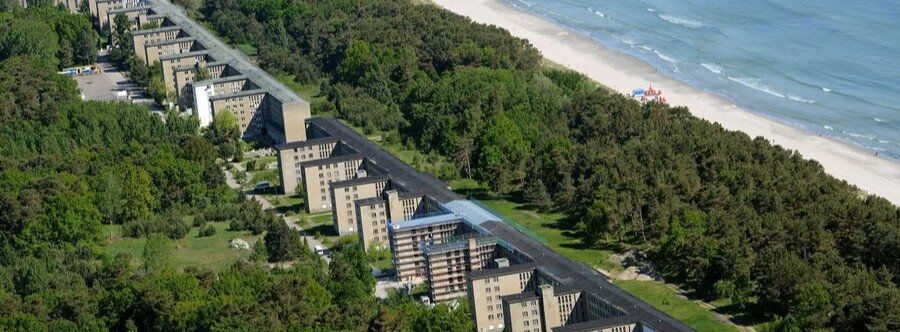
Imagine a building so vast it stretches nearly three miles (4.5 km) along one of Germany’s most beautiful white sand beaches. This is Prora, often called the Colossus of Rügen.
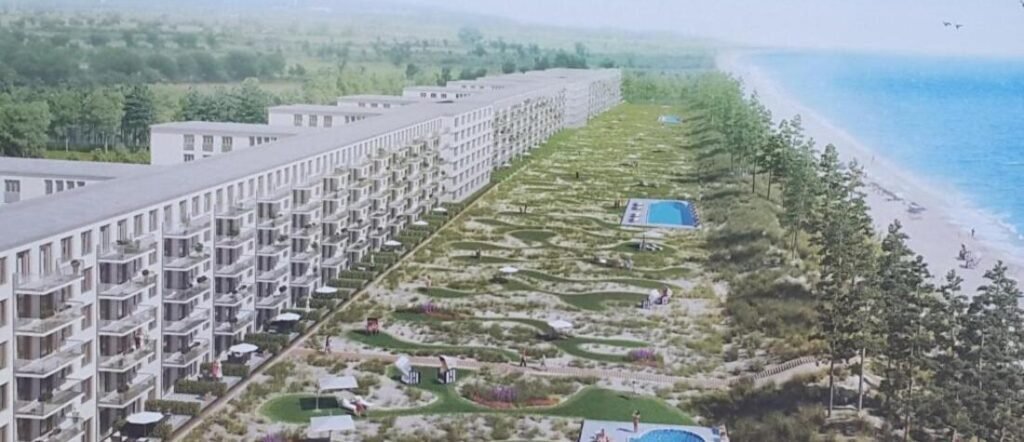
Originally built in the 1930s, the massive complex was designed to become the world’s largest seaside resort. Eight identical concrete blocks were planned to host thousands of vacationers along the Baltic Sea.
But history changed those plans. Construction stopped when World War II began, and the resort never welcomed a single guest. For decades, the enormous structure stood empty. As a result, the long gray buildings became one of the most haunting reminders of the Nazi-era Strength Through Joy program.
Today, the seaside complex tells a different story. Many sections now feature modern apartments, stylish hotels, and even the world’s longest youth hostel. Visitors can stay just steps from the calm turquoise waters of the Baltic Sea.
Some travelers come for the powerful history. Others visit for the long sandy beach and peaceful coastal scenery. Either way, the destination offers one of the most unique travel experiences on Rügen Island. Here, the past and present stand side by side along Germany’s beautiful Baltic coast.
Learn more about Rügen Island here, or also visit us on Pinterest.
Weather and Best Time to Visit Prora
This stretch of coast sits along Germany’s Baltic Sea shoreline, so the climate stays mild but cooler than many European beach destinations. Summers are comfortable rather than hot. While winters can feel chilly and windy along the shoreline.
Summer (June–August) is the best time to visit if you want to enjoy the beach. Temperatures usually range from 65–75°F (18–24°C). The Baltic Sea warms enough for swimming. Plus, the long daylight hours make it perfect for beach walks and exploring Rügen Island.
Late spring (May) and early fall (September) are also great times to visit. The weather stays pleasant, crowds are smaller, and the coastal scenery looks beautiful. But, the water may feel cooler for swimming.
Fall (October–November) brings cooler temperatures and stronger coastal winds. The beaches become quieter, making it a peaceful time to explore the island, walk coastal trails, or visit nearby museums.
Winter (December–March) is the quietest season. Temperatures drop and swimming is not possible. However, the Baltic coastline can look dramatic with winter skies and empty beaches.
Overall, the best time to visit is June through September, when warm weather, calm seas, and long sunny days make the Baltic coast ideal for swimming, relaxing, and exploring the island.
Why Visit Prora
The area is worth visiting for its mix of natural beauty and powerful history. The area combines a long sandy beach with one of the most striking sites on the Baltic coast. As a result, visitors find a place that feels very different from other beach towns on Rügen Island.
Top Reasons to Visit
Pristine Caribbean-Style Beach
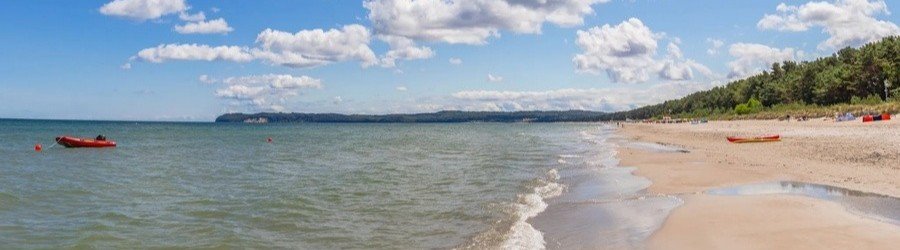
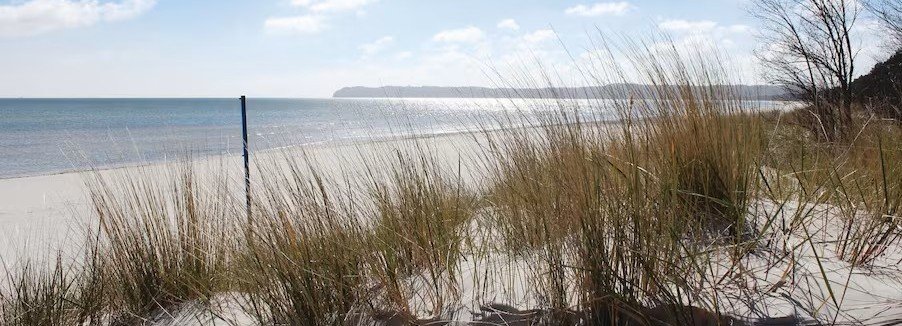
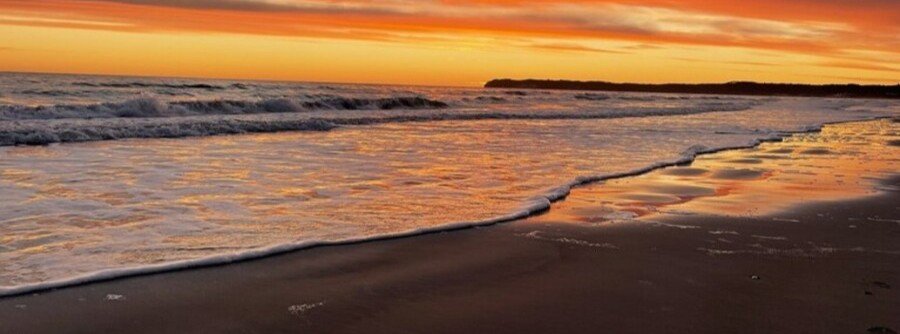
Prorer Wiek Bay has several kilometers of soft white sand. The water is calm and shallow. As a result, the beach is great for swimming and relaxing. Many visitors say it is one of the cleanest beaches on Rügen. It is also quieter than the busy resort town of Binz.
Mind-Bending Architecture
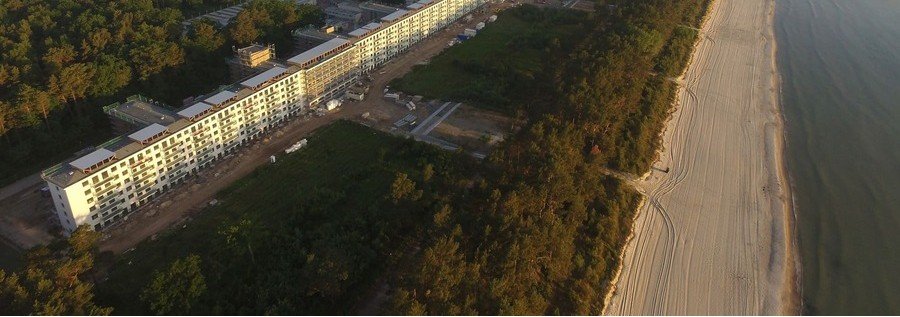
The Colossus of Prora stretches nearly three miles (4.5 km) along the coast. Long rows of identical buildings line the shore. Workers built the complex in the 1930s as a huge holiday resort. Today, some sections hold modern apartments and hotels.
Fascinating Historical Insights
The Dokumentationszentrum Prora museum explains the history of the site. Exhibits show how the Nazis planned the resort. They also explain how the area later served as an East German military base. Today, visitors see restored buildings beside empty sections.
Unique Outdoor Adventures
The are also offers many outdoor activities. The Natural Heritage Centre Rügen has a treetop walk through the forest. A 40-meter tower offers wide views of the island. In addition, bike and hiking trails run through nearby pine forests as well as along the Baltic coast.
Vibrant New Culture
Today, it feels like a lively seaside town. Beach bars and cafés attract visitors during the summer. The area also hosts a sand sculpture festival each year. In addition, the complex includes the world’s longest youth hostel.
The Prora Beach Zones
The coastline stretches along a long curve known as Prorer Wiek Bay. At first glance, the beach looks like one continuous shoreline. However, several sections serve different types of visitors.
The beach runs beside the massive 3-mile (4.5 km) seaside complex, so it helps to think of it as one huge beach with four main areas.
The Main Textile Beach (Standard)
Vibe: Classic family-friendly beach atmosphere.
Features: This section has the famous Strandkörbe, the hooded wicker beach chairs you see across Germany’s Baltic coast.
Best For: Swimming, sunbathing, and visitors staying in the renovated apartments or the Prora Youth Hostel.
FKK Strand (Naturist Beach)
Vibe: Relaxed and natural, following Germany’s long tradition of Freikörperkultur (FKK).
Location: Usually in the quieter southern stretches of the beach, closer to Binz.
Best For: Travelers who enjoy a more private and nature-focused beach experience.
Hundestrand (Dog Beach)
Vibe: Active and pet-friendly.
Location: Clearly marked sections where dogs can run, play, and swim in the Baltic Sea.
Best For: Visitors traveling with dogs who want a designated space on the beach.
The Sports and Action Zone
Vibe: Energetic and adventurous.
Activities: Popular activities include kite surfing, stand-up paddleboarding (SUP), and banana boat rides.
Best For: Active travelers who want water sports and beach activities.
Tip: Because the shoreline stretches for several kilometers, the beach rarely feels crowded. Even in peak summer, it is usually quieter than the main beach in nearby Binz.
Things to Do in Prora
The area offers a mix of exciting water sports as well as interesting land attractions. As a result, the area feels much more active than a typical historical site on the Baltic coast.
Water Activities
Prorer Wiek Bay is a popular place for wind-powered sports. Because the bay is open to Baltic winds, conditions are often ideal for water activities.
Kitesurfing and Windsurfing
The beach is a great spot for both beginners and experienced riders. North-east and east winds often create the best conditions. Local schools provide lessons and equipment rentals.
Stand-Up Paddling (SUP) and Kayaking
On calm days, the shallow shoreline is perfect for paddling. Many visitors enjoy paddling along the Prora complex to see the massive building from the water.
Sailing and Boat Tours
Guided boat tours leave from nearby Sassnitz. Many trips visit the famous Königsstuhl chalk cliffs or search for seals along the Baltic coast.
Snorkeling and Diving
The Baltic waters here are often clear near the shore. Snorkelers can explore the shallow areas, while dive centers organize trips to see local marine life.
Land Activities
The area also offers many activities away from the beach.
Natural Heritage Centre (Naturerbe Zentrum Rügen)
This nature park sits in the nearby forest and offers great views of the island.
- Treetop Walk: A 1,250-meter path leads visitors through the forest canopy.
- Eagle’s Nest Tower: A 40-meter observation tower provides wide views of Rügen as well as the Baltic Sea.
Cycling and Hiking
The area lies along the popular Rügen Circular Route. The island has nearly 800 km of cycling as well as hiking trails. One popular route is the coastal path between Binz, Prora, and Neu Mukran.
Museums and Culture
- Prora Documentation Center: This museum explains the complex history of the site during the Nazi and East German periods.
- Sand Sculpture Festival: A yearly exhibition featuring large artworks made from thousands of tons of sand.
Adventure Parks
- Kletterwald BinzProra: A forest climbing park with rope courses and obstacles. Great for both kids as well as adults.
The Colossus Hotel
Prora is not just one hotel. The original “Colossus” was designed as a single massive resort during the 1930s. Today, however, the surviving blocks belong to several private developers.
As a result, the complex now includes a mix of luxury hotels, stylish apartment rentals, and even the world’s longest youth hostel.
Luxury and Boutique Options in the Prora Blocks
Prora Solitaire Apartments & Spa
This redevelopment in Block 2 is one of the most luxurious parts of the complex. It features penthouse suites, a large spa, as well as outdoor pools right in front of the building. In addition, the design feels sleek and modern with glass balconies and heated parquet floors.
Dormero Strandhotel Rügen
This 4-star hotel offers large suites, many with views of the Baltic Sea. Guests can also enjoy a rooftop terrace, as well as a wellness area with an indoor pool and sauna. But, some visitors say it feels more like a modern apartment hotel than a traditional resort.
Mariandl am Meer
This high-end aparthotel brings a Bavarian theme to the Baltic coast. Plus, the property is well known for its restaurant serving authentic Bavarian food. Guests also enjoy the wellness and sports facilities, which include indoor and outdoor pools.
Prora Solitaire Avida Loft 8
These modern loft style apartments offer upscale accommodations within the historic complex. Most units include full kitchens, spacious living areas, as well as private saunas.
Budget and Alternative Options
DJH Youth Hostel Prora with Campsite
This youth hostel occupies a large part of Block 5. It is a great option for families, students, and guests on a budget visiting Rügen Island.
Zur Alten Post Prora
This traditional guesthouse sits just behind the main concrete blocks. It is also highly rated for its friendly service as well as its quieter location near the beach.
Pro Tip:
If you want the ultimate luxury stay, consider nearby Binz. It’s located about two miles south of the complex. The town is home to well known hotels such as the Grand Hotel Binz and the historic A-ROSA Kurhaus Binz.
Must-Visit Historical Centers
To understand Prora’s past, visit the centers that preserve its history. These sites explain how the massive complex was built as well as how it changed over time. In addition, guided walks take visitors beyond the newly restored sections.
Dokumentationszentrum Prora
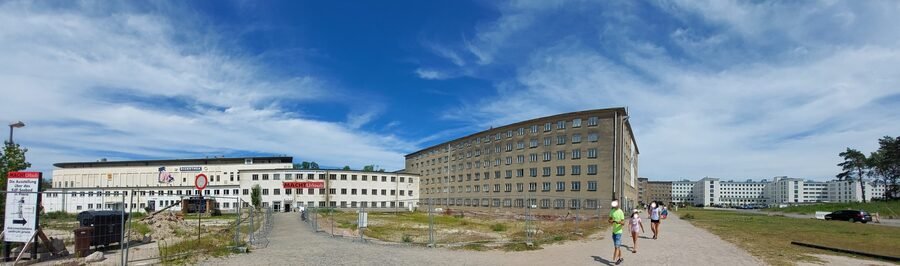
This museum sits in the central part of the complex and explains the history in detail. The main display, “MACHTUrlaub” (Power Vacation), shows how the Nazi regime used holidays and leisure to spread its message.
Pro Tip: Most exhibits appear in German. Visitors can also request an English translation brochure for a small deposit. QR codes throughout the museum provide digital translations.
Prora-Zentrum
This center sits near the Youth Hostel in the northern part of the complex, around Block 5. It focuses on the educational side of the site. As well as its later use as a secret military base during the GDR period. The center also hosts rotating photo exhibitions that show the construction phase in striking detail.
Recommended Tours
Guided Grounds Walk
Both centers offer guided walks that last about 90–120 minutes. These tours help visitors see parts of the complex they might miss on their own. For example, guides show the foundations of the planned festival hall as well as sections of the original quay wall.
Timing: Public tours usually run from April to October. English tours are sometimes available, but you may need to request them ahead of time.
“Moving History” Bicycle Tour
The Prora-Zentrum also offers guided bike tours along the entire three mile complex. This is one of the best ways to understand the huge scale of the building while riding past both restored and abandoned sections.
The Documentary Film
If you have limited time, both centers show a 30-minute film with English subtitles. The film explains the Strength Through Joy program as well as the different roles the building played over the years.
Don’t Miss: The “Unfinished” Blocks
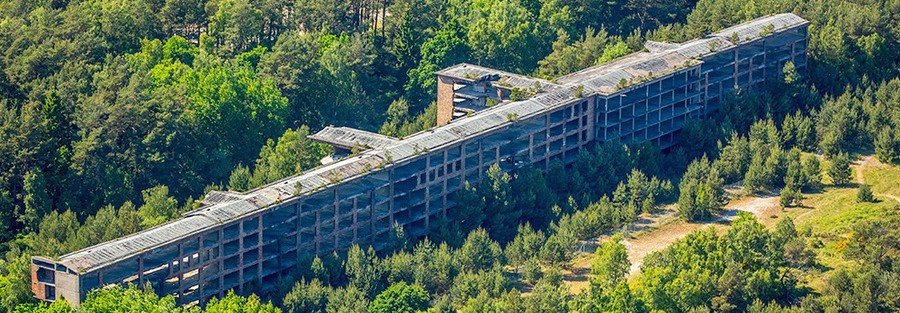
Many sections now look modern and restored. However, parts of Block 3 and Block 5 still remain in their raw gray condition. Walking past these unfinished areas gives visitors the strongest sense of the complex’s original scale and atmosphere.
Essential Travel Logistics
Getting There and Around
By Train:
The area has two train stations: Prora and Prora Ost. Local trains connect the coast with Bergen auf Rügen and other towns on the island.
By Bus:
VVR bus lines 18 and 22 connect the area with nearby towns such as Sassnitz and Binz.
By Car:
Drivers can reach the resort using the B96 highway from Stralsund. Parking near the hotel blocks may be limited. Instead, many visitors use Großparkplatz Prora, the main public parking area.
Best Time to Visit
Summer (July–August):
This is the peak season for beach trips and swimming. During this time, the Baltic Sea often warms to about 22°C (72°F).
Shoulder Season (May–June and September):
These months are great for hiking and cycling. The weather is mild, crowds are smaller, and average temperatures reach about 16°C (61°F).
Local Amenities for Self-Catering
Many places to stay are modern apartments with full kitchens. Because of this, travelers often need nearby shops to buy groceries and supplies.
Supermarkets:
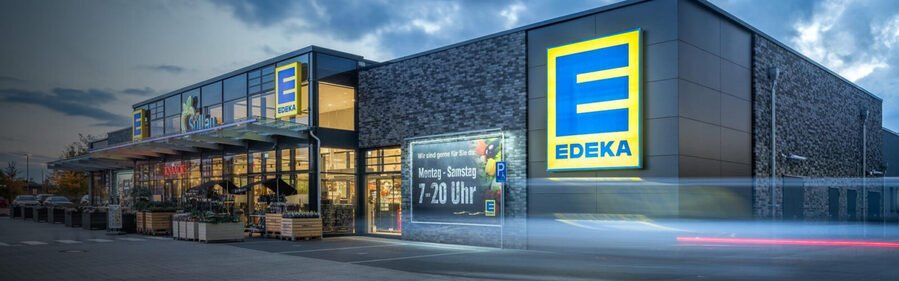
The EDEKA Krüger supermarket is modern, spacious, and well rated. It is one of the most convenient places to stock up on food and essentials during your stay.
Sundays in Germany:
Most supermarkets in Germany close on Sundays. However, this EDEKA often opens on Sundays during the tourist season. As a result, it is a helpful option for visitors arriving on weekends.
Family-Friendly Rainy Day Options
Even when the weather turns rainy, the area still offers fun indoor activities for families.
Galileo Wissenswelt
This large interactive museum features more than 200 hands-on exhibits. Displays cover science, technology, and the natural world, making it both fun and educational for kids and adults.
Sand Sculpture Festival
This indoor exhibition is one of the largest sand sculpture displays in the world. Located inside the Prora complex, the event showcases impressive artworks created from thousands of tons of sand.
Beyond the Blocks: Nearby Day Trips
The area is a great base for exploring other highlights across Rügen Island. Several famous sights are only a short trip away.
Jasmund National Park
This park is home to the famous white chalk cliffs (Kreidefelsen) along the Baltic coast. Visitors can reach the park with a short drive or bus ride north to the town of Sassnitz.
Rügen Narrow Gauge Railway
The “Raging Roland” is a historic steam-powered train that runs across the island. The railway connects Binz with the seaside towns of Sellin and Göhren, offering a scenic way to explore the southern coast.
Flavors of Prora
The area offers a mix of classic Baltic seafood and modern street food. As a result, visitors can enjoy both local specialties and casual beach snacks.
Must-Try Local Specialties
Fischbrötchen (Seafood Sandwich)
This classic Baltic snack features fresh fish served in a crusty bread roll. Popular fillings include pickled herring, smoked salmon, in addition to fried fish.
Sanddorn (Sea Buckthorn)
Often called the “lemon of the north,” this bright orange berry grows along the Baltic coast. Locals use it in cakes, jams, juices, and also liqueurs.
Fresh Baltic Fish
Seasonal fish are common on local menus. Herring is popular in spring, while hornfish (Hornhecht) appears from late May to mid-June.
Bubble Waffles
A trendy dessert served at Blubbar, these waffles have a soft bubble texture and come with many sweet toppings.
Currywurst
This popular German street food features sliced sausage topped with spiced tomato curry sauce. It usually comes with fries.

Top Dining Spots in Prora
Several great places to eat sit near the beach. Visitors can enjoy everything from seafood snacks to full meals after a day by the Baltic Sea.
Delicat
This seafood deli is known for high quality Fischbrötchen and creative herring dishes. It is also a great stop for a quick lunch near the beach.
Cafe Patcus
This cozy café is famous for excellent coffee as well as homemade cakes. As a result, it is a popular place for breakfast or an afternoon break.
FalkenNest
This relaxed bistro serves hearty Polish dishes in a warm setting. In addition, the casual atmosphere makes it a great place for dinner.
Il Ristorante
This well rated Italian restaurant is known for pasta, pizza, as well as friendly service. Plus, guests also enjoy the wide selection of German beers.
Blubbar
This highly rated spot (around 4.7 stars) specializes in bubble waffles with customizable toppings. In addition, the menu includes milkshakes, bubble tea, in addition to frozen yogurt.
Heimathafen Prora
This popular spot serves quick but high quality burgers, including Black Irish Angus options. Many visitors say the burgers also rival some of the best in Berlin.

Local Tips
Rasender Roland
This historic narrow-gauge steam train runs across Rügen Island. It connects the area with seaside towns like Sellin and Göhren. As a result, it offers a nostalgic and scenic way to explore the island.
Bike Rentals
Rügen has more than 800 km of cycling trails. Because of this, renting a bike is one of the best ways to explore the island. You can easily ride between the different blocks of the 4.5 km seaside complex and continue toward nearby Jasmund National Park.
Why Prora Is One of Rügen’s Most Unique Coastal Destinations
The area is one of the most unusual places on Germany’s Baltic coast. It combines a long sandy beach with one of Europe’s largest seaside buildings. As a result, visitors see both natural beauty and powerful history in one place.
Today, the massive complex is changing. Restored sections now include modern apartments, hotels, as well as restaurants. Some parts of the original building still remain.
The site is also a great base for exploring Rügen Island. The chalk cliffs of Jasmund National Park are close by. The seaside towns of Binz, Sellin, and Göhren are also easy to reach.
For travelers who enjoy beaches, history, and coastal scenery, the destination offers a unique Baltic Sea experience. The beach alone is worth the trip.
FAQs About Visiting Prora
Visitors often have a few questions before planning a trip. Below, the answers explain what to expect when visiting this unique Baltic Sea destination.
Where is Prora located?
The seaside complex sits on Rügen Island along Germany’s Baltic Sea coast. More specifically, it lies between the seaside town of Binz and the port city of Sassnitz.
Why is Prora famous?
The area is known for its massive seaside complex built in the 1930s. In fact, the building stretches almost 3 miles (4.5 km) along the beach. Because of this, it is one of the longest seaside buildings in Europe.
Can you visit the Prora complex?
Yes. Visitors can walk along the outside of the structure and explore several museums inside. In addition, guided tours explain the history of the site and its role during different periods of German history.
Is Prora Beach worth visiting?
Yes. The beach at Prorer Wiek Bay is one of the longest sandy beaches on Rügen Island. As a result, it is perfect for swimming and long walks along the shore.
How do you get to Prora?
The area is easy to reach by train, bus, or car. For example, two train stations—Prora and Prora Ost—connect the coast with other towns on Rügen Island.
When is the best time to visit Prora?
Summer offers the best weather for swimming and beach activities. However, late spring and early fall are also great for hiking and cycling with fewer crowds.
Are there places to stay in Prora?
Yes. Today, the complex includes luxury apartments, boutique hotels, and the world’s longest youth hostel. Additionally, visitors can stay in nearby Binz, which offers many traditional seaside hotels.
Explore More Places on Rügen Island
Rügen Island is filled with charming seaside towns, dramatic coastal cliffs, historic resorts, and peaceful fishing villages. Each destination has its own personality, from elegant spa towns to quiet Baltic beaches. If you are planning a longer stay or exploring the island by car, these nearby destinations are well worth adding to your itinerary.
Explore more beautiful places around the island:
Baabe • Binz • Glowe • Göhren • Lauterbach • Lohme • Prora • Putbus • Sassnitz • Sellin • Thiessow • Rügen Island
Related Posts
 Visit Beautiful Lohme in the Jasmund Region on Rügen Island
- Visit Beautiful Lauterbach on The Island of Rügen
- Visit Beautiful Putbus on The Island of Rügen
- Discover the Most Beautiful Coastal Landscapes of Sassnitz Germany
- Rhine Gorge: The Most Stunning Hidden Castles You’ll Love
- The Most Beautiful Heidelberg Old Town and Stunning Castle Views You’ll Love


I had heard the name Prora before, but I never realized just how massive the complex really is. Nearly three miles along the beach is incredible. Can visitors actually walk the whole length of it, or is part of it closed off?
Yes, visitors can walk along much of the complex, although some sections feel more accessible than others depending on redevelopment and ongoing use. Walking the grounds is one of the best ways to understand the true scale of the site because photos rarely capture how enormous it is. Some parts now contain hotels, apartments, and museums, while other stretches still feel unfinished and stark. That contrast between restored sections and the raw concrete blocks is part of what makes the visit so memorable.
This was such an interesting read because Prora seems so different from the usual beach destination. The mix of history and a beautiful shoreline is really striking. Would you recommend visiting mainly for the history, or is the beach itself worth the trip too?
Both are worth experiencing, which is what makes Prora stand out so much. The history gives the place a very powerful atmosphere, especially when visiting the museums and seeing the unfinished sections of the complex. At the same time, the beach is genuinely beautiful, with soft white sand and calm Baltic water. Many travelers come for the beach and end up being surprised by the historical side, while others arrive for the history and stay longer because of the coastal scenery.
The youth hostel inside the complex really surprised me. It’s amazing how a place with such a heavy history has been adapted for modern travel. Does it still feel eerie when you stay there, or has it become more like a normal beach destination now?
It really feels like a mix of both. Some restored areas feel modern and comfortable, especially around the apartments, hotels, and hostel spaces near the beach. However, the scale of the building and the long rows of concrete still remind visitors that this is not an ordinary seaside resort. That unusual contrast is what makes staying there so different from a typical Baltic beach trip. You can enjoy the beach by day, then still feel the weight of history when walking through the older parts.
I found the section about the unfinished blocks especially interesting. Sometimes places like this lose part of their impact once everything is renovated. Are those raw sections easy to find when visiting?
Yes, they are still an important part of the experience and help visitors understand the original atmosphere of the site. Seeing the unfinished gray sections beside the newly restored areas makes the contrast much stronger. Those raw blocks give a much clearer sense of the building’s size, age, and history than the polished sections alone. For many visitors, those parts are actually the most powerful because they feel more honest and less transformed.
The beach sounds beautiful, especially if it stays quieter than Binz in summer. I always like wide beaches where you can spread out a bit. Is Prora a good choice for a full beach day, or is it better as more of a sightseeing stop?
Prora works very well for a full beach day. The shoreline is long, sandy, and usually more spacious than some of the busier resort beaches nearby. Families, swimmers, and people who simply want a long walk by the Baltic often find it a very comfortable place to spend several hours. Since there are also cafés, beach areas, and places to stay nearby, it can easily be both a relaxing beach destination and a sightseeing stop in the same visit.
I always enjoy places that have both nature and unusual architecture, so Prora sounds fascinating. The treetop walk nearby also caught my attention. Would that make a good combination with the historical museum in the same day?
Yes, that combination works very well. The documentation center gives visitors a deeper understanding of the site’s difficult history, while the nearby Natural Heritage Centre adds a completely different side of the area with forest views and fresh air. Many people enjoy pairing the two because it balances the heavier museum experience with time outdoors. It also shows how Prora sits between a very human-made history and the natural beauty of Rügen’s coast and forests.
This might be one of the most unusual places on Rügen from everything I’ve read. The old resort plan sounds so grand and unsettling at the same time. How much time would you set aside for a first visit if you want to see both the beach and the history side?
For a first visit, half a day is usually a good minimum, while a full day is even better if you want a more complete experience. That gives enough time to walk part of the complex, visit one of the museums, and still spend time on the beach or at a café. Because the site is so large, rushing through it can make it harder to appreciate the scale. A slower visit works best here, especially if you want to feel both the historical impact and the coastal setting.
The fact that it was designed as such a huge resort but never actually opened makes it even more haunting. I can see why so many people are drawn to it now. Do you think it’s suitable for families, or is it more of a destination for adults interested in history?
It can work for both, depending on what your family enjoys. The beach, treetop walk, climbing park, and indoor attractions like Galileo Wissenswelt make the area very family-friendly in many ways. At the same time, the historical side is much more meaningful for adults and older children who are interested in learning about the site’s past. Families often end up appreciating the balance, because there are enough outdoor and beach activities to keep the visit from feeling too heavy.
I really liked how you described Prora as a place where the past and present stand side by side. That seems to fit it perfectly. Is it easy to visit from Binz if someone is staying there instead of inside the complex?
Yes, it is very easy to visit from Binz. The two places are close together, so many travelers stay in Binz and make a simple trip over for a few hours or even a full day. You can reach the area by car, train, bus, bicycle, or even on foot if you enjoy longer coastal walks. That makes it a convenient addition to a Rügen itinerary, especially for visitors who want to experience Prora’s history without staying directly in the complex.
Pingback: Kristina Marsh
Prora is known for both its history and its beautiful Baltic Sea beach. Many visitors come because the Prora complex is one of the most unusual historical sites on Rügen Island. At the same time, the long sandy shoreline at Prorer Wiek Bay attracts travelers who simply want to enjoy the coast. The beach stretches for several kilometers and usually feels much quieter than nearby resorts like Binz. Because of this combination of history, nature, and seaside scenery, Prora has become one of the most interesting coastal destinations along Germany’s Baltic coast.