

Copacabana Beach is one of the most famous shorelines in the world, known for its sweeping golden sand, vibrant beach culture, and iconic mosaic promenade. Located in Rio de Janeiro’s lively South Zone, it blends stunning coastal scenery with nonstop energy. This guide covers the best things to do, where to stay, and what makes Copacabana unforgettable.
Copacabana Beach is one of the most famous beaches in the world. It’s located along the coast of Rio de Janeiro, and stretches for about 2.5 miles. The beach sits between scenic hills and the Atlantic Ocean. Golden sand, lively beach culture, as well as beautiful ocean views make it one of Rio’s top attractions.
During the day, the beach is full of energy. Locals and visitors gather to swim, relax, as well as enjoy the sun. In addition, many people play beach volleyball or soccer. While others walk or run along the famous black and white mosaic promenade.
Plus, colorful umbrellas and fresh coconut water create a relaxed beach atmosphere. Street vendors and beach kiosks also add to the lively scene that makes Copacabana so memorable.
Finally, this guide explores what makes Copacabana Beach special. You will discover the best things to do, where to stay nearby, and helpful tips to enjoy one of Rio’s most iconic beaches.
Visit the most amazing beaches in Brazil here, or on Pinterest.

Weather and Best Time to Visit Copacabana Beach
Copacabana Beach enjoys warm temperatures throughout the year thanks to the tropical climate of Rio de Janeiro. Average daytime highs usually range from about 75°F to 88°F (24°C to 31°C). While evenings stay mild between 68°F and 77°F (20°C to 25°C). Even during the cooler months, beach days remain common as well as comfortable.
May through October is often considered the most pleasant time to visit. During these months, daytime temperatures typically stay between 75°F and 82°F (24°C to 28°C). Humidity drops, rain is lighter, and skies are often clearer. As a result, this period is perfect for long beach walks, sightseeing, as well as enjoying the coastline without intense summer heat.
December through March brings the peak of Rio’s summer. Temperatures frequently reach 84°F to 90°F (29°C to 32°C) with higher humidity. Short afternoon showers are common, but they usually pass quickly and sunshine returns soon after. This is also the liveliest season on Copacabana. Especially around New Year’s Eve and Carnival, when the beach becomes the center of Rio’s celebrations.
April and November act as transitional months. Temperatures remain warm, usually around 80°F to 84°F (27°C to 29°C), while crowds are smaller than peak summer. For many travelers, these months provide the best balance of warm ocean water, pleasant weather, and fewer visitors.
No matter the season, Copacabana remains beach-friendly year round. The main difference is whether you prefer energetic summer crowds or calmer coastal days with cooler breezes.
Why Visit Copacabana Beach
Copacabana Beach is one of the most famous beaches in the world. It sits along the coast of Rio de Janeiro, where golden sand meets the blue Atlantic. Here, beach life blends with the energy of the city. As a result, Copacabana feels lively from morning to sunset.
Iconic Landmarks and Views
One of the most famous sights is the black-and-white wave mosaic promenade. The pattern was designed by landscape artist Roberto Burle Marx. Today, the bold waves stretch along the beach and have become a symbol of Rio.
Another landmark is the grand Copacabana Palace. Opened in 1923, the hotel has welcomed royalty, movie stars, and world leaders. Because of this, it remains one of the best known hotels in Brazil.
At the south end of the beach sits Copacabana Fort. This old fort now has a small museum and scenic lookout points. From here, you can see the full curve of Copacabana’s bay.
The “Carioca” Beach Lifestyle
Beach Vendors: A constant flow of vendors sell everything from grilled shrimp and Biscoito Globo (manioc snacks) to custom beach sarongs.
Beach Sports: It is the birthplace of footvolley, a mix of soccer and volleyball played without hands. You’ll also see endless games of beach soccer and altinha.
Quiosques (Kiosks): Dozens of beachside kiosks serve ice-cold Brahma beer, fresh coconut water, and the popular Brazilian Caipirinha.
About Copacabana Beach
Copacabana Beach stretches for about 2.5 miles (4 km) along the coastline of Rio de Janeiro. The beach forms a wide crescent of golden sand that curves gently around a calm Atlantic bay. Throughout the day, soft waves roll onto the broad shoreline. This creates ideal conditions for swimming, beach sports, as well as long walks along the water.
Behind the sand runs the famous palm-lined promenade. From the beach, visitors enjoy open views across the ocean, fishing boats resting in the bay, and Rio’s dramatic hills rising along the coast. The setting feels both scenic and energetic, blending natural beauty with the lively spirit of the city.
Copacabana is also one of the widest beaches in Rio. At low tide, the sandy shoreline expands even farther, leaving plenty of space for volleyball nets, soccer games, and rows of colorful umbrellas. Because of its size and iconic scenery, Copacabana remains one of the most recognizable beaches in the world.
The Famous Mosaic Promenade
One of the most recognizable features of Copacabana Beach is the striking black and white mosaic promenade. The flowing wave pattern was designed by landscape architect Roberto Burle Marx and stretches the full length of the beachfront.
Today, the promenade is a lively gathering place. Locals jog, cycle, and stroll beneath rows of tall palm trees. Street performers, small cafés, and beach kiosks add to the relaxed coastal atmosphere.
Understanding the Posto System
In Rio de Janeiro, the postos (lifeguard towers) are more than safety stations. They are the main social markers used along the beach. Spaced about one kilometer apart, they help locals and visitors find their way along the 4 km (2.5-mile) curve of Copacabana Beach.
The Postos of Copacabana
The numbered system continues through nearby beaches like Ipanema as well as Leblon. Copacabana itself runs from Posto 1 to Posto 6.
Posto 1 – Leme
This area sits at the quieter end of the beach near the Leme neighborhood. It attracts local families and residents who prefer a calmer atmosphere away from the main tourist crowds.
Posto 2
Often seen as the gateway to Copacabana, this area has a lively feel. It sits near Lido Square and is also a common pickup point for tours heading to Christ the Redeemer.
Posto 3
This section represents the classic Copacabana scene. Major hotels line the beachfront here, including the famous Copacabana Palace. As a result, the area attracts both tourists and locals.
Posto 5
Known as one of the most active parts of the beach, this section is a hub for sports. You will often see beach soccer, volleyball, and Footvolley played throughout the day.
Posto 6
Located near Copacabana Fort, this area is known for calmer water. The fort helps block wind and waves, making it a popular place for swimming and stand-up paddleboarding.
Practical Tips for Visitors
Amenities
Many posto towers include restrooms, showers, and changing rooms. A small fee is usually required, often around R$1–3.
Meeting Points
Because the beach is so large, locals often say things like “Meet at Posto 4.” This simple system makes it easy to find friends.
Lifeguards
Most towers are staffed from about 8:00 AM to 8:00 PM. Always check the flags near the tower before swimming, as they show ocean conditions.
Views and Landmarks Around the Beach
The scenery around Copacabana Beach helps make it one of the most famous beaches in the world. Green hills, historic sites, as well as Rio’s busy waterfront surround the wide curve of sand.
The Calçadão (Wave Promenade)
The Calçadão, or wave promenade, is one of the most photographed sidewalks in the world. It was designed by landscape architect Roberto Burle Marx in 1970. The walkway features a bold black and white mosaic pattern inspired by ocean waves.
Today, the promenade runs the entire length of the beach. So, locals walk, jog, as well as cycle here throughout the day. At sunset, it becomes one of the most scenic places to stroll along Rio’s coastline.
Forte de Copacabana
At the southern tip of the beach stands Copacabana Fort, a historic military base overlooking the bay. From the fort’s stone walls, visitors also enjoy some of the best panoramic views of the entire Copacabana crescent.
Inside the complex is the Army Historical Museum and the famous Confeitaria Colombo café. Here, visitors can enjoy a traditional Brazilian breakfast while looking out over the Atlantic Ocean.
Copacabana Palace
The elegant Copacabana Palace has stood along the beachfront since 1923. This gleaming white hotel is a masterpiece of Art Deco architecture. It has long been a symbol of Rio’s glamorous past.
Over the decades, the hotel has welcomed royalty, film stars, as well as world leaders. Even today, its grand facade remains one of the most photographed buildings on Copacabana.
Morro do Leme
At the northern end of the beach rises Morro do Leme. A lush green hill that forms the natural boundary of Copacabana.
A short but steep trail leads to the top through sections of Atlantic Forest. From the summit, visitors enjoy sweeping views of Copacabana Beach in addition to the surrounding coastline.
Sugarloaf Mountain
While not directly on the beach, Sugarloaf Mountain dominates the skyline to the north. From the sand near Posto 1 and Posto 2, the granite peak rises above the bay.
During golden hour, the mountain glows in warm light. This creates one of Rio’s most iconic coastal views.
Avenida Atlântica
Running parallel to the beach is Avenida Atlântica. The lively boulevard that frames Copacabana’s waterfront.
High rise hotels, beach kiosks, as well as open air bars line the avenue. On Sundays and holidays, the lanes closest to the beach close to cars. So, the boulevard becomes a huge space filled with cyclists, skaters, as well as families enjoying the ocean air.
Daily Beach Life at Copacabana
Life on Copacabana Beach follows a lively daily rhythm. In the morning, joggers and cyclists fill the promenade while early swimmers head into the Atlantic.
As the day warms up, the sand becomes a hub for beach volleyball, soccer, as well as Footvolley. Meanwhile, colorful umbrellas appear across the wide shoreline as people relax in the sun.
Throughout the afternoon, vendors walk along the beach selling cold drinks, fresh coconut water, and snacks. By sunset, the beach slows down as visitors gather to watch the sky glow over the Atlantic.
Flavors of Copacabana
To truly experience Copacabana Beach, you have to eat like a Carioca, a local from Rio de Janeiro. Food here blends street snacks, beach favs, and classic restaurants. So, visitors can enjoy everything from quick bites on the sand to traditional Brazilian meals nearby.
The Beach Combo – Matte and Biscoito Globo
This simple snack is the unofficial classic of Rio’s beaches.
Matte Leão
An iced toasted yerba mate tea poured from large metal canisters carried by beach vendors. So, many locals order it “com limão”, which means with fresh lime.
Biscoito Globo
These light manioc flour rings are crunchy as well as airy. They come in two versions: sweet (red bag) or salty (green bag). Because they are baked and simple, they are also vegan-friendly.
Kiosk Classics (Quiosques)
The beachfront promenade is lined with dozens of beach kiosks. Many stay open all day and night. While menus vary, many items appear almost everywhere.
Caipirinha
Brazil’s national cocktail made with cachaça, sugar, as well as lime. Many kiosks now serve caipifrutas, which use tropical fruits such as passion fruit (maracujá) or cashew fruit (caju).
Água de Coco
Fresh coconut water served straight from a chilled green coconut. It is one of the best ways to stay cool in Rio’s warm climate.
Petiscos (Small Bites)
Popular snacks include bolinhos de bacalhau (codfish croquettes) and pastéis, crispy fried pastries filled with cheese, meat, or shrimp.
Sand-Side Service
At Copacabana, food often comes directly to your beach chair. Vendors walk along the sand carrying trays or small portable grills. So, you can enjoy fresh snacks without leaving your umbrella.
The smell of grilled food often drifts across the beach during the afternoon. Many vendors stop regularly near groups of umbrellas.
Queijo Coalho
This firm Brazilian cheese is grilled on skewers until golden and slightly crispy. Often, vendors sprinkle oregano or add a drizzle of molasses for extra flavor.
Espetinhos.
These small skewers of shrimp or chicken are grilled over charcoal. They are usually seasoned with garlic as well as lime before serving.
Iconic Dining Spots
For a more traditional meal, several famous restaurants sit just steps from Copacabana Beach. In addition, many of these spots have been local favorites for decades.
Confeitaria Colombo (at the Fort)
Located inside Copacabana Fort, this elegant café offers one of the most scenic breakfasts in Rio. Here, visitors can enjoy fresh breads, pastries, as well as coffee while looking out over the Atlantic Ocean.
Cervantes
This casual restaurant has become a late night institution in the Copacabana neighborhood. It is best known for its unnique steak, cheese, and pineapple sandwich. So, it’s earned a local following.
Churrascaria Palace
One of the neighborhood’s most traditional steakhouses. Here, diners enjoy rodízio service, where servers bring endless cuts of grilled meat to the table.
Açaí Bowls
In Rio de Janeiro, açaí is served thick and frozen rather than blended like a smoothie. It is often mixed with guaraná syrup for a small energy boost.
Around Copacabana Beach, small juice bars called suco bars serve açaí in chilled bowls. Most come topped with granola and sliced banana. As a result, it has become a favorite snack after a long day at the beach.
Tip for Beach Snacks
When buying food from beach vendors, look for stands with a steady flow of people. Usually, busy vendors mean fresher food. This is especially important for grilled seafood and cheese sold on the sand.
Seasonal Events
Réveillon (New Year’s Eve)
Every year on December 31, Copacabana Beach hosts one of the largest New Year’s celebrations in the world. More than two million people gather along the sand to welcome the new year.
The Ritual Locals wear white clothes for peace and good luck. At midnight, many people jump seven waves in the ocean. Others place white flowers in the water for Iemanjá, the sea goddess.
The Spectacle A huge fireworks show lights up the bay for about 12 to 17 minutes. The fireworks launch from barges just offshore.
Entertainment Several large stages host free concerts along the beach throughout the night.
Rio Carnival (February or March)
Although the famous parades take place at the Sambadrome, Copacabana becomes a lively center for Rio’s street celebrations.
Blocos (street parties) During Carnival, hundreds of themed street bands perform along the coastal avenues. Crowds follow the music through the streets while wearing colorful costumes.
The Magic Ball (Baile do Copa) Inside the Copacabana Palace Hotel, this famous gala takes place during Carnival week. Guests arrive in elaborate costumes for a glamorous night of music and celebration.
Mega Concerts
Copacabana Beach often hosts huge free concerts and public events. The wide shoreline allows large stages as well as massive crowds.
Over the years, artists like The Rolling Stones and Rod Stewart have performed here. Some shows have drawn crowds of more than a million people.
During these events, the beach turns into one of the largest outdoor music venues in the world.
Major Sporting Events
Copacabana is also a global stage for sand sports.
Beach volleyball International tournaments often take place on the sand.
Beach soccer The beach is also known as one of the homes of beach soccer. As a result, major matches and qualifying events are sometimes held here.
Quick Tips for Event Planning
Booking During New Year’s Eve and Carnival, hotel occupancy can reach 97 percent or more. For this reason, it is best to book hotels at least six months in advance.
Logistics During major events, Avenida Atlântica often closes to cars. The metro is usually the easiest way to reach the beach.
The Best 5-Star Resorts Along Copacabana Beach
These six luxury hotels capture both the glamour and the modern style of Copacabana Beach. Each one offers ocean views, excellent service, and a different way to experience Rio’s famous shoreline.
Copacabana Palace, A Belmond Hotel — 5★ | 9.8/10
The crown jewel of Copacabana, this famous Art Deco hotel opened in 1923 and remains Rio’s most iconic address. The grand white building faces the beach and reflects the golden age of travel.
Rooms and suites mix historic charm with modern comfort. Many include large balconies that overlook the sweeping curve of Copacabana Beach.
Romantic highlights include the private sixth-floor “Black Pool,” a peaceful retreat above the busy beach. The hotel also offers excellent dining, including Michelin-starred cuisine and the elegant Restaurante Pérgula, known for its lavish poolside breakfast.



Fairmont Rio de Janeiro Copacabana — 5★ | 9.1/10
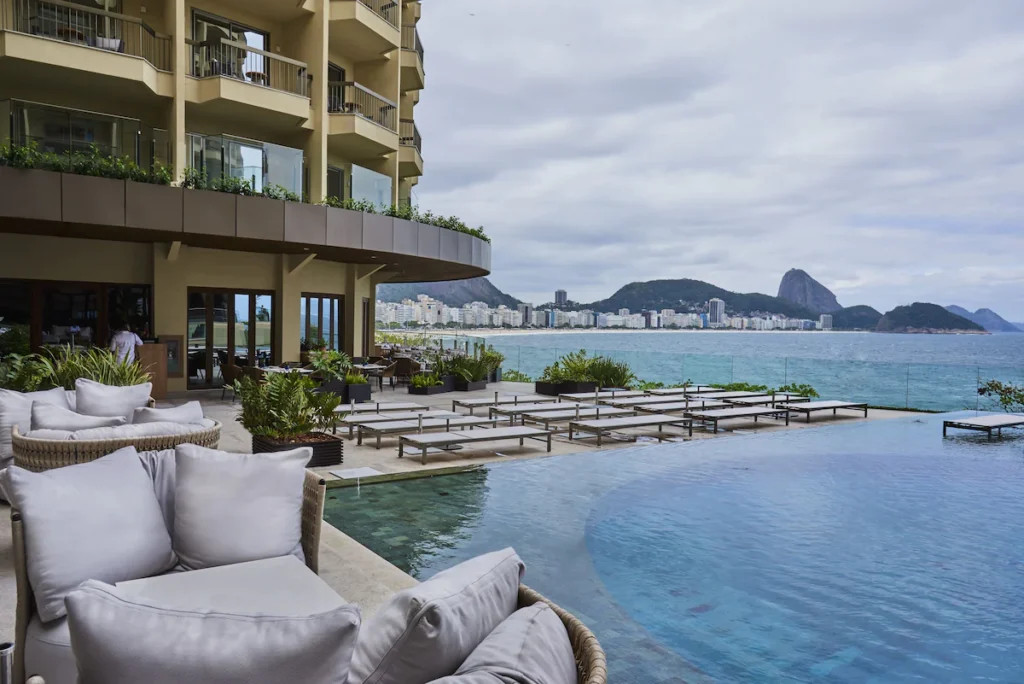
This oceanfront hotel sits at the quieter south end of Copacabana near Posto 6. The location feels calmer than the busy center of the beach while still offering easy access to the sand.
The design reflects Rio’s stylish 1950s era. Warm colors, natural stone, and soft lighting create a relaxed but elegant setting.
Two infinity pools overlook the ocean and nearby hills. One pool faces Sugarloaf Mountain and catches the morning sun, making it one of the most popular spots in the hotel. Couples can also book the honeymoon package, which includes champagne, breakfast in bed, and spa treatments.


Emiliano Rio — 5★ | 9.2/10
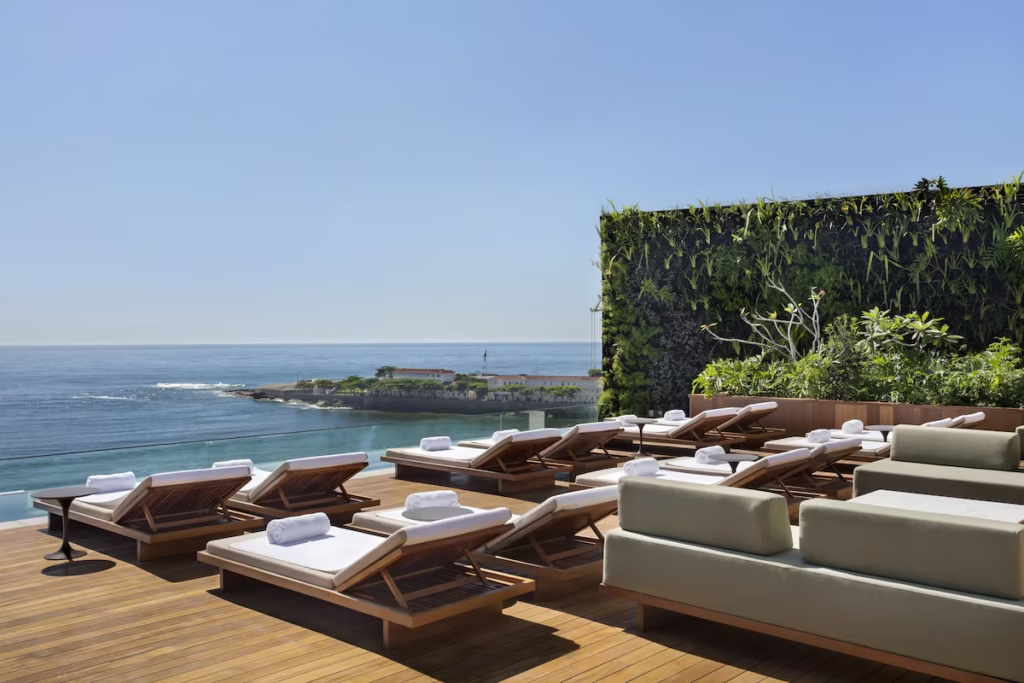
Emiliano Rio is a modern boutique hotel set right on Copacabana Beach. The hotel feels calm and private, almost like a luxury home by the sea. Its white façade stands out along the famous waterfront.
Ocean suites offer deep soaking tubs by Victoria + Albert and soft Egyptian cotton bedding. Large windows bring in natural light and ocean views. After a day on the beach, the rooms feel quiet and relaxing.
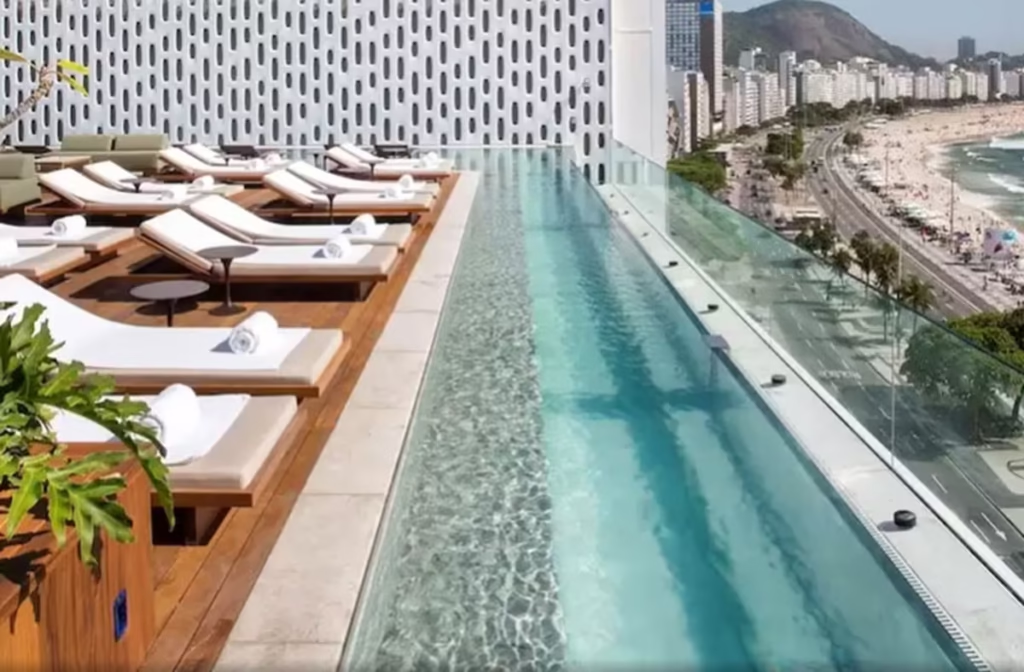
At the top of the hotel, a rooftop infinity pool overlooks the Atlantic Ocean. Guests can also enjoy fine dining at Emile Restaurant beside a lush garden wall.

Miramar by Windsor Copacabana — 5★ | 9.6/10
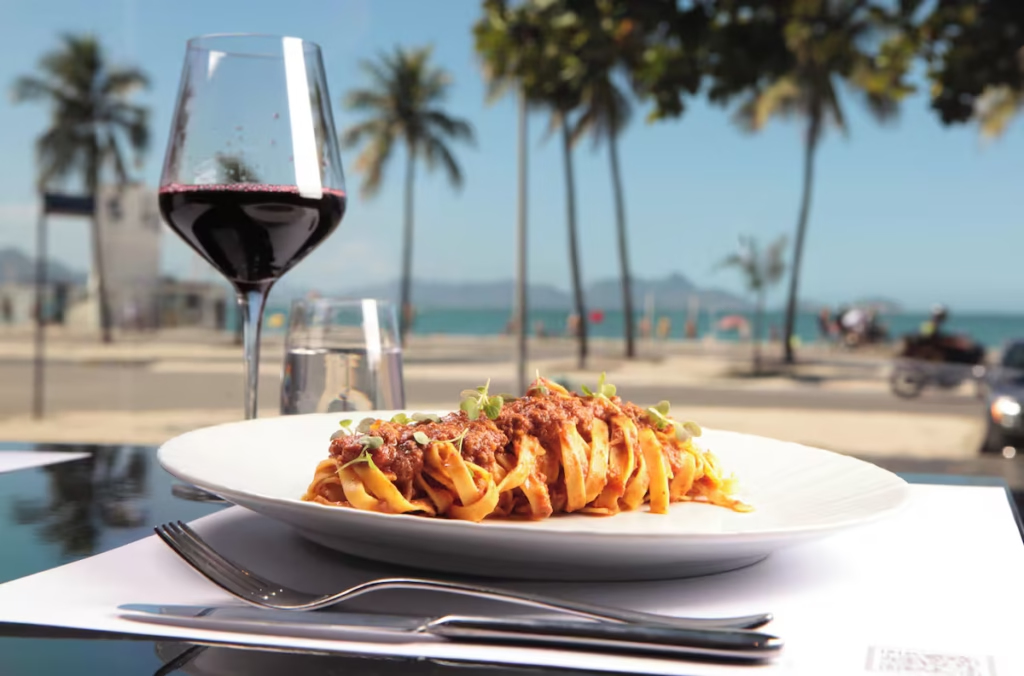
Miramar by Windsor earns strong guest reviews for service and comfort. The hotel blends modern style with classic Brazilian design touches.
Inside, guests see Brazilian artwork, crystal chandeliers, and polished marble floors. The rooms feel refined yet welcoming, and many overlook Copacabana Beach.
The rooftop infinity pool and bar offer wide views of the bay. Guests also enjoy beach service and complimentary butler service during their stay.

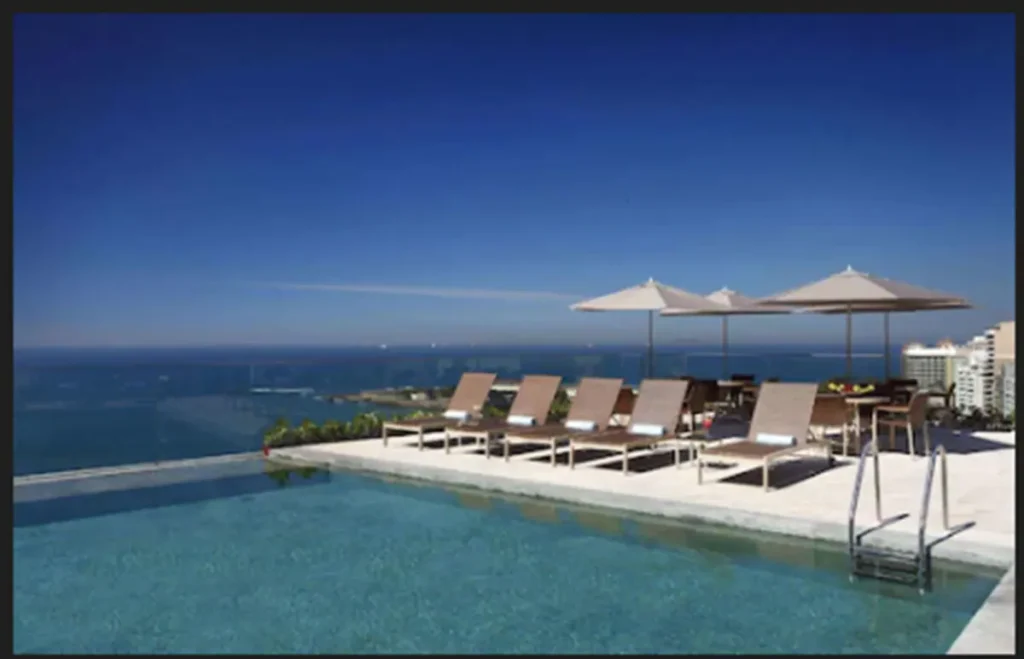
Hilton Rio de Janeiro Copacabana — 5★ | 9.0/10
The Hilton stands as the tallest hotel on Copacabana Beach. Its height gives guests some of the best views along the shoreline. The famous promenade sits just steps from the entrance.
Nearly three quarters of the rooms face the ocean. In addition, many offer wide views of Rio’s sweeping coastline and bright blue water. Modern amenities make the hotel comfortable for short visits or longer stays.
The rooftop infinity pool and terrace bar sit on the 39th floor. From there, guests can watch beautiful sunsets over Copacabana. It is one of the highest viewpoints along the beach.



JW Marriott Hotel Rio de Janeiro — 5★ | 9.0/10
The JW Marriott sits in the center of Copacabana’s famous curve. The beachfront location places guests steps from the sand. Plus, shops, cafés, as well as restaurants are also close by.
The hotel offers classic five star comfort in a calm setting. So, many travelers choose it for its reliable service and secure atmosphere. Plus, rooms provide a quiet retreat after a day exploring Rio.
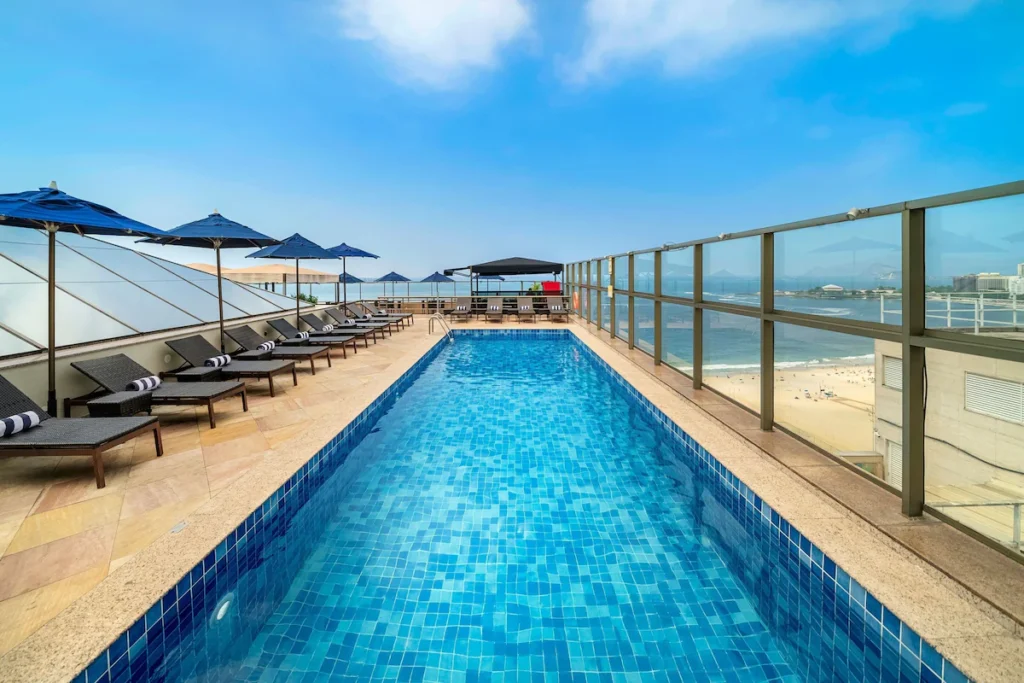
Guests can relax at the hotel’s private beach area. Reserved chairs and umbrellas also wait just steps from the water. While attentive staff also helps guests settle in for a relaxing beach day.


Packing List & Beach Culture
The “Canga” (Sarong): Skip bulky beach towels. They quickly mark you as a tourist. Locals use cangas which are colorful sarongs that are light and dry fast. You can buy them easily from beach vendors.
Footwear: Havaianas flip-flops are the unofficial beach uniform. They are comfortable as well as easy to wear all day. But, pack lightweight sneakers if you plan to walk the promenade or hike nearby Leme Hill.
Dress Code: Beach style is very relaxed. Men often wear sungas, which are tight square-cut swim trunks. Women wear bikinis of every style, size, as well as color.
Essentials: Bring a phone pouch if you plan to swim. But, never leave valuables alone on the sand.
Safety Pro-Tips
Inconspicuous Travel: Leave jewelry, watches, and expensive cameras at your hotel. Avoid flashy items when walking around the beach. Use your phone sparingly in public, as phones are a common target for petty theft.
ATM Safety: Use ATMs inside banks or shopping malls whenever possible. These locations are safer and monitored. Try to withdraw cash during the day.
Night Safety: The beach is well lit at night, but avoid walking on the sand after dark. Stay on the Avenida Atlântica sidewalk instead. The kiosks along the promenade stay open and keep the area active.
Transportation & Connectivity
Ride-Hailing: Uber and 99 are the easiest ways to get around Rio. They are safe, reliable, and widely used in the city. Avoid public buses at night, as robberies happen more often.
Mobile Data: Buy an eSIM before you arrive in Brazil. It gives you quick access to maps and ride apps. This also helps you avoid high roaming fees.
Best Times to Visit (Weather & Crowds)
The Sweet Spot: April, May, September, and October are the best months to visit Copacabana. The weather stays warm enough for the beach, with average highs around 26°C (79°F). Humidity is lower, and the crowds are much smaller than in peak summer.
Peak Summer (Dec–March): Summer in Rio feels lively and energetic. Temperatures often rise above 35°C (95°F). Afternoon rain showers are common during this season.
Essential Beach Slang & Phrases
Carioca (kah-ree-OH-kah): A person from Rio de Janeiro. So, locals use it to describe anything from the city.
Posto (POH-shtoo): The numbered lifeguard stations along the beach. Locals often say “Meet me at Posto 6.”
Canga (KAHN-gah): A colorful beach sarong used instead of a towel. Vendors sell them everywhere on the sand.
Sunga (SOON-gah): Traditional Brazilian men’s swim trunks. They are tighter and shorter than board shorts.
Valeu! (vah-LAY-oo): A very common word that means “thanks,” “cool,” or “got it.”
Lindo / Linda (LEEN-doo / dah): Means “beautiful.” You will hear it used for sunsets, views, as well as great food.
Tudo bem? (TOO-doo baym): A casual greeting that means “How’s it going?” or “All good?”
Ordering Like a Local
Água de coco (AH-gwah jee KOH-koo): Fresh coconut water sold along the beach.
Gelada (zheh-LAH-dah): Means “ice cold.” Use it when ordering a cold beer.
Sem gelo (SAYM ZHEH-loo): Means “no ice.” Useful when ordering juice or soft drinks.
A conta, por favor (ah KOHN-tah poor fah-VOHR): “The bill, please.”
Tip: The “Sh” Sound
In Rio, the letter S at the end of words sounds like “sh.”
For example, “reais” often sounds like “hay-AYSH.”
Using that soft “sh” sound can make your Portuguese sound more local.
Why Copacabana Beach Is Rio’s Most Iconic Beach
Copacabana Beach is one of the most famous beaches in the world. Its sweeping shoreline, lively culture, as well as golden sand create an unforgettable Rio experience.
From sunrise walks along Avenida Atlântica to sunset views over the Atlantic, every moment here feels vibrant as well as full of life. Visitors can relax on the sand, enjoy fresh coconut water, as well as watch the rhythm of Rio unfold along the promenade.
Whether you come for the beach, the food, or the electric atmosphere, Copacabana captures the spirit of Rio de Janeiro like nowhere else.

Frequently Asked Questions About Copacabana Beach
Is Copacabana Beach safe for tourists?
Yes, Copacabana Beach is generally safe during the day. Stay aware of your surroundings and avoid displaying valuables. At night, walk along Avenida Atlântica rather than the sand.
Is Copacabana Beach free to visit?
Yes. The beach is public and free to access. Visitors only pay for items like chairs, umbrellas, food, or drinks from beach vendors.
What is the best time of year to visit Copacabana Beach?
April, May, September, and October offer the best balance of weather and crowds. These months have warm temperatures with fewer tourists than peak summer.
What do locals wear at Copacabana Beach?
Beach style in Rio is relaxed. Men often wear sungas, while women wear bikinis of many styles. Many locals also use colorful cangas instead of beach towels.
Can you swim at Copacabana Beach?
Yes, swimming is common along most of the beach. However, waves and currents can vary, so always pay attention to lifeguard flags.
What is a “posto” on Copacabana Beach?
A posto is a numbered lifeguard station along the beach. Locals often use these numbers as meeting points, such as Posto 5 or Posto 6.
How long is Copacabana Beach?
Copacabana Beach stretches about 4 kilometers (2.5 miles) along Rio’s famous coastline.
Do beach vendors accept credit cards?
Many vendors accept cards or mobile payments, but it is still helpful to carry some cash for small purchases.